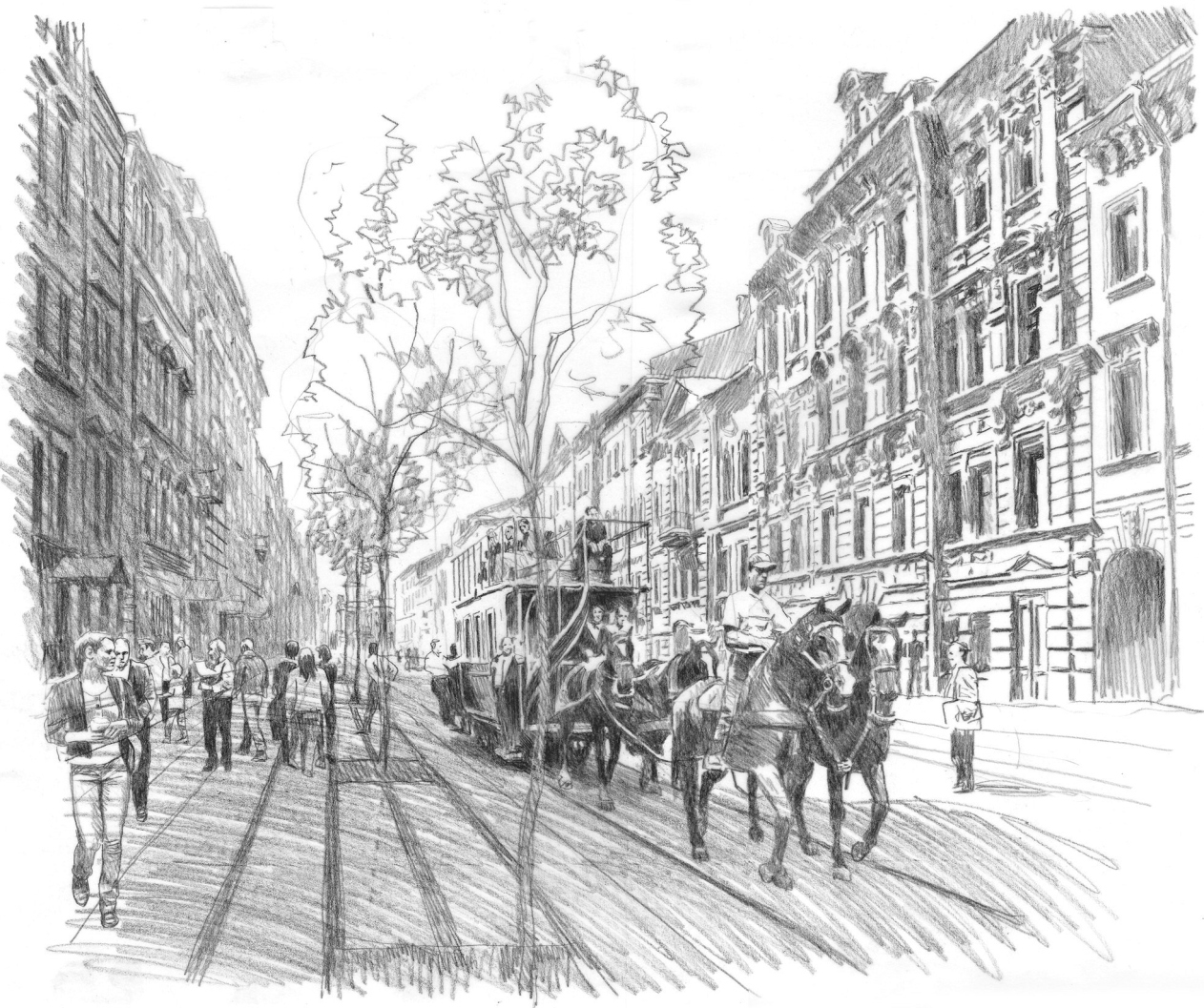
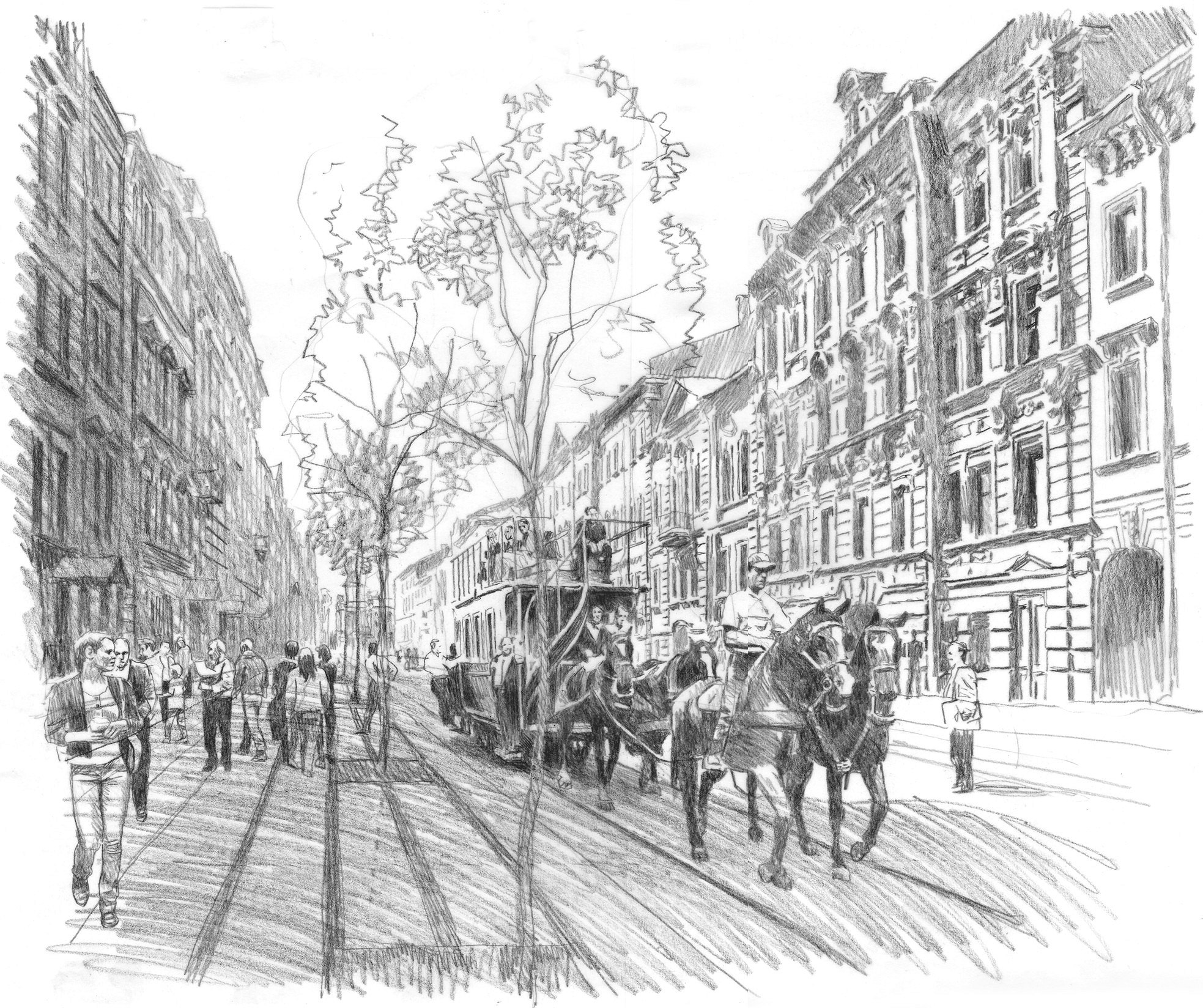
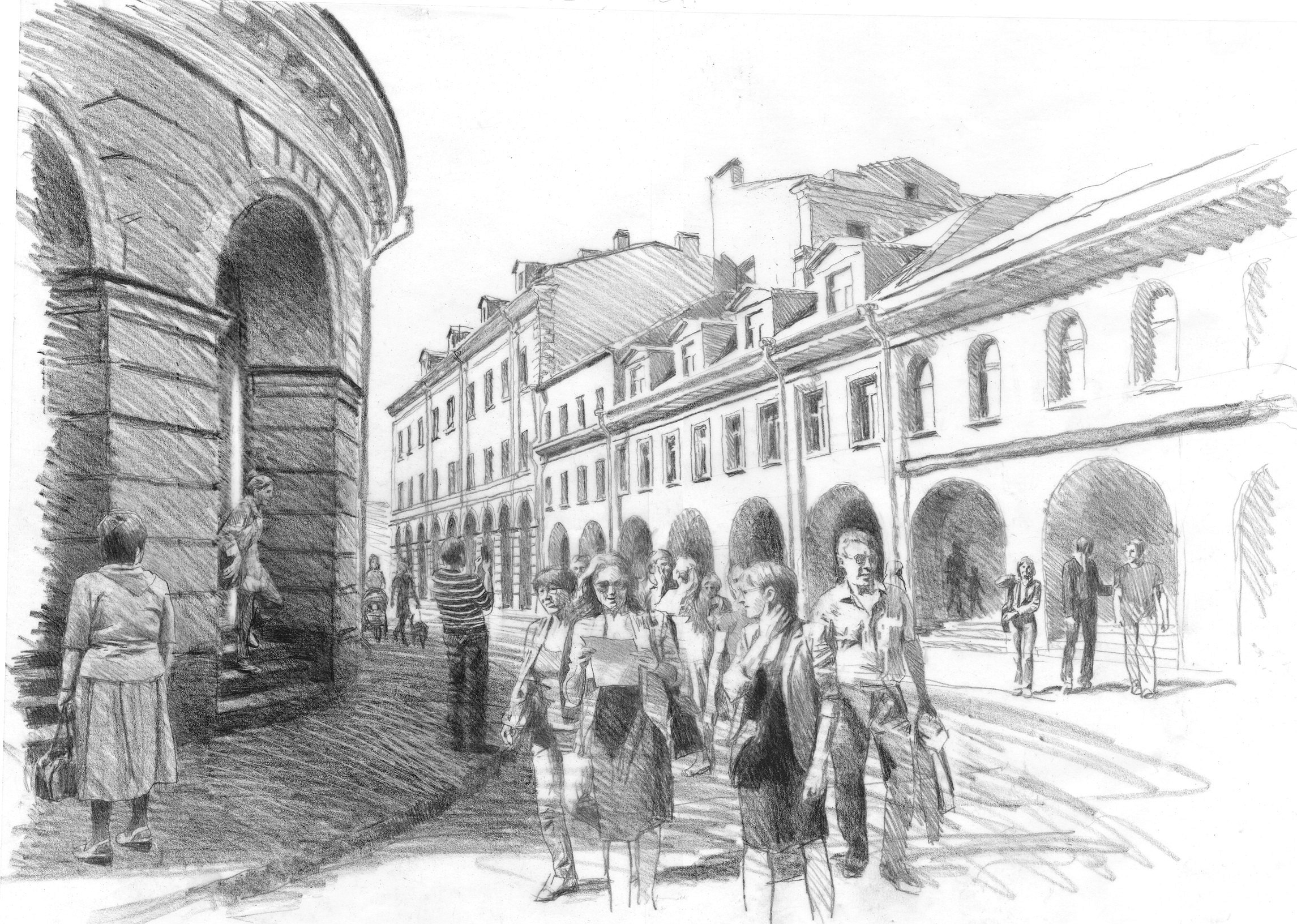
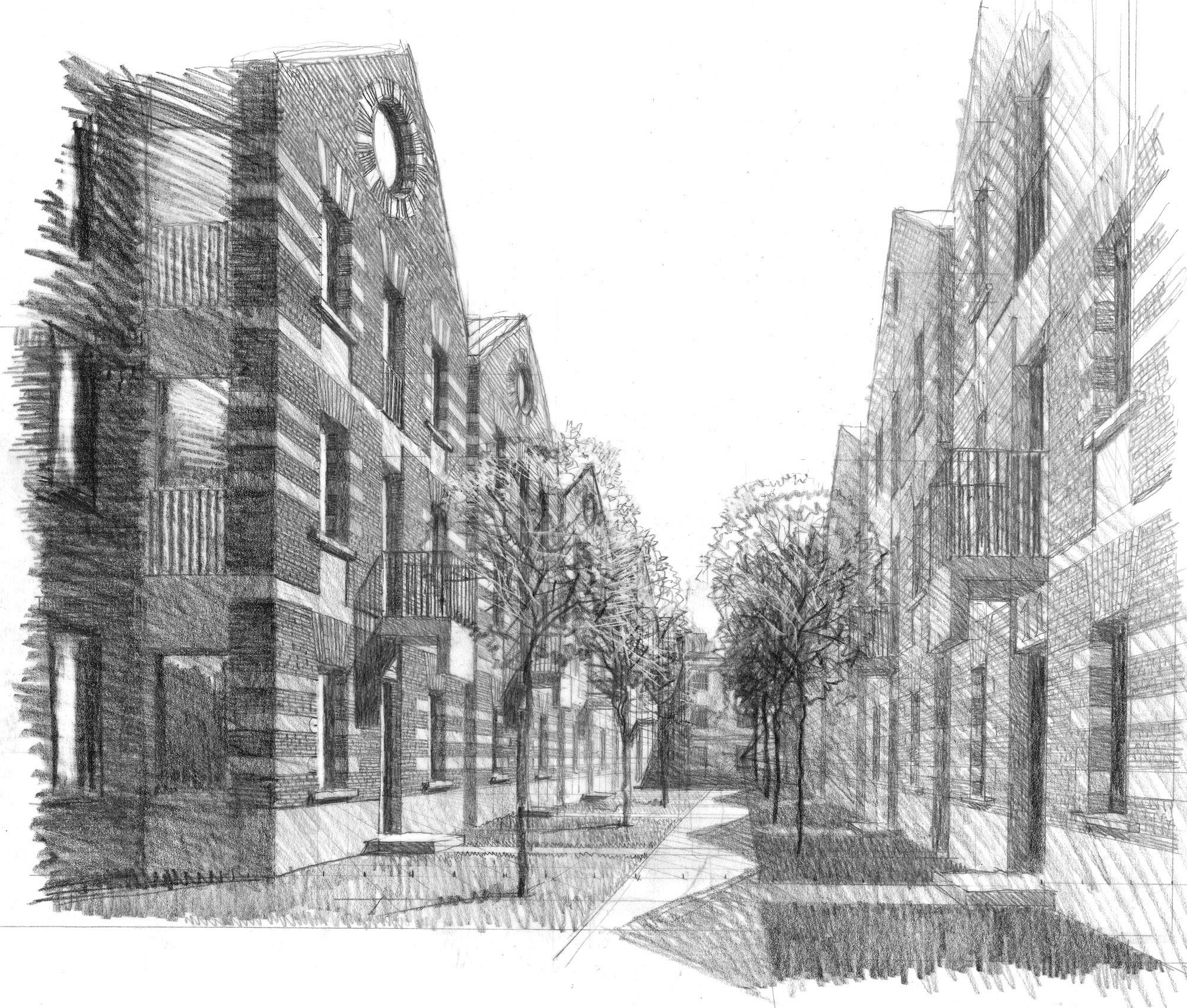
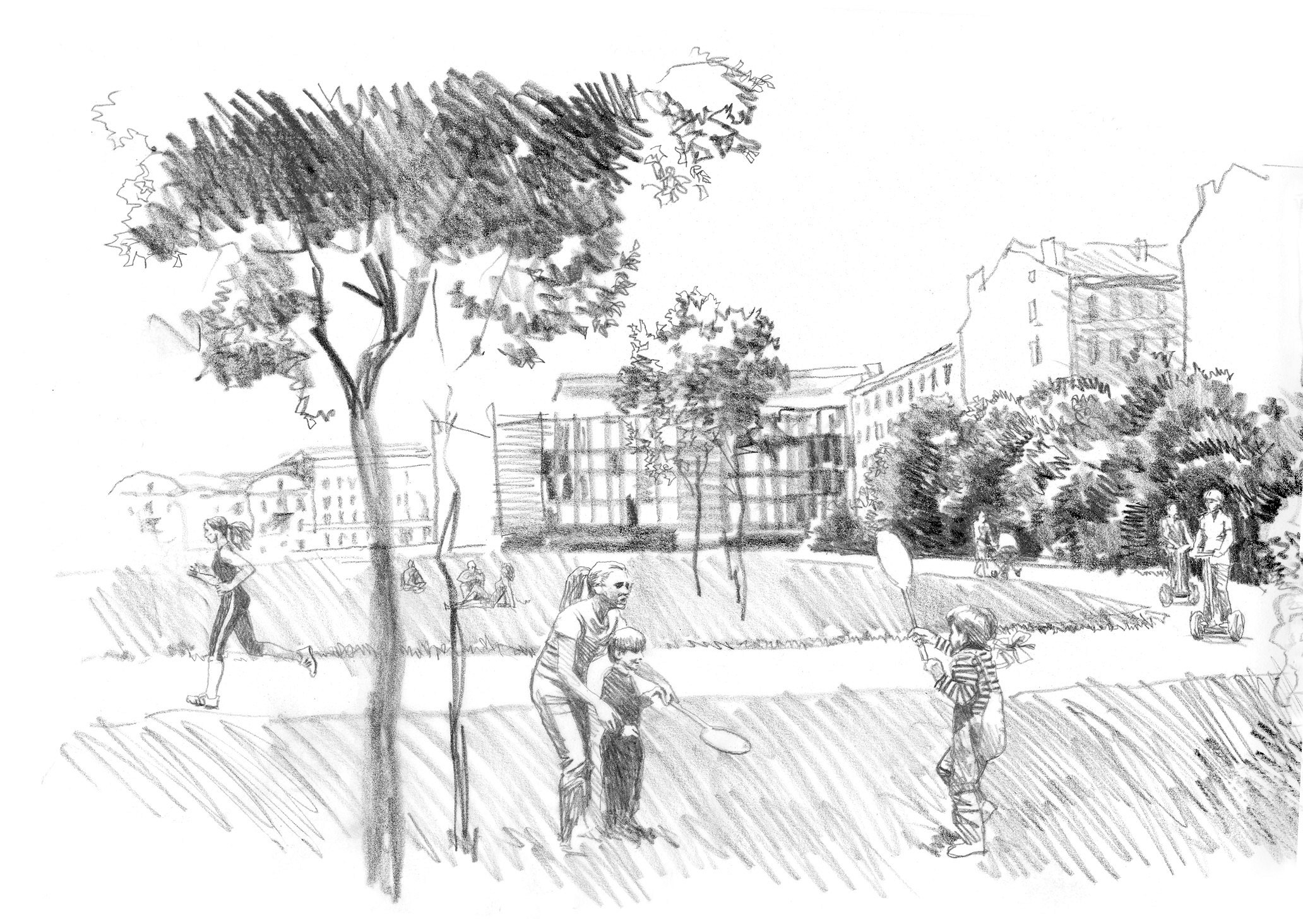
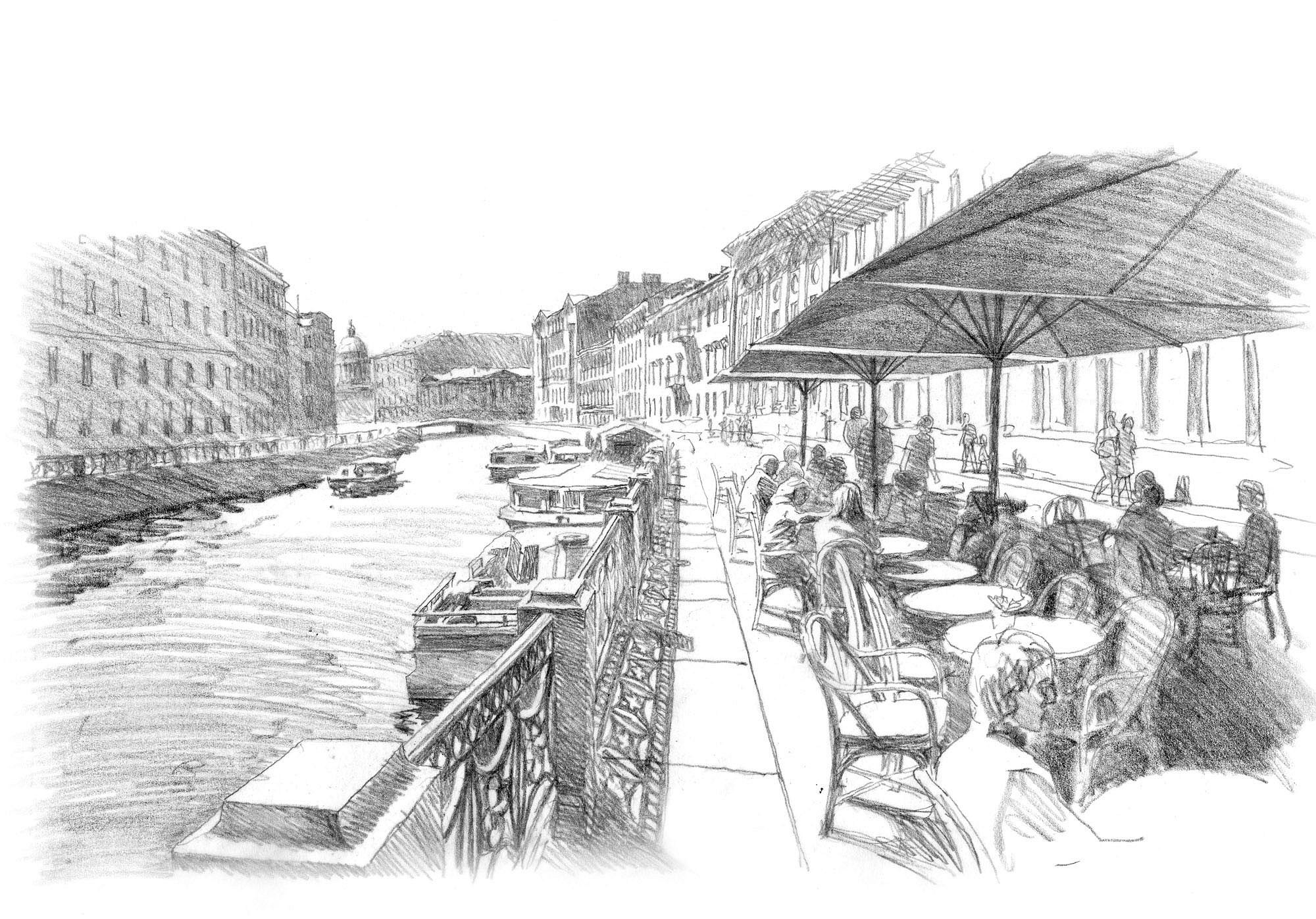
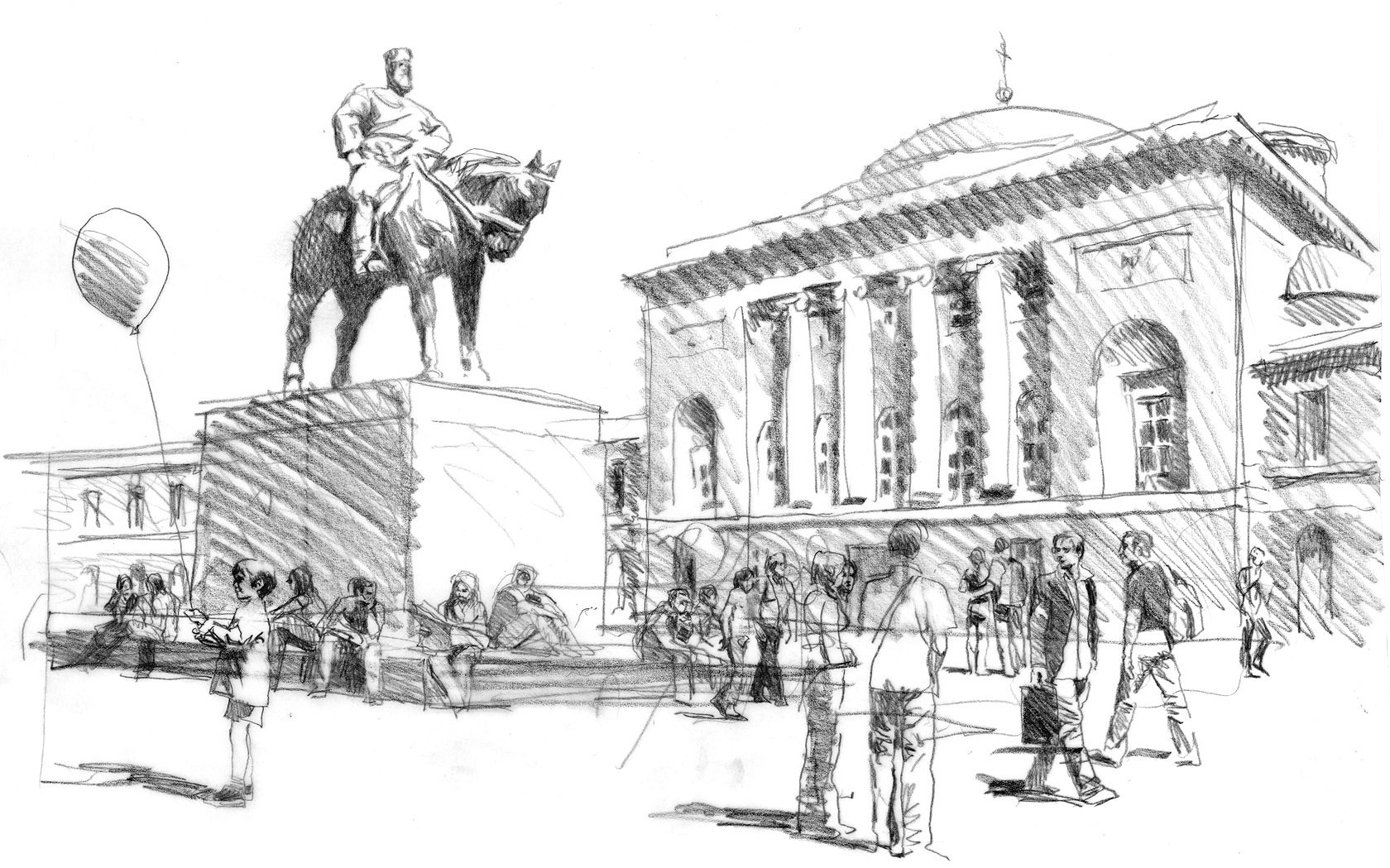
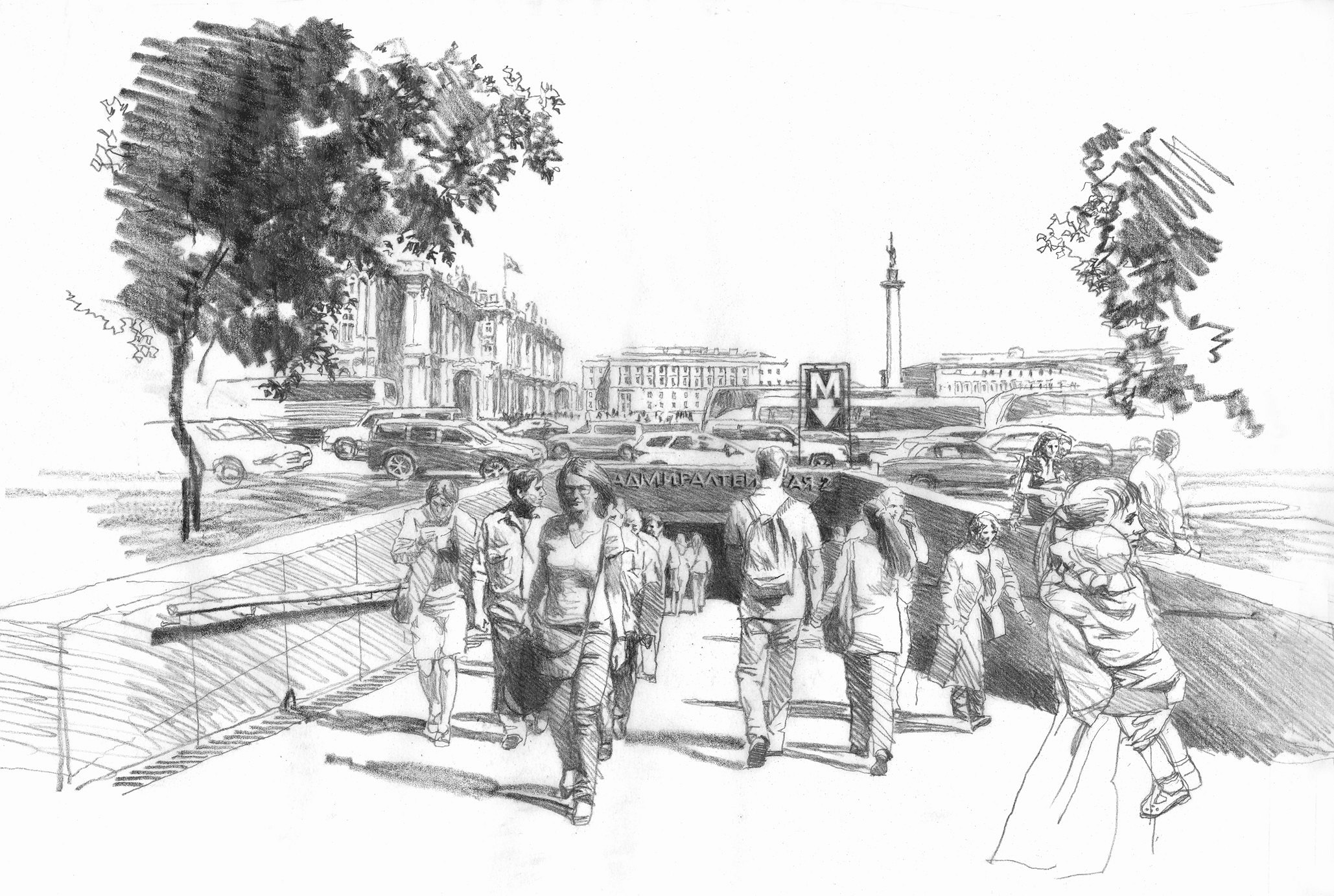
This September, Saint Petersburg has seen the final of the open contest for the best development concept of the historical downtown area. The list of the contestants included, among others, “Studio 44” architectural office, whose project got an honorable mention for its stylishness and feasibility.
Written by: Anna Martovitskaya Translated by: Anton Mizonov
Project Team:
Authors of the project: N. Yavein, O. Yavein, M. Vinogradova, I. Grigoryev, I. Kozhin, V. Lemekhov, L. Likhacheva, A. Patrikeev, G. Snezhkin, M. Yavein
Historical consultants: B. Kirikov, director of Saint Petersburg branch of Research Institute of Theory of Architecture and Town-planning of Russian Academy of Architecture and Construction Sciences A. Kobak, executive director of D.C. Likhachev Foundation, A. Margolis, co-chairman of Saint Petersburg branch of All-Russian Society for the Protection of Monuments and Culture.
Transport development strategy: M. Petrovich, General Director of “House-planning Laboratory”
2012
Contest organizer: Government of Saint Petersburg represented by Committee for Economic Development, Industrial Policy and Trade.
First of all, the architects
did what might be called “taking inventory” of the vast historical and cultural
legacy of the area – it was important for them to sort out which “growing points”
were already underway for the city, which worked half their potential, and
which were lying idle. The basic inference drawn by “Studio 44” can be put in this nutshell:
“Konyushennaya” and “Severnaya Kolomna – Novaya Gollandiya (“New Holland”)” are
the areas that concentrate all the best that the northern capital has to offer.
It is the crossing spot of several Saint Petersburgs, completely different. These
are the interfaith city, the imperial capital, the center of revolutionary
struggle, a city of theaters and concert halls, and, of course, the city of
bridges and unique granite embankments. In other words, this part of the city offers
an abundance of “cultural anchors” that are worth not only the tourists’
attention but also investments of various magnitude. The difficulty is that today
all these beauty sights have neither comfortable pedestrian access nor any
well-thought system of sign-posts. “Even in the center of Saint Petersburg, the
civilized environment comes in random fragments – Nikita Yavein explains – On
the one hand, the city implements ambitious projects, on the other hand, all
the work is conducted solely on the façade side. The underside of the blocks still
presents a striking contrast to their prestigious “credentials”. According to
the architect, what the city really lacks is, as he puts it, the depth of the
service, and it is this depth of service that “Studio 44” project is about in the
first place.
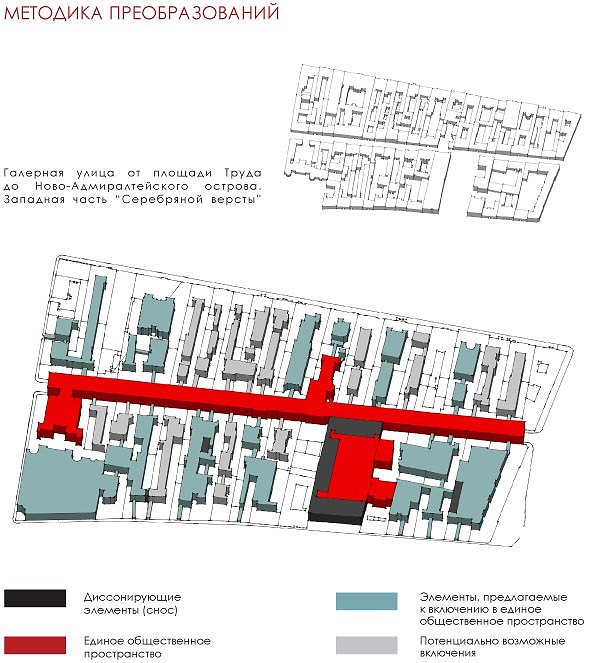
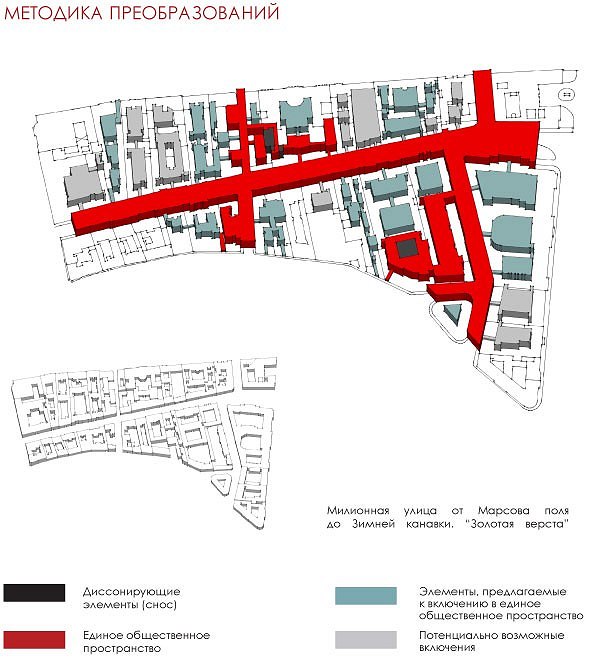
The system of public spaces that is now under construction should be based, according
to “Studio 44”
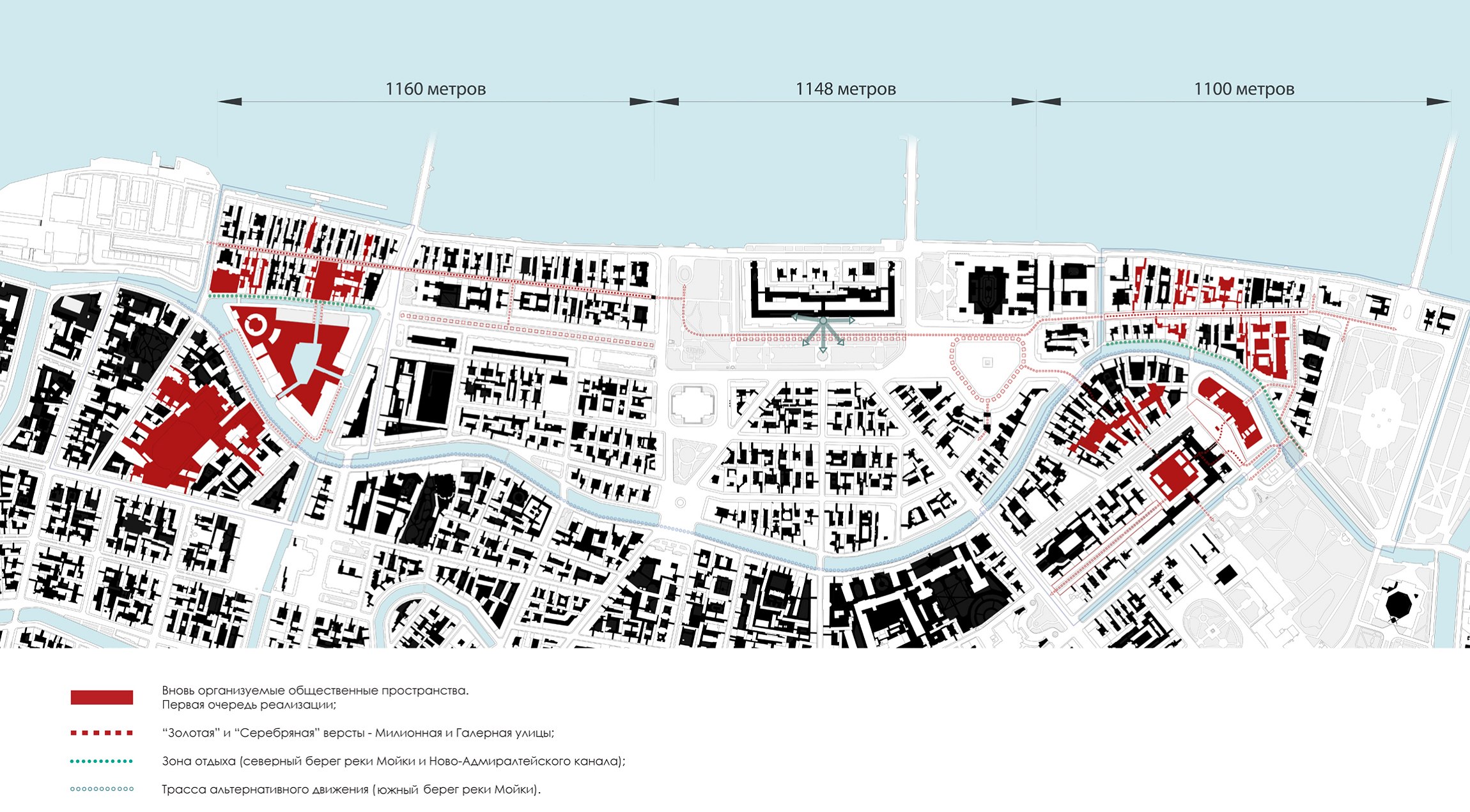
on the main pedestrian artery – the axis lane of Millionnaya and Galernaya
Streets that traverses the downtown area from Fontanka Street to the Gulf
of Finland water area. Its length is approximately two miles, which
“Studio 44”
conditionally called “Golden” and “Silver” ones. Along this axis, pedestrian
flow is organized, which will be rendered continuous by means of three new
pedestrian crossings (underground or stoplight-equipped) – across Nevsky
Prospect near the PalaceBridge, on the Senate Square, and
on the Labor Square.
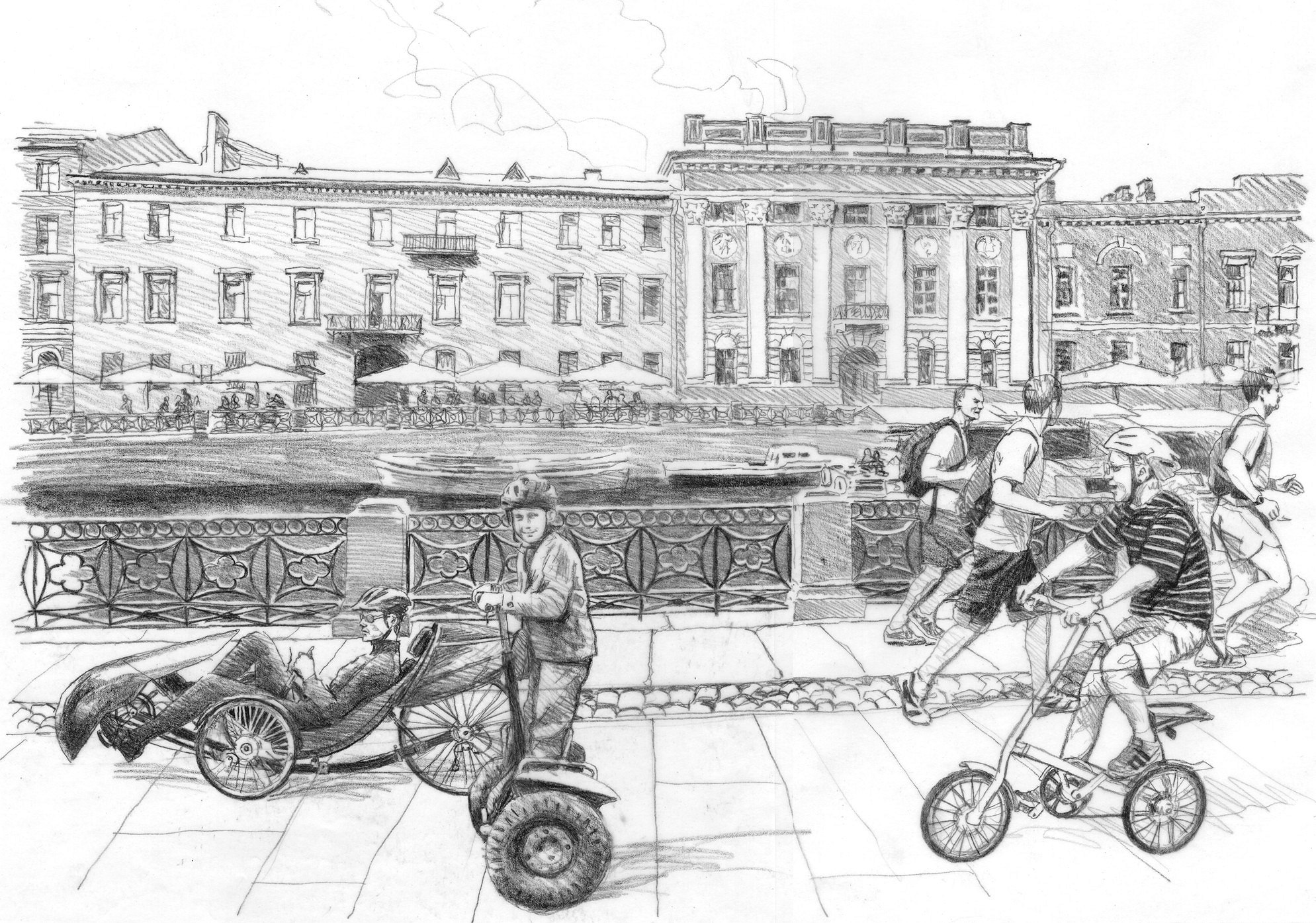
The pedestrian flows running along the Golden and the Silver Mile is going to
be doubled by the water transportation on the NevaRiver
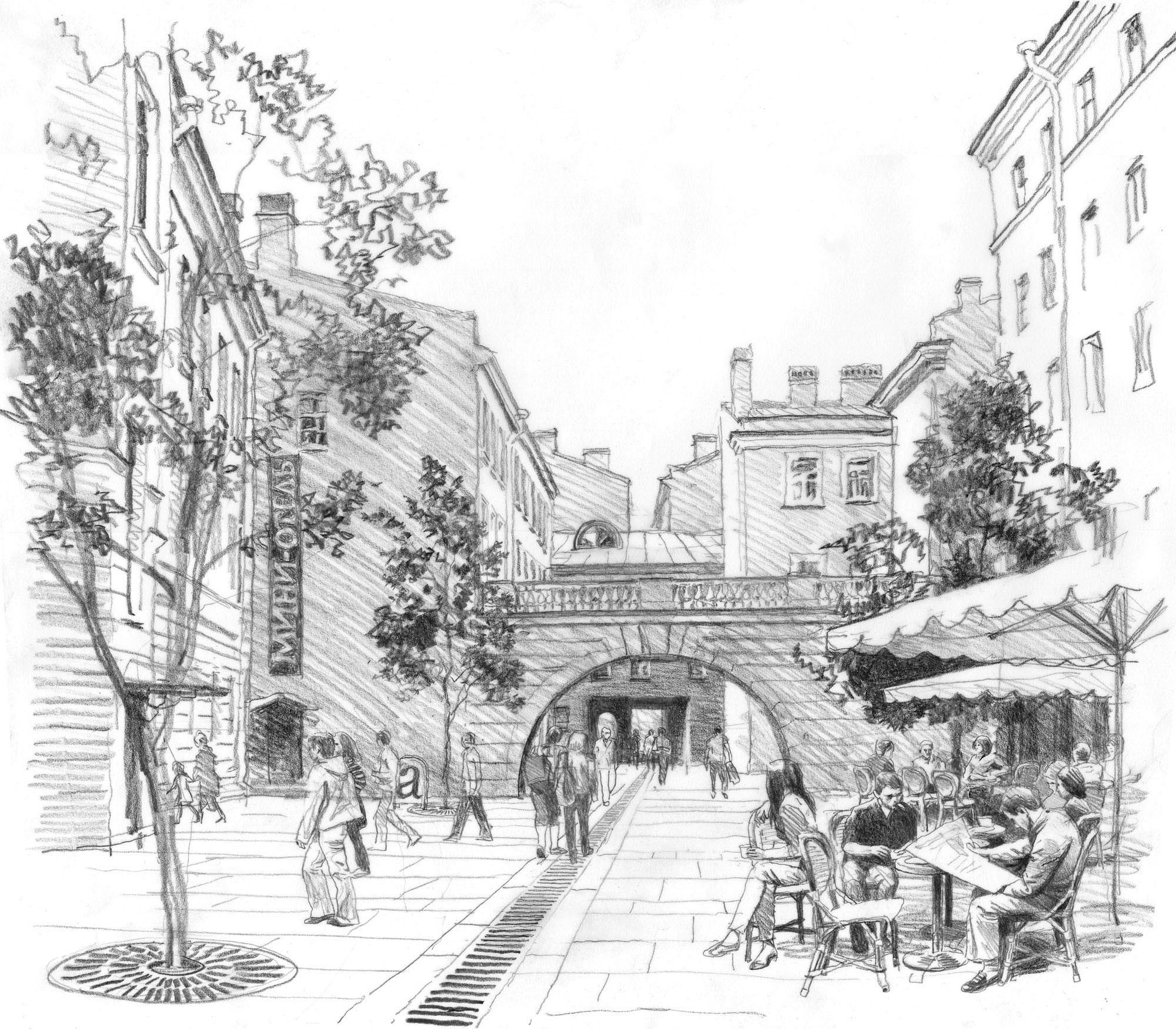
and by the bicycle and EV lanes. The idea of “Studio 44” is pretty simple: the city completely
finances this stage of the project and its implementation will trigger other
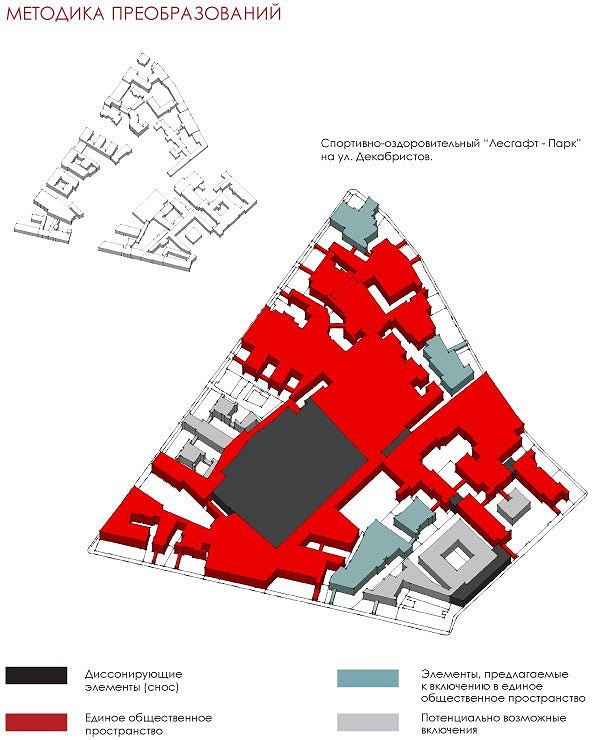
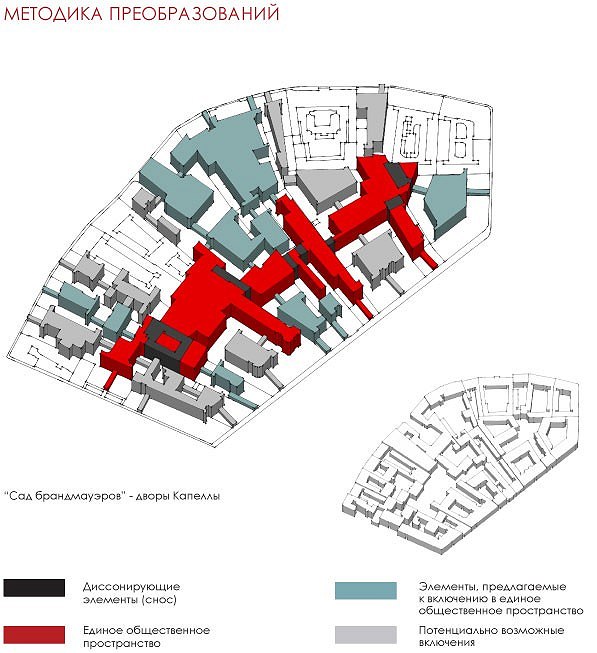
investments: from the main artery, new branches of new public spaces and
streets will spring out that will in turn “flow” into the other blocks and thus
will form a “capillary” system of “chamber” landscaped territories. The project
also contains specific examples of private and federal fund-raising initiatives.
For one, the architects are proposing to open to the general public the already
mentioned Block 100 (with gradual forming of Old Saint Petersburg Museum), in
the Guards Corps Building the architects are proposing to make the Guards
Museum, as well as to organize guided tours in the Abamelek-Lazarev Mansion
(presently it is occupied by the Physical Culture and Sports Committee). The
network of the new culture centers must be supported by the new infrastructure
objects – art galleries, cafes, and stores that the architects are proposing to
place on the ground floors of the buildings.
The final stage of the project provides for even deeper saturation of the city
tissue – it was not by chance that the architects called these changes “protuberances”.
As possible examples, Nikita Yavein names the Museum
of Chocolate at Samoilova Confectionary
or launching a restaurant and a viewing platform on the AdmiraltyTower.
At the same time the architects are not saying that they are suggesting driving
Russian Navy Headquarters out of the Admiralty building tomorrow – rather, they
are looking to start a wide public discussion about the possibility of
multipurpose use of the objects of Saint
Petersburg historical center. Because it is this capability
of performing several different functions that will become the basis of successful
revival of Saint Petersburg
downtown area under the new economic conditions.
Project Team:
Authors of the project: N. Yavein, O. Yavein, M. Vinogradova, I. Grigoryev, I. Kozhin, V. Lemekhov, L. Likhacheva, A. Patrikeev, G. Snezhkin, M. Yavein
Historical consultants: B. Kirikov, director of Saint Petersburg branch of Research Institute of Theory of Architecture and Town-planning of Russian Academy of Architecture and Construction Sciences A. Kobak, executive director of D.C. Likhachev Foundation, A. Margolis, co-chairman of Saint Petersburg branch of All-Russian Society for the Protection of Monuments and Culture.
Transport development strategy: M. Petrovich, General Director of “House-planning Laboratory”
2012
Contest organizer: Government of Saint Petersburg represented by Committee for Economic Development, Industrial Policy and Trade.
About Uzbekistan With Love
The restoration of the National Pavilion of Uzbekistan at VDNKh, completed in 2025, was at times like a detective story and at times like a drama. Many architectural details seemed to have been irretrievably lost, the 25-meter-high rotunda was on the verge of collapse, and the nuances of the decoration had to be reconstructed from split-second frames of a color documentary film. But the MV-PROEKT architectural bureau managed to untangle this web of problems and literally reassemble one of the most graceful buildings at VDNKh.
Gears in Motion
The children’s technopark in Novy Urengoy includes 11 laboratories dedicated to space exploration, robotics, biotechnology, and other cutting-edge fields. Following the function, PI ARENA chose a form that draws heavily on the traditions of Modernism: the architectural design evokes Suprematist compositions, an interpretation of Ivan Zholtovsky’s “Hexagon”, and the modularity of Metabolism.
The Telegraph’s Second Life (photographed September 24, 2026)
In the final version of the project to adapt the Telegraph building for use as a university – which began with a concept by Chipperfield – Sergey Kiselev and Partners served as the design developers and general designers at the working documentation stage. Remarkably, the project by the global “starchitect” turned out to be surprisingly similar to a concept proposed by SKiP itself back in 1997-1999. In this article, Igor Shvartsman and Tatyana Gruzdeva discuss the two projects developed for the Telegraphbuilding – the earlier proposal and the one now implemented.
Lighthouse on the Cliff
One of the neighborhoods in Desnarechye, a large-scale district under construction in New Moscow, is being designed by the architectural company Krupny Plan (KPLN). The site has its advantages and challenges: on the one hand, the river is close by and the landscape is expressive; on the other, there is a highway and a change in elevation. The architects decided to emphasize the site’s existing “texture”: they placed a lighthouse-like tower as a landmark on the natural high ground, made the podium a continuation of the cliff, and reflected the proximity of the river in the architecture of the sectional buildings.
Geology-Scale Architecture
A “geological,” nature-inspired form for large-scale complexes is one of the important themes of our time; it suits large volumes much better than pilasters and cornices. The project with the geographical name Latitude 54, proposed by Rais Baishev and the architects of Ostozhenka, likewise “grows” into the ground through a preserved ravine, while upward it rises in slabs of buildings resembling chalk mountains, with courtyards and terraces carved into their mass like caves. Its distinctive feature is the abundance of shared spaces open to both city residents and local inhabitants, along with an emphasis on high-quality construction. Large expanses of glazing, and even centralized air conditioning. Let us examine the project in context.
Full-Cycle Art
A school requires order, regulations, and discipline, while creativity calls for freedom, experimentation, and improvisation. In the building of the Siberian Higher School of Musical and Theatrical Arts in Kemerovo, MV-PROEKT made an attempt to reconcile these contradictions: to contain a complex and ever-changing creative life within a strict, rationally organized architectural form.
The Romance of a Saint Petersburg Courtyard
Studio 44’s approach to the redevelopment of the Liviz winery site appears to be an important precedent for Saint Petersburg: the architects are adapting not only designated heritage buildings but also other more-than-a-century old structures, revealing their distinctive character and giving them new public or residential uses. New architecture is interwoven with the old, creating a range of clearly defined or deliberately complex urban spaces. Blocks of different typologies are complemented by a pedestrian promenade that makes the environment much more permeable and lively. And all of this is framed by a sense of romance and nostalgia for the historic city.
The Voice of the Amur
MV-PROJECT has won a competition for the façades of the Khabarovsk Regional Academic Musical Theater. The architects took a bold approach, proposing a striking wave-like envelope inspired by the waters of the Amur, along with landscaped rooftop terraces. The concept won an absolute majority of the public vote. We take a closer look at the proposal, its feasibility, and its rich imagery, which invites associations with the work of Ivan Aivazovsky and Katsushika Hokusai.
A Theater for Figure Skaters, or Cherchez La Femme
Ice arenas are typologically close to industrial buildings: enormous windowless halls with minimal architectural embellishment. In designing Navka Arena, Yuliy Borisov and the UNK architects did not try to fight the utilitarian nature of the structure. Instead, they concentrated all of its expressive elements in one place – the central façade. A parabolic canopy, a monumental sculpture of a figure skater, and her shadow rendered in perforated metal transform an ordinary sports “box” into an architectural statement about ice, movement, and theater.
The Soft Forms of a New Enlightenment
The school that will rise amid the new high-rise neighborhoods of Set and Veer can fairly be called a landmark of the future district. The educational environment was designed by IMAGO, a firm specializing in learning spaces, while the façade concept was selected through a competition. The winner, GAFA, proposed a regular grid of three-dimensional modules that creates an intriguing effect of “soft” architecture. The imagery of this solution appeals to children of different ages and suits the stature of the educational complex, which will be handed over to the highly rated School No. 1329 upon completion.
Projection of a Spiral, Projection of a Wave
Architects from Mezonsproekt have designed a high-rise residential complex of four towers near the intersection of Novaya Riga Highway and the Moskva River. Its landmark status is motivated both by the proximity of Rublyovo-Arkhangelskoye and its SberCity development, and by the theme of two intersecting flows: water and traffic. The architects have organized the façade pattern around the supergraphic image of a pixelated spiral, intended to animate – and perhaps even transform – the perception of the buildings’ prismatic volumes.
The Ever-Changing Mist
T+T Architects has developed a concept for a premium business center featuring “living” façades that change their configuration depending on weather conditions, time of day, and the occupants’ needs, transforming the building into an urban-scale installation. The idea of endless variability continues inside, with interiors designed to accommodate different scenarios of use. Some of the engineering solutions proposed for the project are being introduced to the Russian commercial real estate market for the first time.
A Small Book of Farewell
The book dedicated to Valery Kanyashin, published by his colleagues at Ostozhenka Architects, is remarkably small. It fits comfortably in the palm of your hand, more like sketchbook than an actual architectural monograph. Combined with its tiny print run, the result is an intentionally unglamorous, decidedly non-representational publication – one that is made “for friends”. Yet the way it weaves together projects, texts, photographs, and drawings is remarkably subtle. Perhaps this is precisely how one comes to understand a person, at least a little, by tracing the course of their creative life.
Win-Win
For Perm, the opening of the new home for its Art Gallery – guardian of the famous collection of Perm wooden sculpture – marks the end of a 35-year search for a building worthy of a collection that had long outgrown the city cathedral that had served as its only home. Sergey Tchoban considers the project one of the most important of his career in Russia and emphasizes that it deliberately avoids “iconic” architecture in favor of contextual appropriateness. We traveled to Perm to explore both the building and its extensive new exhibition, and found that, much like Tchoban’s other museum projects, it is conceived in a distinctly contemporary way: the old and the new do not merely coexist but reinforce one another through contrast, sharpening the visitor’s perception of the museum.
A Score for 12th Line
“Amo”, a residential complex designed by Stepan Liphart on Vasilyevsky Island, brings together three architectural ideas: the cour d’honneur, a piazzetta-like courtyard, and imagery borrowed from Renaissance architecture. Together, these elements make a contemporary apartment complex feel more humane, extending the theme of individuality in residential design. The effect is achieved through a carefully calibrated vocabulary of moderately standardized components: recessed façade panels enriched with sgraffito ornament, a disciplined hierarchy of cornices and moldings, and a series of bespoke decorative details. The development combines residential and hotel sections that frame the restored wooden mansion of the Brömme brothers.
Riverfront Façade
The Premium residential complex, designed by KPLN, has been built in the town of Pushkino, just outside Moscow, on the banks of the Serebryanka River. Its two towers reinforce the scale of the high-rise development that emerged here in the 2000s, while introducing a bolder architectural form that reads more effectively from a distance, along with a system of contrasts and design strategies responding to the site’s waterfront setting. One of the project’s distinctive features is a series of metal discs that conceal air-conditioning units while serving as an additional decorative layer.
A Construction Set for Adult Life
In the project by Atrium, the new building for Moscow’s School No. 2107, designed to accommodate 1,100 students, is above all a carefully organized system of learning and recreational spaces. On the one hand, it is complex and highly articulated; on the other, it remains intuitive, safe, and conducive to personal growth. In a sense, it serves as a model of life in the city – a place where one must communicate, make decisions, plan ahead, and find a balance between work and leisure. All of these scenarios are reflected, to varying degrees, in the building’s architecture.
Axis of Rotation
One of the installations in the Masters exhibition at Arch Moscow featured a futuristic yet entirely feasible project by Vladimir Plotkin and TPO Reserve – a tower that could be assembled from prefabricated factory-made modules. The concept even incorporates the possibility of slow rotation (!). Using the same module, one could create a residential block, a giant cantilevered “arrow”, or virtually any other configuration you could possibly think of. Let us take a closer look at the module itself.
A New Magazine and a New Ranking
The magazine Expert.Urban has only just appeared, apparently timed to coincide with Arch Moscow. It is published with the support of VEB.RF and Strelka KB. We have not yet had time to read it cover to cover, but the impression so far is that it consists of about eighty percent interviews. It also features a distinctly “Strelka-style” initiative: a ranking of the “Best Architect of Moscow in the 21st Century”. So, who came out on top? Sergey Skuratov. Yuri Grigoryan took second place, and Sergei Tchoban came third.
Oleg Shapiro: “We design life as a whole, in all of its diversity”
Wowhaus has long since outgrown its association with “urban improvement” projects alone. One of its newer directions is neo-industrialization. Another is large-scale master planning. Yet work on Gorky Park is once again underway – only now on a more systematic and far-reaching level. In this interview, we simultaneously revisit Rem Koolhaas, Strelka, and the history of attention to the “urban environment”, while also exploring what exactly Wowhaus is working on today and how the company operates – with its nine divisions and approximately 160 employees.
Red Card for Copyright
The development concept for the territory of Shinnik Stadium in Yaroslavl, prepared by PI ARENA, took second place in an open call competition. The architects proposed a unified structure combining a football arena, a hotel, and the headquarters of PSB Bank, with carefully considered usage scenarios. However, the competition was organized in such a way that the team ultimately chose to forgo the prize money in order to retain their copyright.
CinemaHologram
Not long ago, the Moscow authorities approved the project for a new House of Cinema complex by Kleinewelt Architekten. The original 1968 building could not be preserved – yet the architects managed to save its stained-glass panels, metal reliefs, and even the volumetric parameters of the structure, which will continue to house the Union of Cinematographers and cinema halls. The project’s main focal point, however, will be a residential tower. We examine its sculptural qualities and its allusions within the Moscow context.
Form as Method: TPO Reserve
At the core of the concept developed by Vladimir Plotkin and TPO Reserve lies an unconventional morphology that addresses functional challenges beyond purely formal concerns. Above all, however, it serves expressiveness and creates a rare kind of spatial and emotional experience, as becomes evident when examining the project’s key solutions. We studied it in detail, and it was all worth it. Our interpretation is that what drives this project is neither style nor even metaphor, but rather a method.
Mound of Memory
The competition proposal for a memorial complex on the Pulkovo Heights by Studio 44 will not be realized, yet it deserves attention as an intriguing example of how architecture can symbolize traumatic events and thereby contribute to their processing and integration into human experience. The architects also succeed in combining memorial and recreational functions without slipping either into excessive dramatization or oversimplification. The project develops ideas explored in two earlier competition entries that likewise remained unbuilt – the Museum of the Siege of Leningrad and the Tuchkov Buyan park. It also recalls the mound-like hill that Alexander Nikolsky embodied in the form of the now-lost stadium on Krestovsky Island.
Home Base
Working on the new building for Letovo Junior School – opened to students in autumn 2025 in the MSU Valley – the architects of UNK, following the client’s vision, subordinated both façades and interiors to the theme of “home”. Multiple variations of pitched roofs, a city skyline traced across glass balustrades, wooden textures, and a whole series of micro-spaces for retreat within public areas are all at the disposal of primary and middle school students. We take a closer look at the new school building – and at how it interprets current trends in educational environments.
Doubles Match
The architecture of the Tennis Palace built in Luzhniki Olympic Complex, designed by Arena Design Institute, was shaped by three factors: the proximity of the brutalist Druzhba Arena, the closeness of the Moskva River and the metro bridge overpass, as well as the specifics of the function – tennis courts require large spans, abundant light, yet at the same time protection from direct sunlight. The architects divided the building into several blocks, playing on contrast, which is further emphasized by the façades developed in collaboration with TPO Reserve and Vladimir Plotkin.
Microdynamics of Macroprocesses
Given the proximity of the multifunctional complex SOLOS to Sokolniki Park and to a major transport hub, Kleinewelt Architekten embedded in the design of the two high-rise towers a sense of dynamism more characteristic of natural phenomena than of man-made objects. Without the authors’ diagrams, this logic is not easy to decipher, although the eye immediately detects a pattern and tries to grasp it. It seems to us that one tower contains the impulse of a bud about to open, while the other evokes the movement of a lithospheric plate. Let us try to unravel it together.
The Space of Post-Cubism
Sergei Tchoban and Alexandra Sheiner, of Studio CHART, created for the exhibition of “post-cubist” sculpture by Beatrice Sandomirskaya – a talented and even “mainstream” artist, yet almost unknown even to art historians – a space akin to her sculptural language: solidly built, confidently stereometric, and subtly expressive. It curves, emphasizing the mass of the sculpture, envelops the viewer, and guides them from one perspective to another, from a generic “shrine” to a “Madonna”.
The Value of Open Space
For the site near the Barrikadnaya Metro Station, Sergey Skuratov developed five projects between 2020 and 2025. Two of them were ones that won the client’s invitation-only competitions. The fifth was recently selected by the Mayor of Moscow for implementation. The project is vivid and sculptural, expressive, eye-catching, and engaging – very much in line with the spirit of our time. And yet, this project is mid-rise rather than tall. In its northwestern part, near the metro and Druzhinnikovskaya Street, it shapes a comfortable urban environment. On the opposite side, it opens up, allowing sunlight into the courtyard and creating a spatial pause within the dense city fabric. How it is organized, what geometric principles underlie it, and why it takes this form – all this is explored in our article.
Coming From the Cold
The ArchBukhta Festival remains one of the few events in Russia where participants go through the entire process of creating an architectural object – from concept to construction. And they do so on the shores of Lake Baikal, in dedication to it. This year, GAFA took part and shared its experience: a local legend, a team-specific design code, friendship, as well as ice skating and endurance in freezing temperatures all contributed to gaining something more than just an award.