
По-русски

OSA: “We are excited to work with human habitat”

The Ekaterinburg-based firm “OSA” presents itself as a freethinking community of creative personalities with equal rights to self-realization.

19 September 2017
Interview
mainImg
We met one of its co-founders, Stanislav Belykh, and interviewed him about the ratio of the standardized and the individual in modern housing construction, the urge of architecture to submit humans, and the necessary skill to see things through the eyes of the end consumer of your product.

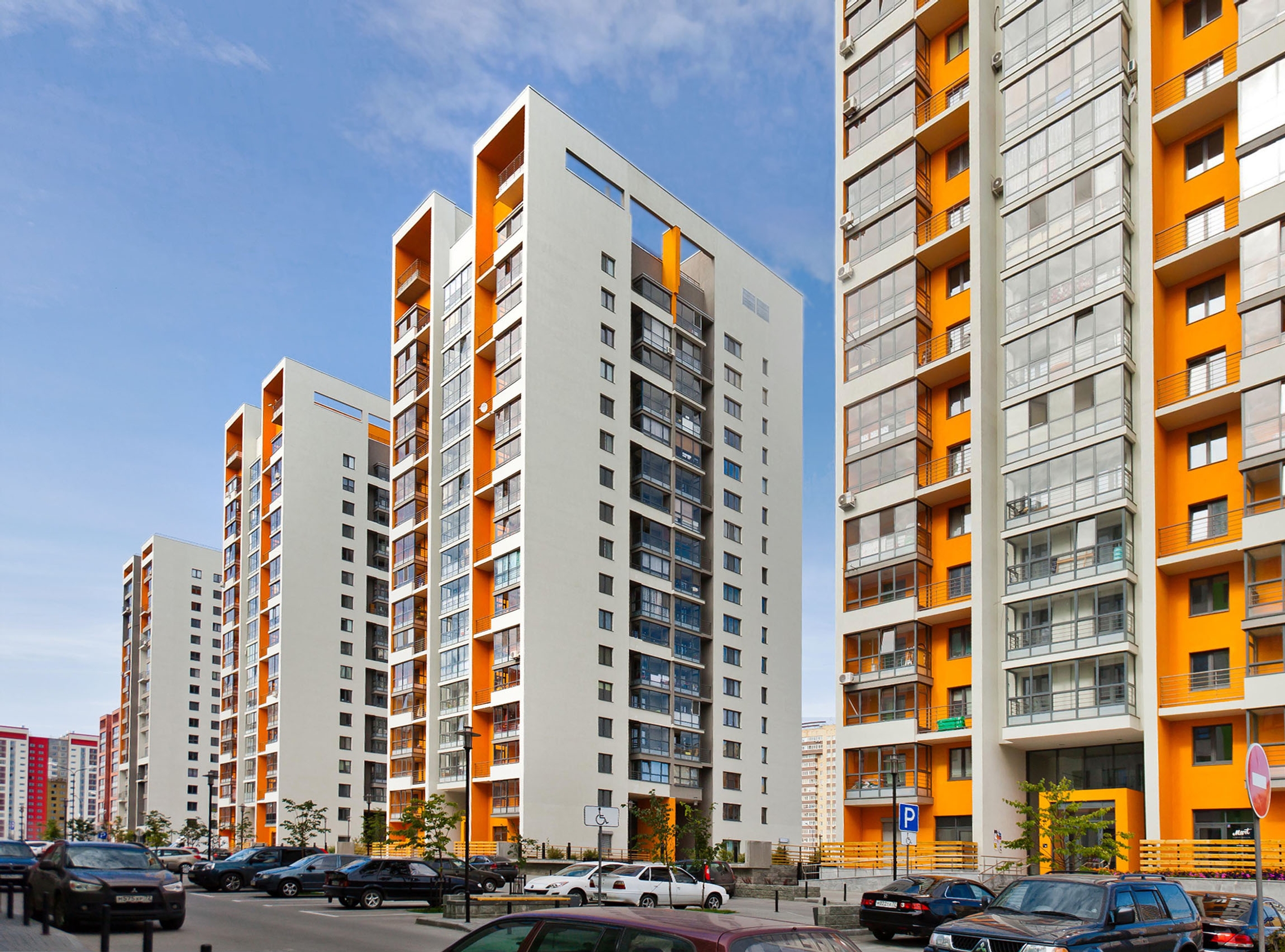
Buildings in the city of Tumen © OSA


Archi.ru:

– An inevitable question: why is your company called “OSA”? Is this connected in any way with the strong constructivist line in the architecture of Ekaterinburg?

Stanislav Belykh:

– I may surprise you but the name was the first thing that we came up with – we like it because it was so sharp, so resonant, and so stinging (“osa” is the Russian for “wasp”) – and it was only the next day that we remembered that back in the 1920’s there was the so-called “Obyedinenie Sovremennykh Arkhitektorov” (“Union of Modern Architects”) in this city. It was, of course, rather cheeky of us to just go ahead and borrow this acronym for our name, but our moral justification is that we wanted to follow in their footsteps and created the “Obyedinenie Samostoyatelnykh Arkhitektorov” (“Union of Independent Architects”), each of whom has the right to go their own way proving by his results that his way is the right way to go. Placing your bets on just one talent, even if it’s a great one, means subjecting the firm to a certain risk, and we wanted to create a strong and stable company. But, of course, all the members must share some common values – not stylistic, stylistic unity is not a rule – but at least some shape-making fundamentals.
zooming


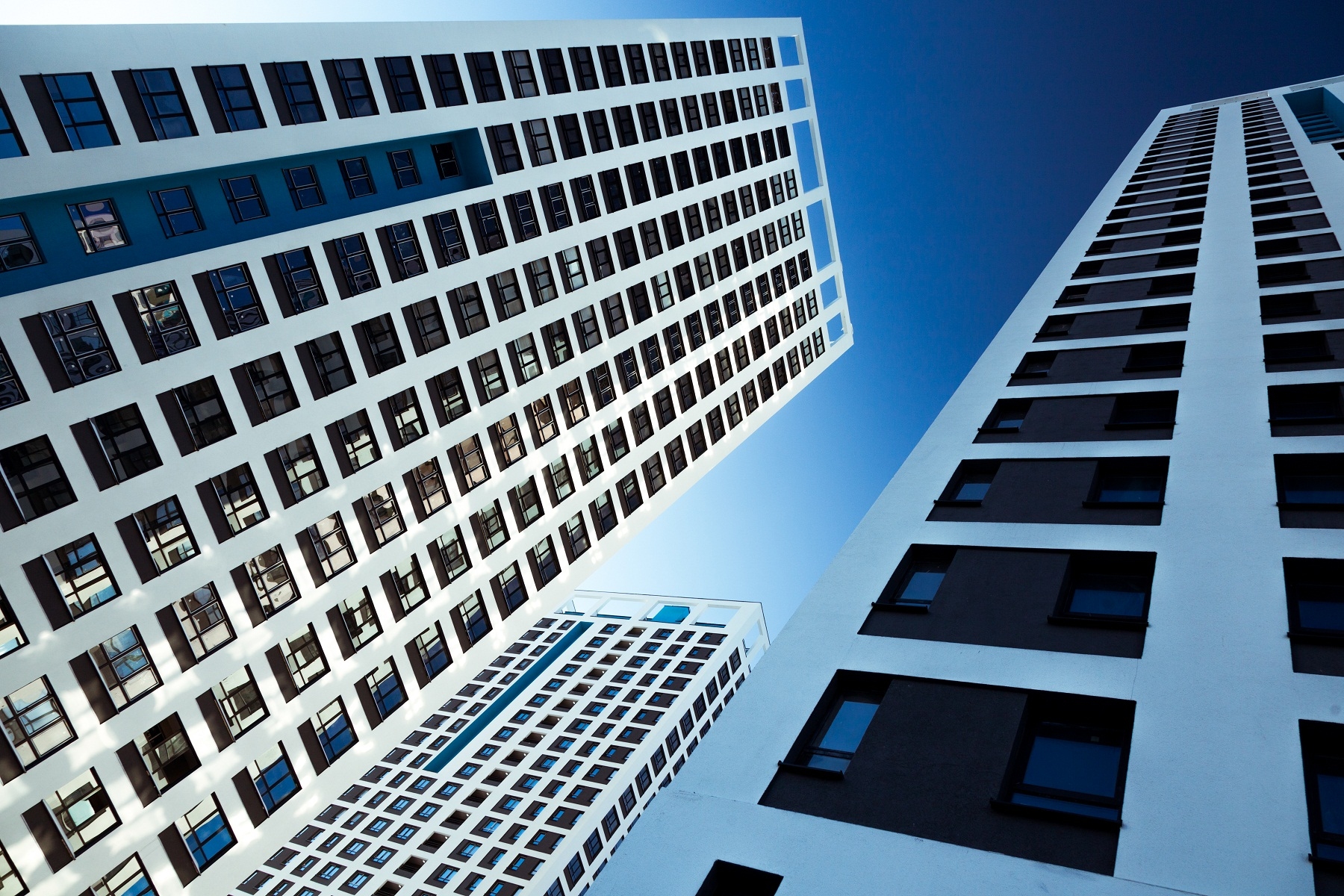
Inside perspective © photograph by Maxim Loskutov


– And what does the structure of your bureau look like in this case? Is there any kind of inside hierarchy?

– Today we have 30 members in our company. The steady core consists of 5 partners. But it is already clear that about 5 or 6 employees are capable of going upwards once they accumulate the necessary knowledge and show their competence and skills. We don’t have a goal of creating and maintaining a caste of two, five or six chosen ones – it’s not about the numbers, it’s about the quality. You need a certain amount of time to go by for the person to “grow” into his profession and start using the design algorithms on the subconscious level – then he will become a part of the orchestra.

We started with designing small entrance groups, and now we design huge residential areas and large-scale housing projects virtually all over Russia. We deliberately try to stay away from going into some narrow specialization, and when we interview new people for the job we specifically stress that an architect must be a jack of all trades – only in this case he will be able to appreciate all the complexity and diversity of human life that he has to organize. At first this task seemed to us totally insurmountable but, at the example of the guys who came to work with our firm (we call them associate partners) we found that this task is quite achievable. After about five years of such active practice the architects can achieve the necessary level of versatility and successfully react to any challenges.

– Still, how close to you are the ideas of constructivism and functionalism? Do you see yourself as successors to a tradition?

– Only partially. You cannot call us “neo-constructivists” – we try to understand and feel different styles of architecture. What we try to borrow from our predecessors is the sense of purpose in our decision making and constant search for something new. When you work on something for a really long time you inevitably get tired and accumulate negative emotions, and it’s really important to keep up the positive attitude, not to lose this expectation of something new and beautiful with which we come into architecture when we’re young. The constructivists, by the way, were populists in the good sense of this word: they felt the social commission and they responded to it. In those maximalist years it was an easy thing to do. Today, when our society shows both the desire for law and order and at the same time appetite for destruction, search for something new and attention to tradition, this task is much more complex and much more interesting. We always try to intuitively find the style that our client needs. And, saying “client”, I don’t necessarily mean “developer” but the end buyer of the apartment or the end renter of the office. In many ways, we have to be actors – we have to imagine ourselves as a grandmother, a child, an elderly man, a young man who has just bought his first car, or a young family that has to pay off the mortgage. When you run all this through yourself, you start creating the environment seeing the world through the eyes of different social roles, and your chances for success are skyrocketing.

We do have conditionally “constructivist” projects, like “Malevich” housing complex where we took the modular idea to the level of aesthetic principle, totally stripping the architecture of any frills. This is a pretty scary thing to do for an architect. And there is also this apartment-hotel at Gorkogo, 79, and this housing project at Pervomaiskaya, 60, in our home city of Ekaterinburg, in which we resorted to quite a different pristine style and tried to feel how powerfully architecture can influence humans on every level. This is not, of course, the Stalin Empire style with its proverbial turrets but still a kind of architecture that makes humans unconditionally surrender to it. Today this style is not popular at all but it has some sort of historical integrity to it. Architecture possessed first power for thousands of years and it still didn’t lose it. Yes the ideas of constructivism and the social approach are more in trend today but we still wanted to remember that feeling and feel this limits of such influence. This is like an alternating shower if you like.

"Malevich" housing complex. OSA. Photograph © Maxim Loskutov


"Malevich" housing complex © OSA


Pervomaiskaya, 1 © OSA


Business-class apart-hotel "Everest" © OSA


– OK, and how important it is for you that identity of the city? To what extent are you a Ekaterinburg firm? 

– Of course, studying in a city with a rich cultural later and a strong school of the 1980’s helped us a lot. But today a significant part of our work is about analytics, accumulating information and analyzing the international expertise, and I do not want to say that we have “outgrown” this city, because this would be an ungrateful thing to say. It’s just that our interests have become broader; it’s interesting for us to have a taste of different cities, in Russia and abroad. We are already actively working in Tumen, there are projects for Novosibirsk, Sredneuralsk, Vologda, Perm, Moscow’s Odintsovo, but we are still hungry for more. Yes, this is a slightly consumerist approach: we love eating and we love the taste of new dishes.

– What can you generally say about the town planning situation in Ekaterinburg?

– The situation is difficult, as it’s difficult all over Russia. As sad as it may sound but we – and I am deliberately using “we” – so far cannot offer our society and our cities town planning, compositional and aesthetic solutions that we might be proud of. And as paradoxic as it may sound, this degradation was triggered by the ultimate freedom that the architects got. We as architects were told “go ahead and do as you please” and it turned out that we really had little to say.

– To what extent will the program of organizing the territories developed by “Strelka” together with Housing Mortgage Finance Agency for 40 Russian cities (in which, by the way, you are taking part) help to improve the situation?

– It surely can make a positive difference, in spite of the fact that Strelka’s very ideology – as rude as this may sound – is ultimately slightly offensive to Russia: it turns out that a huge 150-million country cannot create megalopolises that are capable of so much as developing and landscaping their own land. And it turns out that the 25 years of freedom failed to form people who are ready to make decisions and take responsibility for them. We all sit around and wait hoping that some Strelka will come along or some foreign experts will teach us what to do with our cities.

To do Strelka justice, I must say that it really makes an effort to get as much feedback as possible from the local people, let them have their say. For example, our project of the waterfront of the Iset River underwent significant changes based upon public discussion. Never mind the fact that all these comments and suggestions often sound unprofessional, are hard to implement and are contrary to the good of the majority. The important mechanism – that is a habitual thing in Europe and the rest of the world – is still having a hard time getting implemented here but it’s great that they’ve started listening to people, and, possibly, at the next stages they will be more active, and they will get across their ideas more effectively.
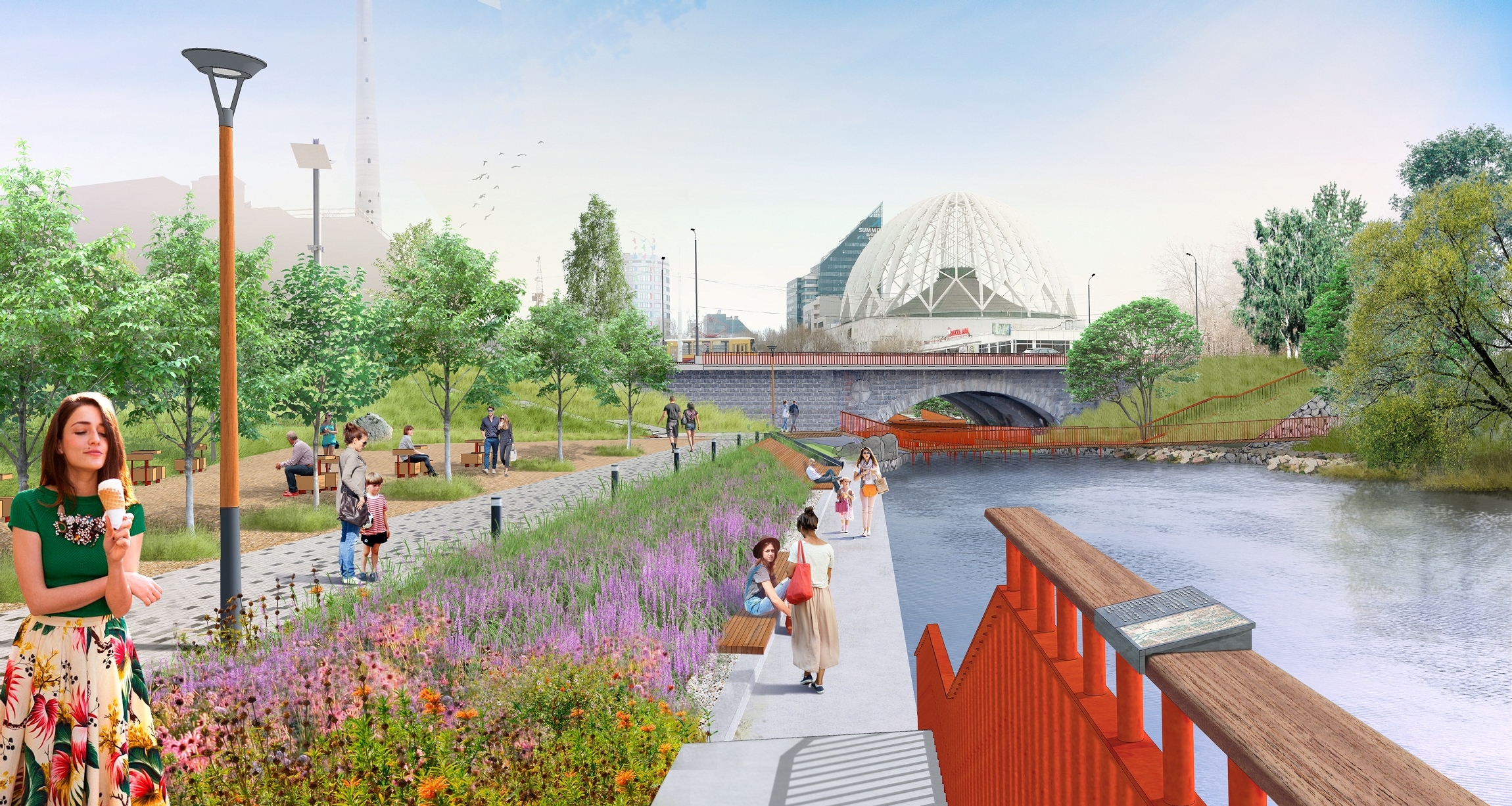
Project of organizing the waterfront of the Iset River from the Malysheva Street to Kuybysheva Street © Strelka+OSA
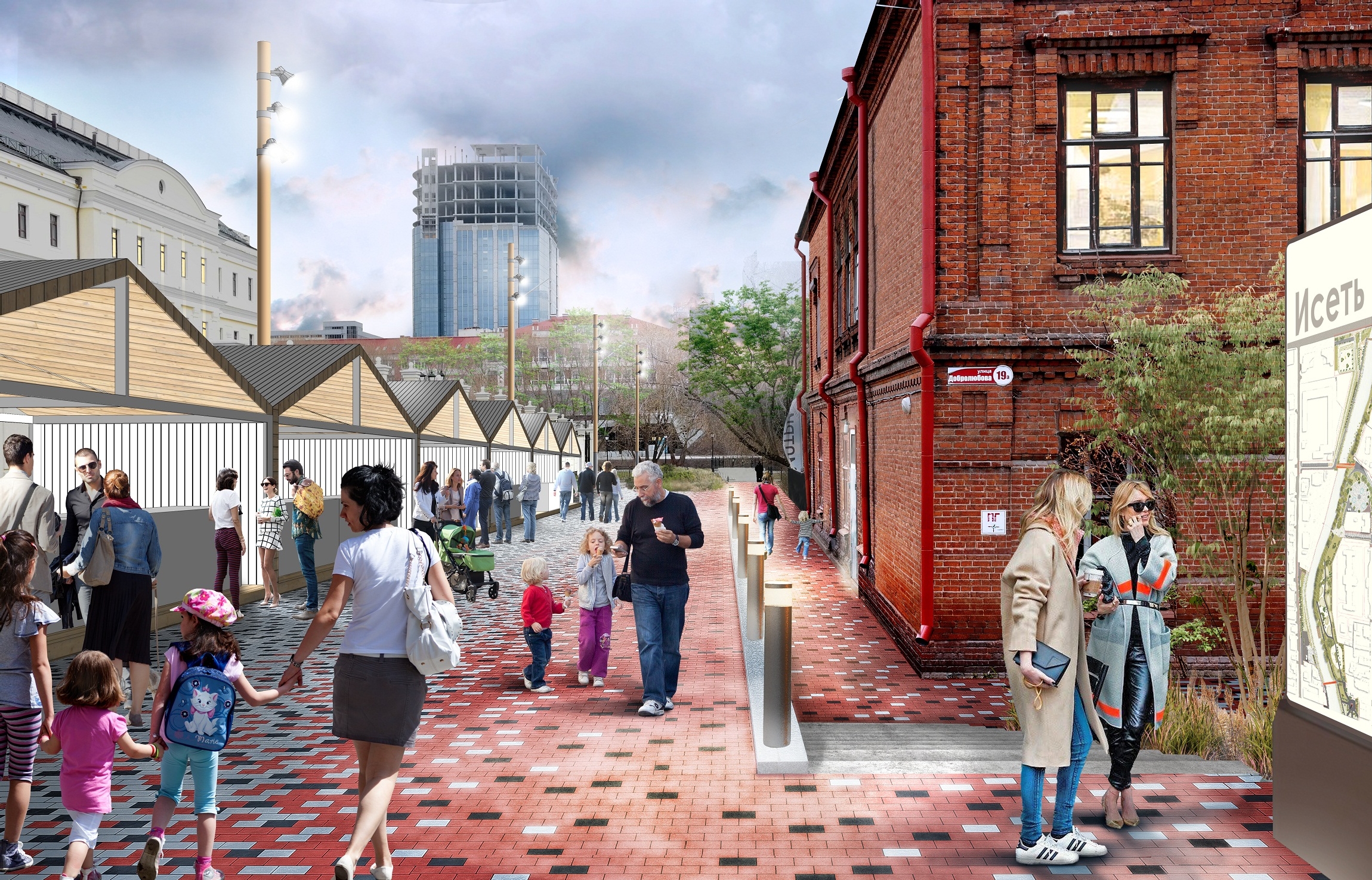

Project of organizing the waterfront of the Iset River from the Malysheva Street to Kuybysheva Street © Strelka+OSA


Project of organizing the waterfront of the Iset River from the Malysheva Street to Kuybysheva Street © Strelka+OSA


– The solutions that Strelka comes up with are basically the same for any geographical location. Is there a danger that the cities, and specifically Ekaterinburg, will lose its identity, even in spite of the fact that numerous local firms take part in developing the projects?

– I do not see any danger in implementing what you might call “Strelka aesthetics”, this is just the trend of the times. This project of organizingg waterfronts that we are taking part in, as a matter of fact, was discussed as early back as in the 1970’s. Already at that time there was a desire to build the city’s main green artery from the Verkhneisetsky to the Nizhneisetsky creeks. In the soviet time they tried to solve this problem by applying town-planning fundamentals, i.e. building classic embankments and surrounding houses, which was to take a long time and was expensive. And now it turned out that at the first stage it is enough to simply bring people here and provide them with comfortable recreation at the riverside – and this doesn’t incur any huge expenses. As for the prospect of losing the city’s identity, I don't think this is something to be afraid of because the local character is sure to show through anyway. Curiously, in the soviet time even the images of Lenin were slightly different from one republic to another under the influence of the local traditions, and Strelka’s projects will not lose the local character either, even in spite of the fact that all the architects will work along the same aesthetic lines. 

– Your desire to try your hand at different projects is quite understandable but still what typology is interesting to you most of all? 

– Most of all we like working with housing projects – not even with housing projects as such but with the human habitat, if you like. And if this doesn’t necessarily have to be architecture but any abstract meditation on where and how we as humans feel comfortable... At the end of the day it all comes down to the material implementation anyway but the philosophical rationale is still very important for us.

And today this theme has stepped into the foreground. For example we are really interested in the problem of standardization of housing – including the corporate type. Large developers are trying to understand how to structure their product better, how to make it more typological and ultimately more affordable. And from our side we have an opportunity to sit down with ourselves and just think – people of today, people that buy the housing – what are they like? How do we reconcile the requirements of tomorrow with the necessary standardization? By the way, this subject always comes up during the major cultural turnarounds. Slowly, step-by-step we are trying to convince the developers that we work with in the necessity of applying the city-block approach and in the necessity of developing a line of what we could call “housing cells”. The housing market is extremely conservative in Russia.

– And how exactly are you going to reconcile the standardization process and a very clear demand of the modern people for individuality?

– As a matter of fact there is no contradiction here. Talking to our clients we came to a slightly and expected conclusion: by “individuality” creative people mean the freedom of self-expression, but for most people, come right down to it, this word means “security” or minimum influence of the world outside of their lives. If you feel secure if your needs are met, you feel strong and you perceive yourself as an individual. This is what matters.


19 September 2017

Headlines now
Office on Trubnaya
We continue publishing projects by Valery Kanyashin. A building once described, a quarter century ago, as an example of “quiet modernism” has remained just that in some people’s memory. According to Anatoly Belov, its main quality is its unobtrusiveness. The architects from Ostozhenka say the leading role here is played by context and landscape – the change in elevation. Yet is it really so inconspicuous?
The First International
With this publication, we begin a series of texts dedicated to works by the late Valery Kanyashin, one of the founders of Ostozhenka Architects. As it happens, the projects he was involved in largely illustrate our understanding of the firm and its history. The first project in this series is the International Moscow Bank on Prechistenskaya Embankment.
In Memory of Valery Kanyashin
On Friday, February 27, architect Valery Kanyashin passed away – co-founder of Ostozhenka Architects and the author of many significant buildings in Moscow. We publish a text by Anatoly Belov in memory of Valery Kanyashin.
Hypertext in Space
As part of the exhibition “What We Have We (Do Not) Keep”, Sergey Tchoban, the Museum of Architecture, and the CHART studio experiment with an eco-conscious approach to exhibition design, with thematic cross-references and even with publicistic reflections on the necessity of preserving modernism, the roots of contemporary architecture, and the birth of ideas. All of this makes the exhibition, with its light and transparent design, look quite innovative. The elements – both “material” and conceptual – are familiar, yet their combination is far from conventional.
The Outline of “Foundation”
In their competition proposal for the Fili transport hub, the consortium led by Alexey Ilyin proposed an “inhabited arch” – a form that is simple yet complex. The architects emphasize that even at the competition stage, the project’s feasibility was fully calculated, taking into account the minimal nighttime closures of Bagration Avenue. How was this achieved? With what functions? Let us take a closer look. In our view, the building would have suited the heroes of Isaac Asimov’s Foundation novels perfectly.
The Flying Horizontal
“A house in the spirit of Wright”, as architect Roman Leonidov describes it, pointing to his source of inspiration, was built on a challenging wedge-shaped site. To achieve a sense of intimacy and secure good views from the windows, the entire volume had to be shifted toward the far boundary, turning the house “back” to the neighboring mansions. The main façade demonstrates time-tested techniques often employed by the company: articulated horizontals, a weightless roofline, and a triad of materials – light plaster, dark slate, and warm wood.
Needles of Horizon Contemplation
The “House of Horizons”, designed by Kleinewelt Architekten in Krylatskoye, is carefully thought out at the stereometric level – from the logic of how the volumes interlock (and, conversely, how gaps are articulated between them) to the triangular balconies that give the building its striking, slightly bristling silhouette.
The Red Thread
A linear park project prepared by Alexey Ilyin studio for the improvement of a riverbank in one of the residential districts seeks to reconnect people with nature. Two levels of the embankment invite visitors to contemplate the landscape while at the same time protecting the riverbank from excessive human impact. The “aerial street” links functional zones and the opposite banks, creating new points of attraction along the way: balconies, bridges, and even a “grotto”.
Spindle and Thread
The concept of the Waver residential complex in Yekaterinburg draws inspiration from the past of the Parkovy district. In order to preserve the memory of the late-19th-century flax spinning mill once located here, the architectural company KPLN turns to the theme of textiles and weaving. The project’s main expressive device is a system of ribbons made of perforated weathering steel – a material that, in such volumes, has arguably not yet been used in Russian residential projects.
Woven Into Sokolniki
Over the past few years, high-rise residential construction in former industrial zones has become the main theme of Moscow architecture. Towers are springing up here and there – but the question is what kind of towers they are. The residential complex CODE Sokolniki, designed by Ostozhenka Architects, is a project where every detail has been taken care of. The authors are attentive to the history of the site, the continuity of the urban fabric, the skyline, and visual corridors. They also proposed a motif with the lyrical name “scarf”. We take a closer look at the volumetric composition and the large-scale décor “woven”, in this case, out of terraces and balconies.
Stepan Liphart and Yuri Gerth: “Our Program Is Aesthetic”
The studio of Stepan Liphart, an architect known for his distinctive signature style and one-off projects, now has a partner. Yuri Khitrov, a specialist with a broad range of competencies, will take on the part of the work that distracts one from creativity but drives the business forward. One of the aims of this partnership is to improve the urban environment through dialogue with clients and officials. We spoke with both sides about their ambitions, the firm’s development strategy, shared values, and the need for pragmatism. And why the studio is called “Liphart & Gerth” only became clear at the very end of the interview.
The Copper Mirror
The varied-toned sheen of “unsealed” copper, painterly streaks and fingerprints, exposed concrete, and the unusual proportions – when you study the ZILART Museum building by Sergei Tchoban and SPEECH architects, there is plenty to talk about. However, it seems to us that the most interesting thing is how the museum’s composition responds to the realities of the district itself. The residential district has been realized as an open-air exhibition of façade statements by contemporary architects – but without public access to the inner courtyards of the blocks. This building – that is, the museum – is exactly the opposite: on the outside, it is deliberately restrained, while inside it shines spectacularly, creating its own sunbeams in any weather.
“Strangers” in the City
We asked Alexander Skokan for a comment on the results of 2025 – and he sent us a whole article, moreover one devoted to the discussion we recently began on the “appropriateness of high-rises” – or, more broadly speaking, “contrasting insertions into the urban fabric”. The result is a text that is essentially a question: why here? Why like this?
Dmitry Ostroumov: “To use the language of alchemy, we are involved in the process of “transmutation...
What we ended up having was an extremely unusual conversation with Dmitry Ostroumov. Why? At the very least, because he is not just an architect specializing in the construction of Orthodox churches. And not just – which is an extreme rarity – a proponent of developing contemporary stylistics within this still highly conservative field. Dmitry Ostroumov is a Master of Theology. So in addition to the history and specifics of the company, we speak about the very concept of the temple, about canon and tradition, about the living and the eternal, and even about the Russian Logos.
A Glazed Figurine
In searching for an image for a residential building near the Novodevichy Convent, GAFA architects turned to their own perception of the place: it evoked associations with antiquity, plein-air painting, and vintage artifacts. The two towers will be entirely clad in volumetric glazed ceramic – at present, there are no other buildings like this in Russia. The complex will also stand out thanks to its metabolic bay-window cells, streamlined surfaces, a ceremonial “hotel-style” driveway, and a lobby overlooking a lush garden.
A Knight’s Move via the Cour d’Honneur
Intercolumnium Architects presented to the City Planning Council a residential complex project that is set to replace the Aquatoria business center on Vyborgskaya Embankment. Experts praised the overall quality of the work, but expressed reservations about the three cour d’honneurs and suggested softening the contrast between the facades facing the embankment and the Kantemirovsky Bridge.
A Small Country
Mezonproekt is developing a long-term master plan for the MEPhI campus in Obninsk. Over the next ten years, an enclave territory of about 100 hectares, located in a forest on the northern edge of the city, is set to transform into a modern center for the development of the nuclear energy sector. The plan envisions attracting international students and specialists, as well as comprehensive territorial development: both through the contemporary realization of “frozen” plans from the 1980s and through the introduction of new trends – public spaces, an aquapark, a food court, a school, and even a nuclear medicine center. Public and sports facilities are intended to be accessible to city residents as well, and the campus is to be physically and functionally connected to Obninsk.
Pearl Divers
GAFA has designed an apartment complex for Derbent intended to switch people from a work mode to a resort mindset – and to give the surrounding area a much-needed jolt. The building offers two distinct faces: restrained and laconic on the city side, and a lushly ornate façade facing the sea. At the heart of the complex, a hidden pearl lies – an open-air pool with an arch, offering views of a starry sky, and providing direct access to the beach.
A Satellite Island
The Genplan Institute of Moscow has prepared a master plan for the development of the Sarpinsky and Golodny island system, located within the administrative boundaries of Volgograd and considered among the largest river islands in Russia. By 2045, the plan envisions the implementation of 15 large-scale investment projects, including sports and educational clusters, a congress center with a “Volgonarium”, a film production cluster, and twenty-one theme parks. We explain which engineering, environmental, and transportation challenges must be addressed to turn this vision into reality. The master plan solutions have already been approved and incorporated into the city’s general development plan.
The Amber Gate
The Amber City residential complex is one of the redevelopment projects in the former industrial area located beyond Moscow’s Third Ring Road near Begovaya metro station. Alexey Ilyin’s studio proposed an original master plan that transformed two clusters of towers into ceremonial propylaea, gave the complex a recognizable silhouette, and established visual connections with new high-rise developments on both right and left – thus integrating it into the scale of the growing metropolis. It is also marked by its own futuristic stylistic language, based on a reinterpreted streamline aesthetic.
A Theater Triangle
The architectural company “Chetvertoe Izmerenie” (“Fourth Dimension”) has developed the design for a new stage of the Magnitogorsk Musical Theater, rethinking not only theater architecture but also the role of the theater in the contemporary city.
Aleksei Ilyin: “I approach every task with genuine interest”
Aleksei Ilyin has been working on major urban projects for more than 30 years. He has all the necessary skills for high-rise construction in Moscow – yet he believes it’s essential to maintain variety in the typologies and scales represented in his portfolio. He is passionate about drawing – but only from life, and also in the process of working on a project. We talk about the structure and optimal size of an office, about his past and current projects, large and small tasks, and about creative priorities.
​A Golden Sunbeam
A compact brick-and-metal building in the growing Shukhov Park in Vyksa seems to absorb sunlight, transform it into yellow accents inside, and in the evening “give it back” as a warm golden glow streaming from its windows. It is, frankly, a very attractive building: both material and lightweight at the same time, with lightness inside and materiality outside. Its form is shaped by function – laconic, yet far from simple. Let’s take a closer look.
Architecton Awards
In 2025, the jury of the Architecton festival reviewed the finalist projects through live, open presentations held right in the exhibition hall – a rather engaging performance, and something rarely seen among Russian awards. It would be great if “Zodchestvo” adopted this format. Below, we present all the winning projects, including four special nominations.
Garden of Knowledge
UNK architects and UNK design created the interiors of the Letovo Junior campus, working together with NF Studio, which was responsible for developing the educational technology that takes into account the needs and perception of younger and middle school children.
The Silver Skates
The STONE Kaluzhskaya office quarter is accompanied by two residential towers, making the complex – for it is indeed a single ensemble – well balanced in functional terms. The architects at Kleinewelt gave the residential buildings a silvery finish to match the office blocks. How they are similar, how they differ, and what “Silver Skates” has to do with it – we explore in this article.
On the Dynastic Trail
The houses and townhouses of the “Tsarskaya Tropа” (“Czar’s Trail”) complex are being built in the village of Gaspra in Crimea – to the west and east of the palaces of the former grand-ducal residence “Ai-Todor”. One of the main challenges for the architects at KPLN, who developed the project, was to respond appropriately to this significant neighboring heritage. How this influenced the massing, the façades, and the way the authors work with the terrain is explored in our article.
A New Path
The main feature of the Yar Park project, designed by Sergey Skuratov for Kazan, is that it is organized along the “spine” of a multifunctional mall with an impressive multi-height atrium space in its middle. The entire site, both on the city side and the Kazanka River embankment, is open to the public. The complex is intended not to become “yet another fenced enclave” but, as urban planners say, a “polycenter” – a new point of attraction for the whole of Kazan, especially its northern part, made up of residential districts that until now have lacked such a vibrant public space. It represents a new urban planning approach to a high-density mixed-use development situated in the city center – in a sense, an “anti-quarter”. Even Moscow, one might say, doesn’t yet have anything quite like it. Well, lucky Kazan!