


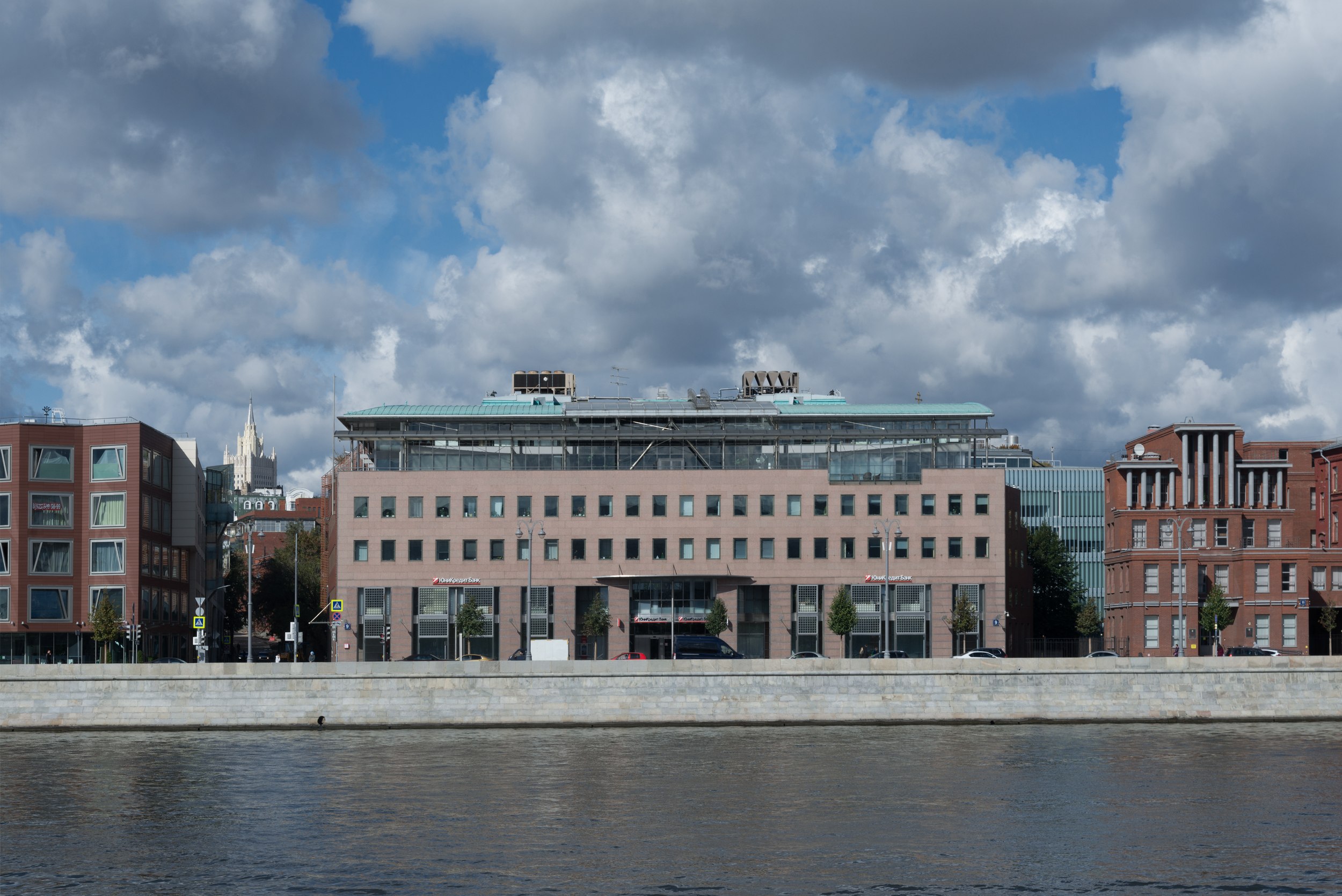

International Moscow Bank
Copyright: Photograph © Alexey Naroditsky / provided by Ostozhenka
At the turn of the 1980s-1990s, Ostozhenka Architects, founded by Alexander Skokan with the support of architect and urban planner Ilya Lezhava – one of the leaders of the NER Group (NER meaning “New Element of Settlement”) and an inspirer of “paper architecture” – received the status of general designer for the district as part of the Moscow Architectural Institute’s research and design center. Over the following years, the team developed regulations for its reconstruction. Of roughly fifty new buildings that appeared in Ostozhenka after the collapse of the USSR, at least half were designed by the team led by Alexander Skokan.
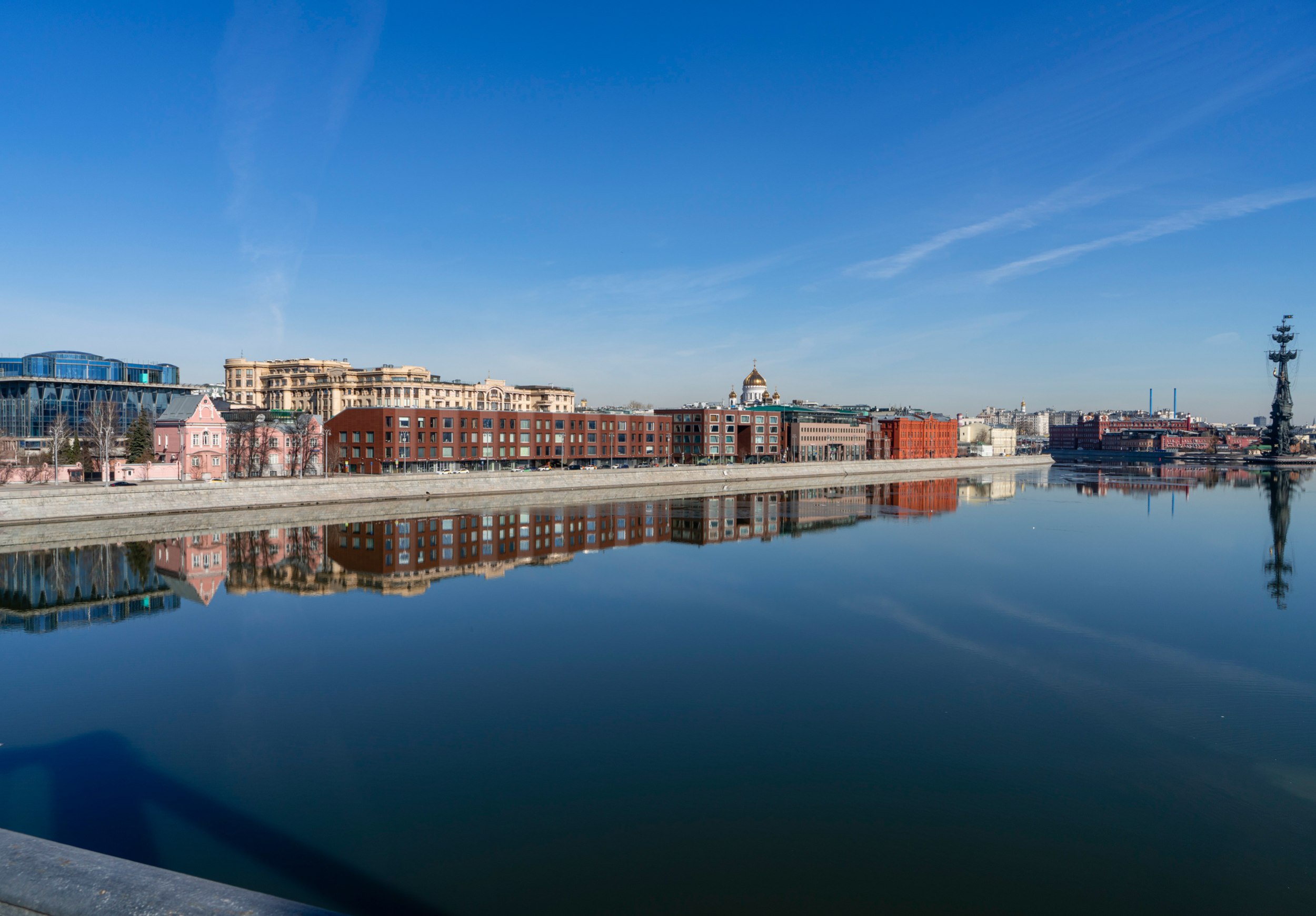

International Moscow Bank in the panorama of Prechistenskaya Embankment
Copyright: Photograph © Alexey Lerer / provided by Ostozhenka
At first glance, the architecture of the bank building on Prechistenskaya Embankment seems to lack a distinct identity or expressive character: it is a granite-and-brick rectangular volume topped by a glass superstructure covered with a slightly curved metal roof. And yet, the building “holds” the embankment line amazingly well. A paradox? The secret lies in the many subtle nuances embedded in the firm’s architecture, resonating with the context and allowing it to be perceived as a natural part of its surroundings – something uncannily appropriate to its specific place. Not everyone will consciously register these nuances, but they nonetheless work quietly on the viewer’s perception.
-
 International Moscow BankCopyright: Photograph © Alexey Naroditsky / provided by Ostozhenka
-
 International Moscow BankCopyright: Photograph © Alexey Naroditsky / provided by Ostozhenka


The main façade deserves particular attention. It is symmetrical – but not entirely. A glass-enclosed “chunk” taken out of the parapet surrounding the fifth-floor terrace disrupts the strict rhythm set by the columns and identical window openings. It is a façade – but not quite: like the famous gridded façade of the administrative building in Casa del Fascio designed by Giuseppe Terragni, it can be described, using the terminology of architectural theorist Peter Eisenman, who wrote many an article on Italian rationalism in architecture, as a “frontispiece” – a kind of shell, a mask, slightly detached from the main volume and concealing the “true” façade (this effect is further reinforced by shallow recesses running the full height of the side elevations). It is functional – but, again, not entirely: at ground level, the “frontispiece façade” accommodates a gallery, meaning that the architects persuaded the client to sacrifice a portion of usable floor area in order to widen the pedestrian zone along the embankment. Further on, decorative inserts of glass blocks visually lighten the heavy, grounded mass, catching the eye as it moves across the otherwise flat and restrained surface. The glass canopy – overhanging above the already-mentioned terrace and seemingly sliding down from the glass superstructure – emphasizes the autonomy of this granite “mask”, while its curvature, as few people know, exactly matches (!) the radius of the cable structures of the Krymsky Bridge.
-
 Copyright: © Ostozhenka Architects") International Moscow Bank (later UniCredit Bank)Copyright: © Ostozhenka Architects
International Moscow Bank (later UniCredit Bank)Copyright: © Ostozhenka Architects
-
 International Moscow BankCopyright: Photograph © Alexey Naroditsky / provided by Ostozhenka


Why complicate things to such an extent? Precisely in order to achieve that sense of appropriateness. A fully glazed façade would have disrupted the embankment line, yet without panoramic glazing the building would have appeared excessively heavy. The deliberately regular composition of the frontispiece echoes the neighboring historic buildings. The glass blocks and the glazed cut-out in the parapet compensate for the lack of fine detailing, making the building engaging to observe. The curved canopy resonates with the so-called chains above the pylons of the Krymsky Bridge, which lies within direct view. The granite cladding nods to Stalin-era embankments, the brick to Art Nouveau apartment houses typical of this part of central Moscow, and the glass simultaneously reflects contemporary trends and pays homage to Soviet modernism, represented here by the Chaika public swimming pool. As you can see, nothing in Ostozhenka’s design is accidental or superfluous.
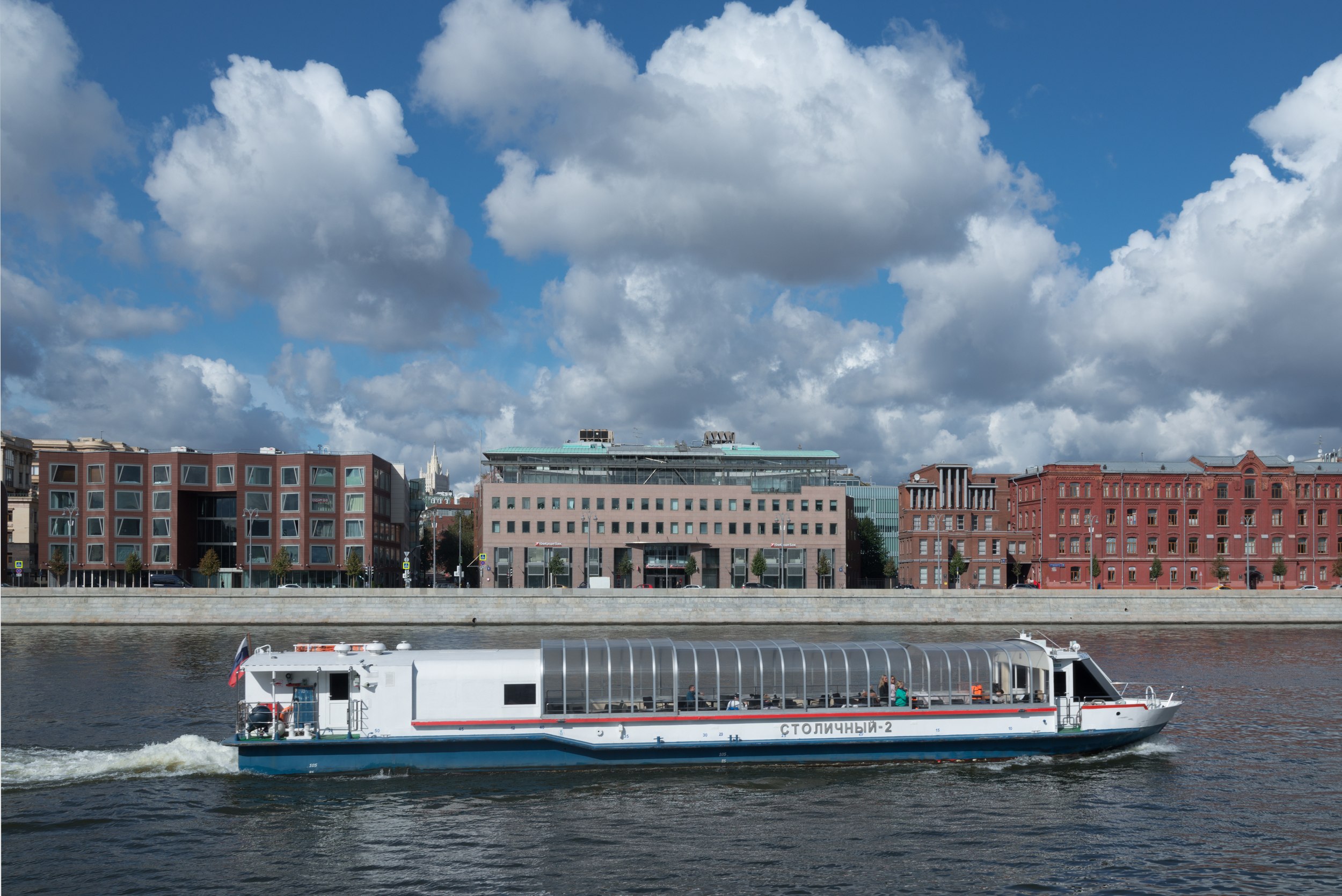

International Moscow Bank
Copyright: Photograph © Alexey Naroditsky / provided by Ostozhenka
In 1996, the building of the International Moscow Bank received the State Prize of the Russian Federation in architecture, and a year later it was named the best building of the decade according to an independent expert ranking. This work, undoubtedly part of architectural history, represents the quintessence of the environmental approach developed by NER member Alexey Gutnov – Alexander Skokan’s teacher – and laid the groundwork for the contextual minimalism that became widespread in Russia in the 2010s.


