


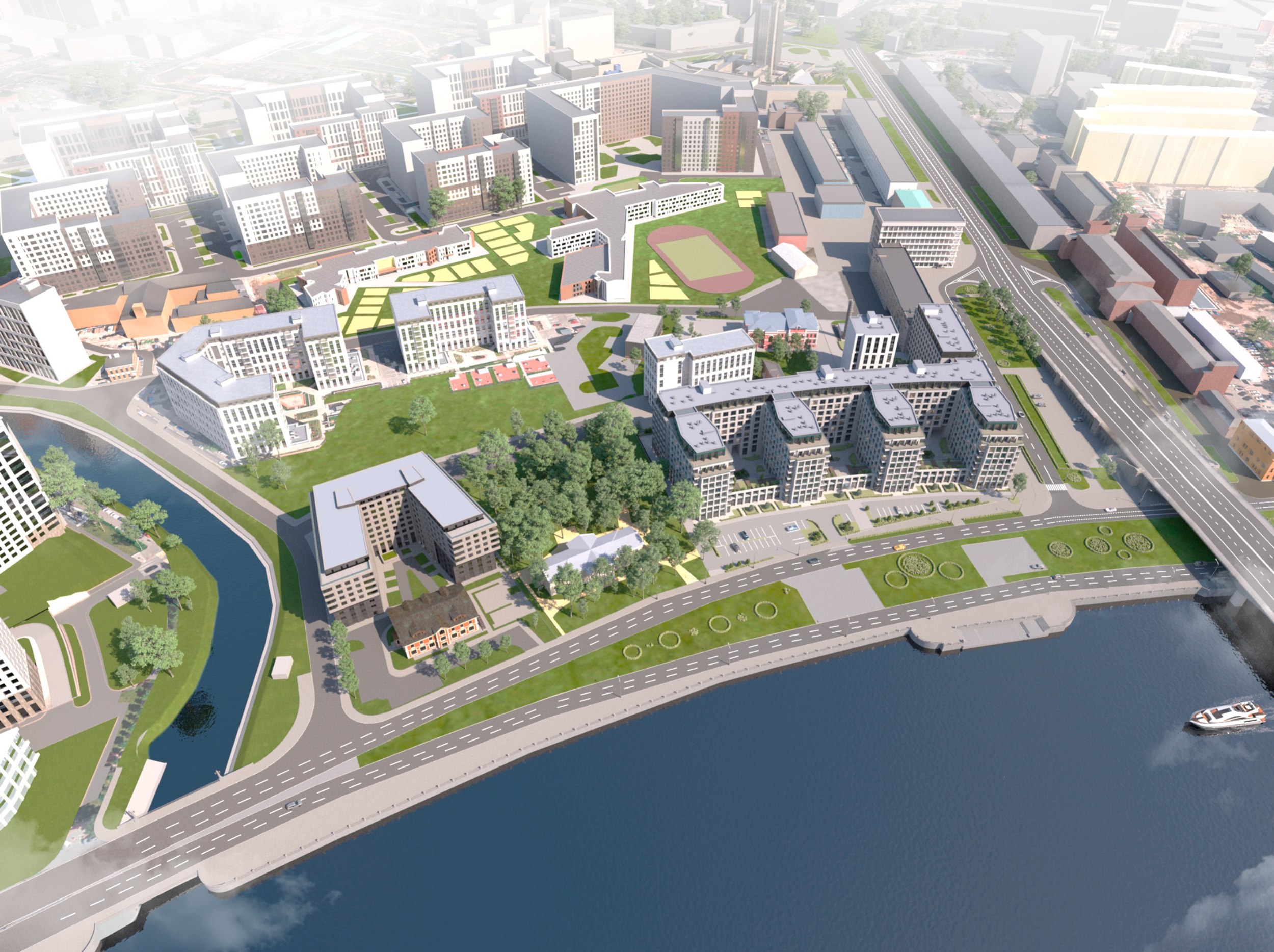

AQUATORI housing complex
Copyright: © INTERCOLUMNIUM / provided by Committee for Urban Planning and Architecture press service


AQUATORI housing complex. Dismantling plan
Copyright: © INTERCOLUMNIUM / provided by Committee for Urban Planning and Architecture press service
Many architects are involved in reshaping the area, but Intercolumnium is arguably more active here than most: the company is behind the already completed “Riverside” and “Riviera Noir” projects, and is currently developing the “Minister” residential complex. For the latter, a wing of the Imperial Foundling Home was even relocated so that it would align with the Golovin Dacha, a rare example of wooden architecture now in a rather dilapidated state. The new “Aquatoria” follows the setback line and the curve of the river, allowing two-story mansions to occupy the first line of the embankment. These buildings are perceived primarily by motorists: the embankment is a major artery connecting the city center with residential districts, so traffic is heavy and pedestrians are few – walking along Vyborgskaya Embankment, given the noise and lack of greenery, is a questionable pleasure.


AQUATORI housing complex. Location plan
Copyright: © INTERCOLUMNIUM / provided by Committee for Urban Planning and Architecture press service


AQUATORI housing complex. Key elements of the post-Soviet development shaping the skyline of the Vyborg and Ushakov Embankments between Ushakov and Grenader Bridges
Copyright: © INTERCOLUMNIUM / provided by Committee for Urban Planning and Architecture press service
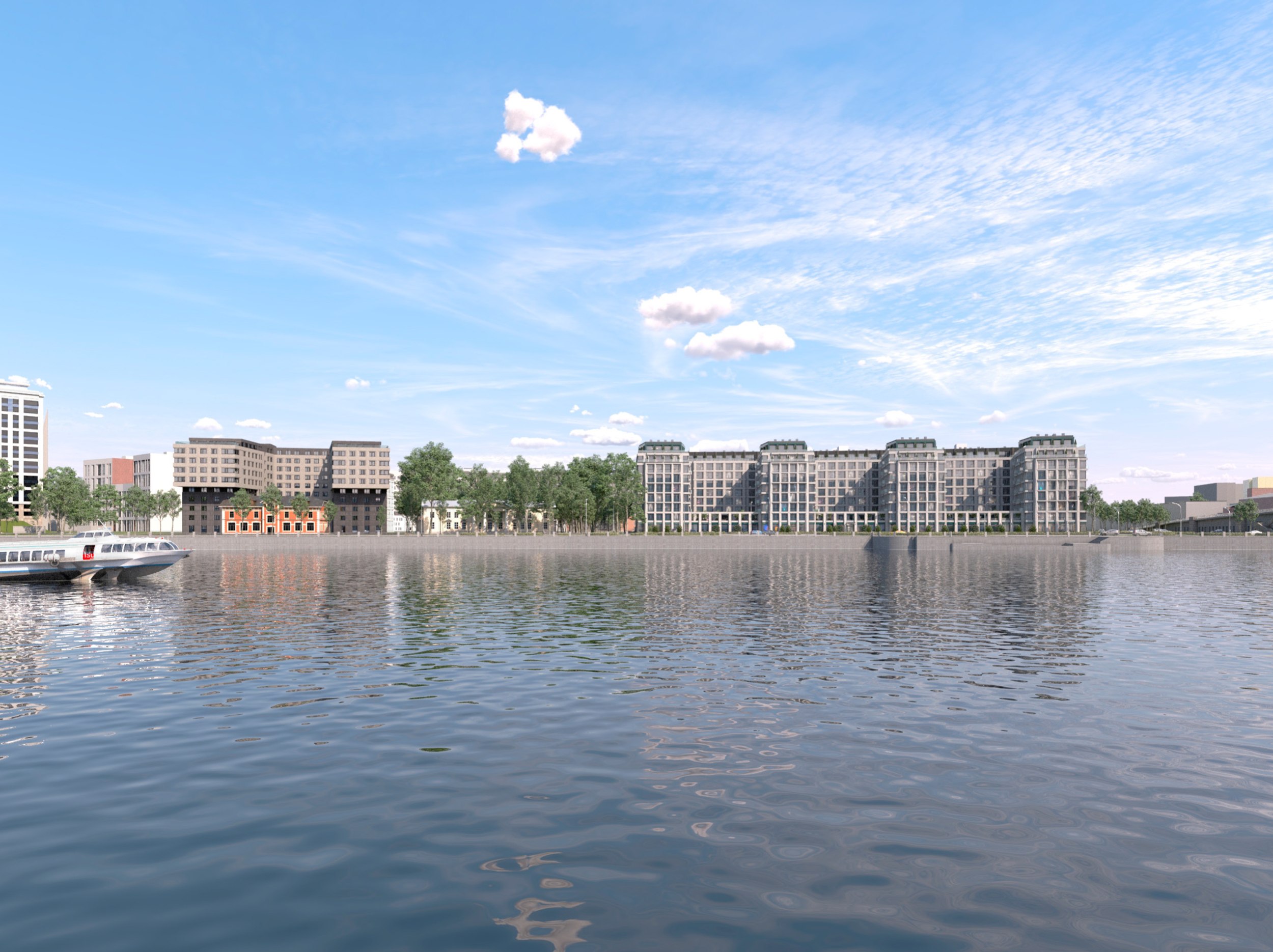
Nevertheless, water in St. Petersburg – even when framed by multilane roads, as in this case – is a major asset for marketing. As project reviewer Evgeny Gerasimov noted, high-performance glazing exists, and if the windows are kept closed and air conditioning is used, the problem disappears. In return, residents gain views of the Bolshaya Nevka, the tip of Kamenny Island, and the attractive business development on the opposite bank.

AQUATORI housing complex
Copyright: © INTERCOLUMNIUM / provided by Committee for Urban Planning and Architecture press service

AQUATORI housing complex
Copyright: © INTERCOLUMNIUM / provided by Committee for Urban Planning and Architecture press service
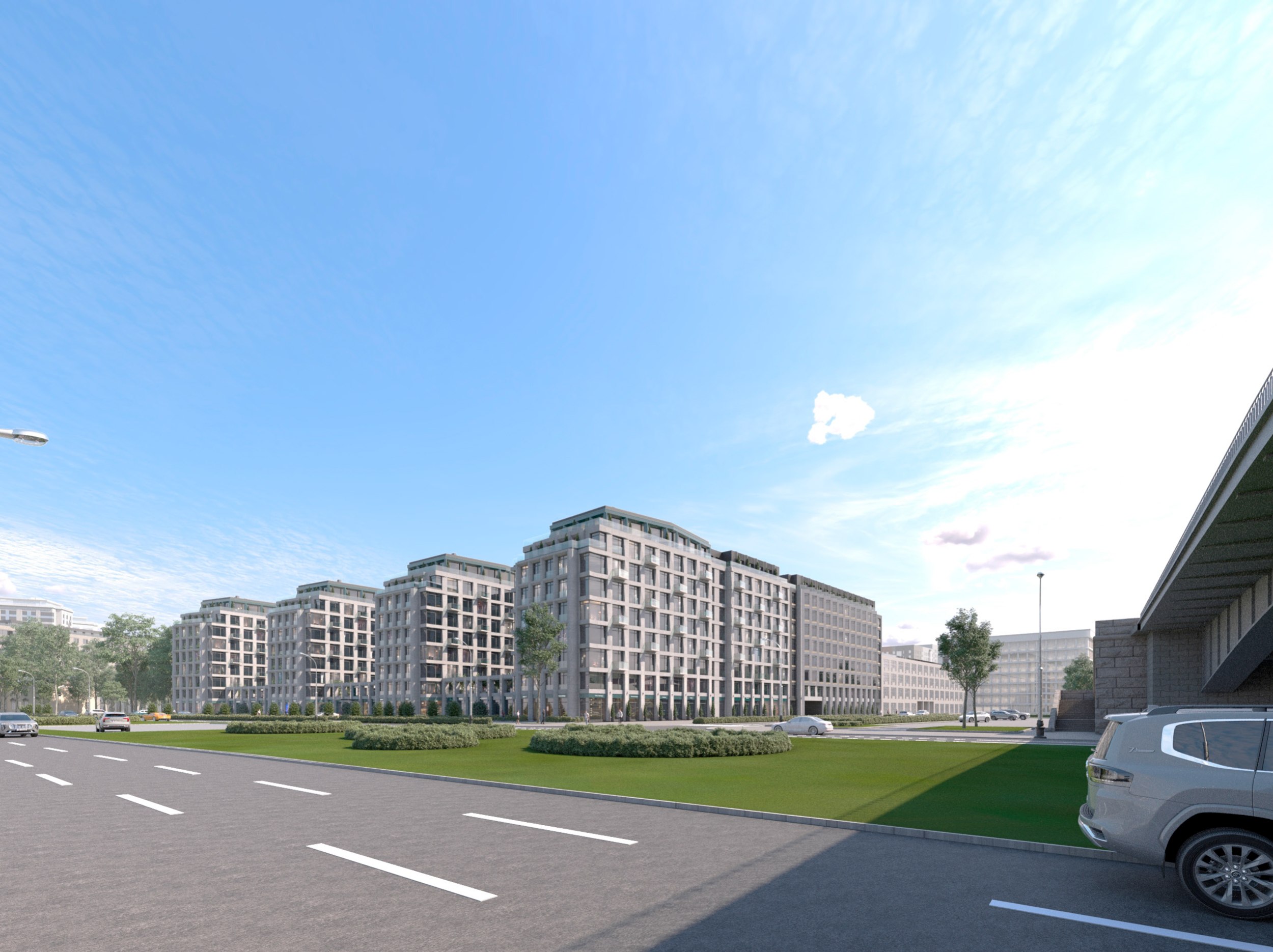
The client tasked the architects with opening as many apartments as possible toward the water. This led to an “inverted” master plan, with three cour d’honneurs oriented not inward, but toward the embankment. The total length of the building is about 150 meters.


AQUATORI housing complex.Diagram of the proposed location of the building on the site
Copyright: © INTERCOLUMNIUM / provided by Committee for Urban Planning and Architecture press service

AQUATORI housing complex
Copyright: © INTERCOLUMNIUM / provided by Committee for Urban Planning and Architecture press service
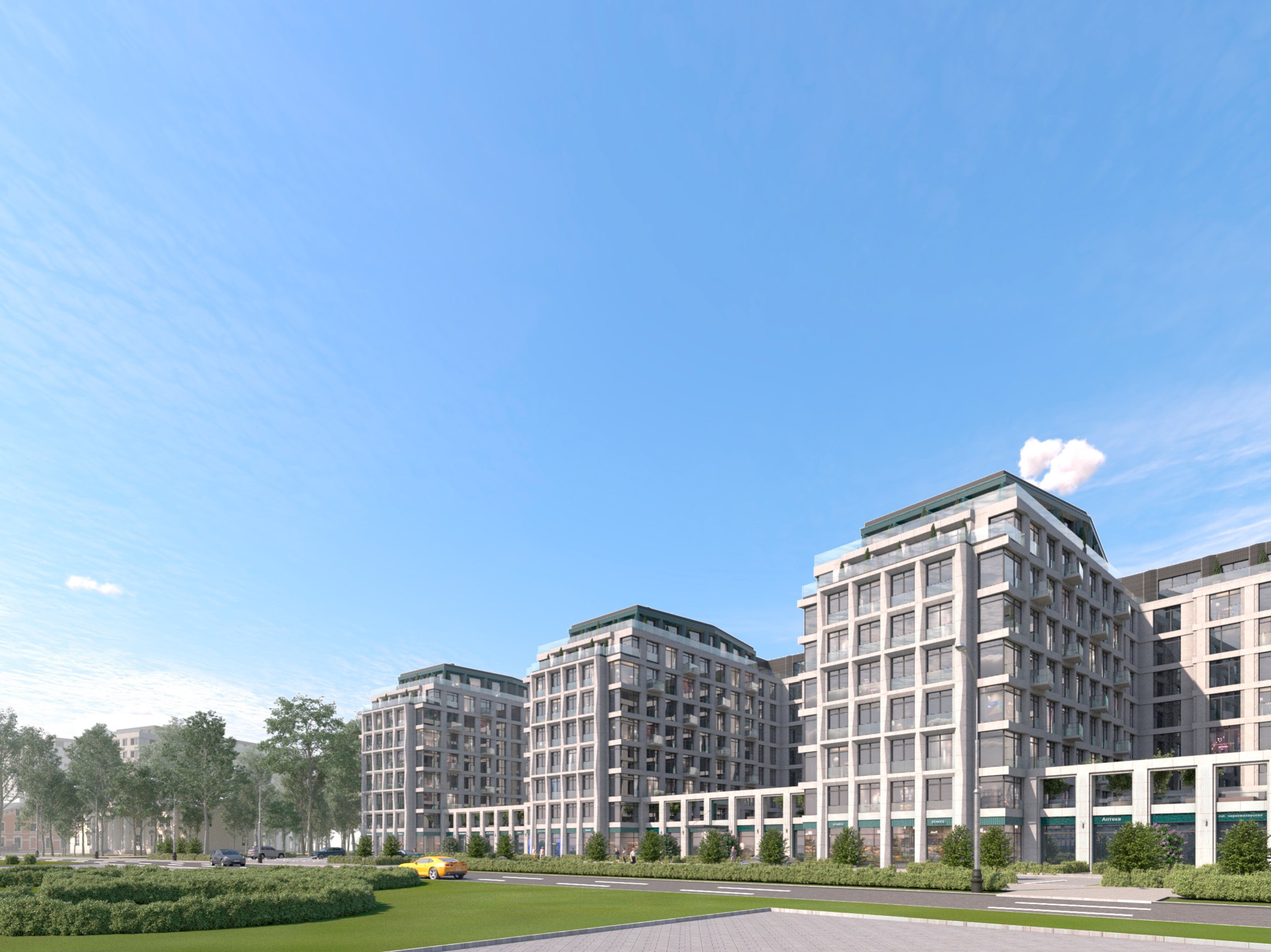
Evgeny Podgornov described the architectural solution as “simple, yet unusual and coherent”. The complex’ facades are made of exposed concrete, complemented by green ceramic elements, with the façade’s sculptural structure playing on a wave motif. The main entrance, with a large lobby, opens onto the embankment. On the roof of the retail gallery, pergolas with noise-protection screens are planned. From the Kantemirovskaya Street side, the architectural language becomes simpler, responding to the neighboring Soviet-era building. Within the courtyard, a small historic wing is being restored and adapted for office use.
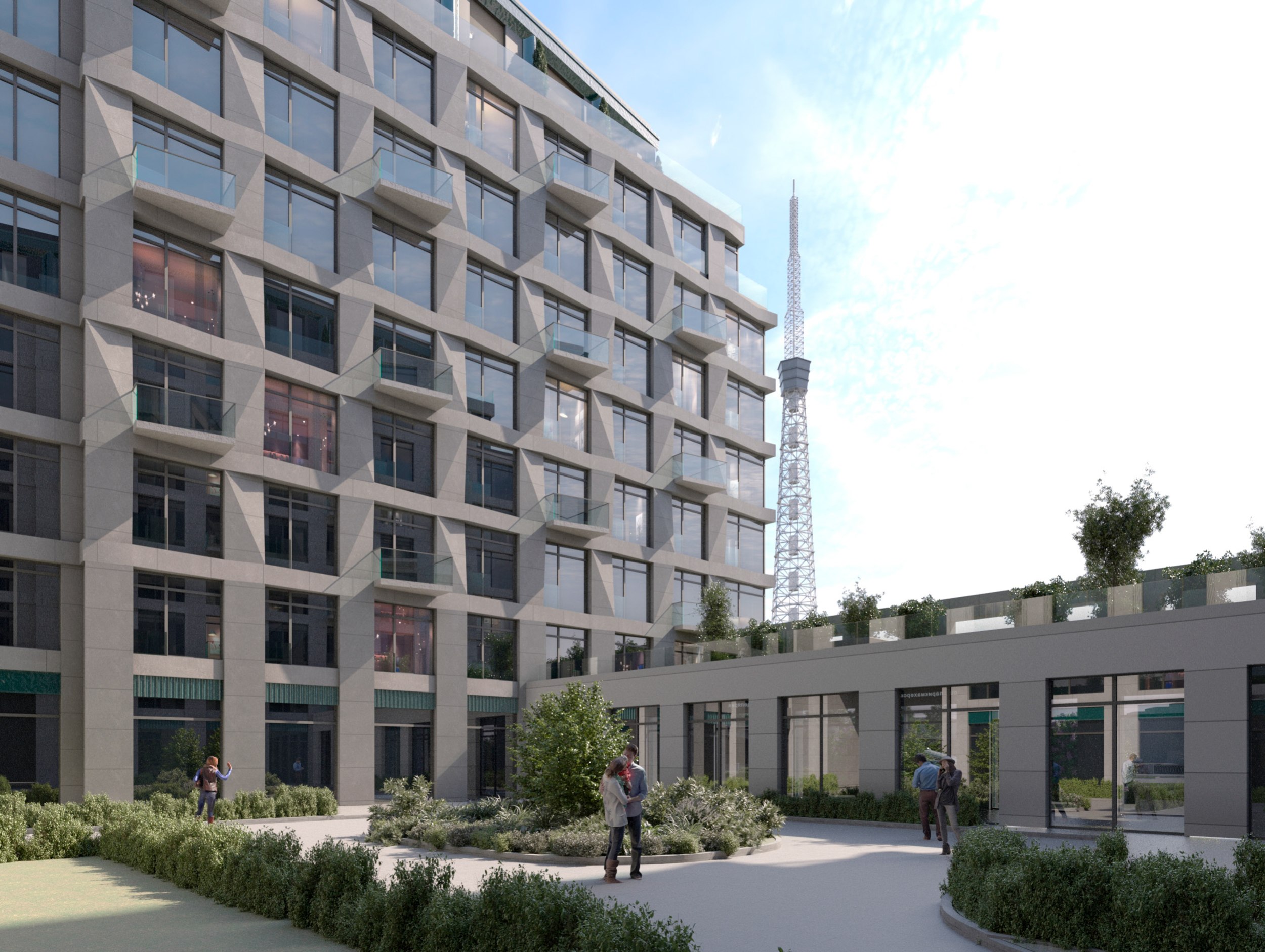

AQUATORI housing complex
Copyright: © INTERCOLUMNIUM / provided by Committee for Urban Planning and Architecture press service


AQUATORI housing complex
Copyright: © INTERCOLUMNIUM / provided by Committee for Urban Planning and Architecture press service


AQUATORI housing complex
Copyright: © INTERCOLUMNIUM / provided by Committee for Urban Planning and Architecture press service
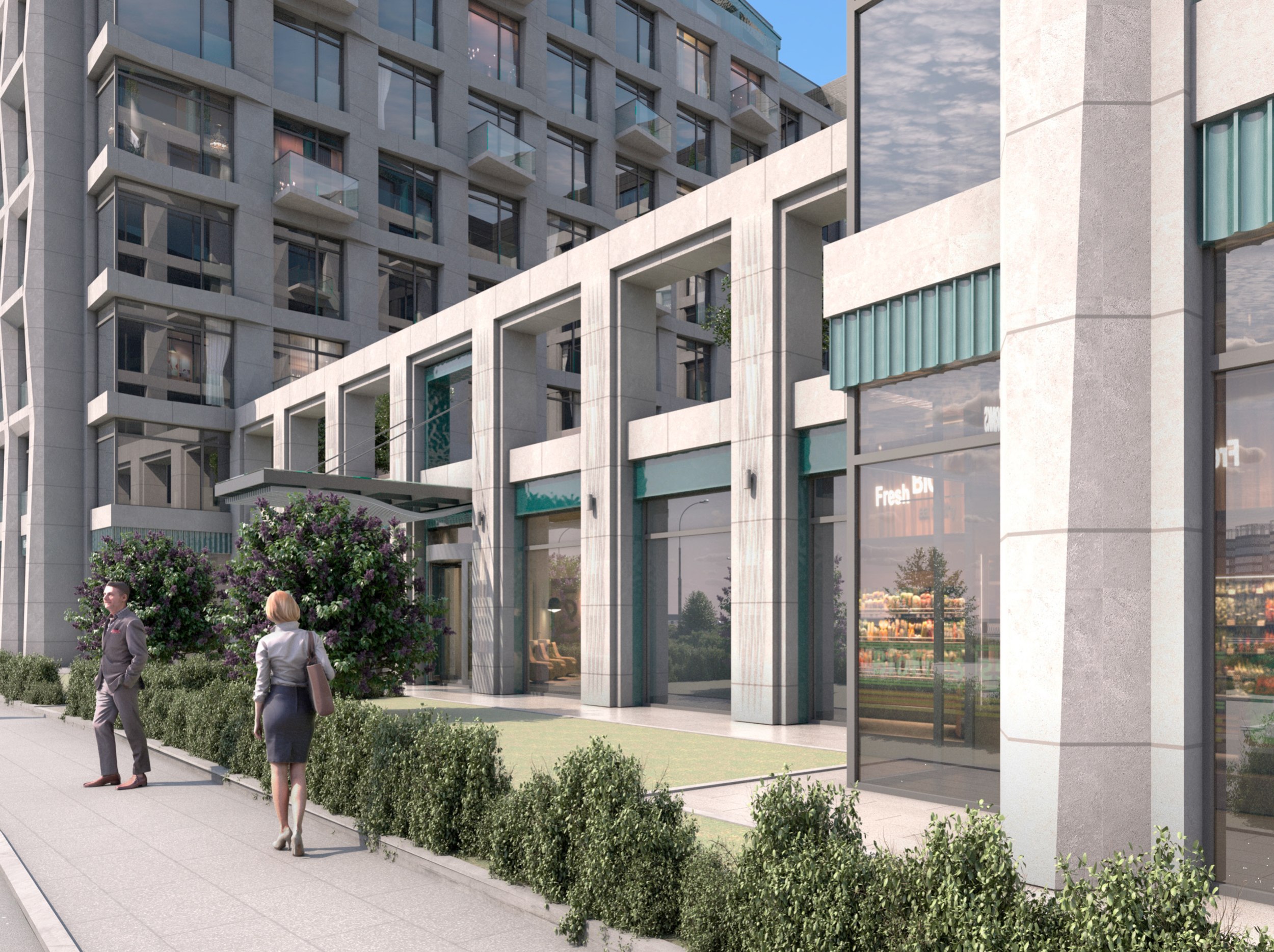

AQUATORI housing complex
Copyright: © INTERCOLUMNIUM / provided by Committee for Urban Planning and Architecture press service
The height of the complex does not exceed the permitted 33 meters. It is designed for 366 apartments, including four- and five-room units. Two levels of underground parking provide a surplus of parking spaces.
-
 1 / 11AQUATORI housing complex. Plan of the 1st floorCopyright: © INTERCOLUMNIUM / provided by Committee for Urban Planning and Architecture press service
-
 2 / 11AQUATORI housing complex. Plan of the 2nd floorCopyright: © INTERCOLUMNIUM / provided by Committee for Urban Planning and Architecture press service
-
 3 / 11AQUATORI housing complex. Plan of the 3rd-7th floorCopyright: © INTERCOLUMNIUM / provided by Committee for Urban Planning and Architecture press service
-
 4 / 11AQUATORI housing complex. Plan of the 8th floorCopyright: © INTERCOLUMNIUM / provided by Committee for Urban Planning and Architecture press service
-
 5 / 11AQUATORI housing complex. Plan of the 9th floorCopyright: © INTERCOLUMNIUM / provided by Committee for Urban Planning and Architecture press service
-
 6 / 11AQUATORI housing complex. Plan of the underground garage. -1st floorCopyright: © INTERCOLUMNIUM / provided by Committee for Urban Planning and Architecture press service
-
 7 / 11AQUATORI housing complex. Plan of the underground garage. -2nd floorCopyright: © INTERCOLUMNIUM / provided by Committee for Urban Planning and Architecture press service
-
 8 / 11AQUATORI housing complex. Section view 1-1, Section view 2-2Copyright: © INTERCOLUMNIUM / provided by Committee for Urban Planning and Architecture press service
-
 9 / 11AQUATORI housing complex. Section view 3-3, Section view 5-5Copyright: © INTERCOLUMNIUM / provided by Committee for Urban Planning and Architecture press service
-
 10 / 11AQUATORI housing complex. Section view 4-4, Section view 7-7Copyright: © INTERCOLUMNIUM / provided by Committee for Urban Planning and Architecture press service
-
 11 / 11AQUATORI housing complex. Section view 6-6Copyright: © INTERCOLUMNIUM / provided by Committee for Urban Planning and Architecture press service


Overall, the experts received the project positively. Reviewer Evgeny Gerasimov felt there was “nothing to regret and nothing to fear”, while descriptions such as “simple”, “competent”, and “sound” were voiced. Svyatoslav Gaikovich particularly emphasized the exceptional quality of the work.


AQUATORI housing complex
Copyright: © INTERCOLUMNIUM / provided by Committee for Urban Planning and Architecture press service
Critical remarks, however, focused on three main points.
The first concerned the already mentioned cour d’honneurs. Evgeny Gerasimov noted that there are not many urban-planning options for a site like this – his own firm had worked on it and arrived at a similar solution. In this configuration, apartments face the water, while the courtyards receive the most favorable southwest orientation. Svyatoslav Gaikovich reminded the council that “cour d’honneurs do not align with the traditional approach to embankment development”. Sergey Oreshkin expanded on this idea: “A classical St. Petersburg cour d’honneur, like those by Suzor or Benois, does not break the street’s main frontage. Three pseudo-cour d’honneurs in a row are excessive – an aggressive end-wall architecture that most have already abandoned”. Vyacheslav Ukhov countered that the end walls nevertheless add variety to a 150-meter-long building.


AQUATORI housing complex
Copyright: © INTERCOLUMNIUM / provided by Committee for Urban Planning and Architecture press service
The second major issue was the overly pronounced contrast between the façades facing Vyborgskaya Embankment and Kantemirovskaya Street. Georgy Snezhkin felt that the façade facing the bridge was “excessively flat and generic”. Maxim Atayants called for balancing this difference, since both streets are almost equally open to the water.
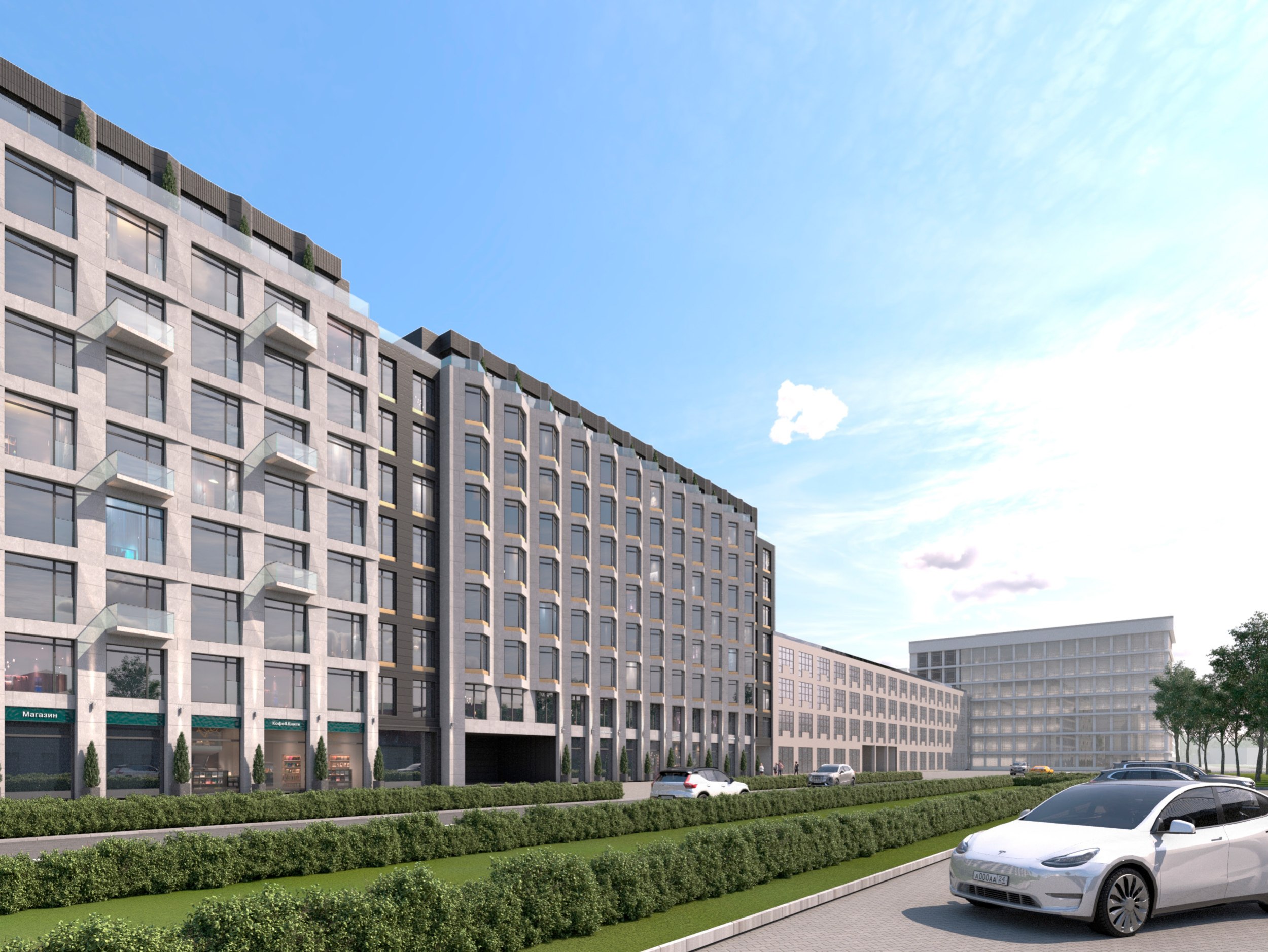

AQUATORI housing complex
Copyright: © INTERCOLUMNIUM / provided by Committee for Urban Planning and Architecture press service
Finally, the third line of criticism addressed a certain “dryness” and monotony of the design. In Vladimir Linov’s view, “the facades lack plastique and substantial detail and still require further improvement”.
The voting results will be announced later.


AQUATORI housing complex. View from House 18 on Aptekarskaya Embankment
Copyright: © INTERCOLUMNIUM / provided by Committee for Urban Planning and Architecture press service


AQUATORI housing complex
Copyright: © INTERCOLUMNIUM / provided by Committee for Urban Planning and Architecture press service
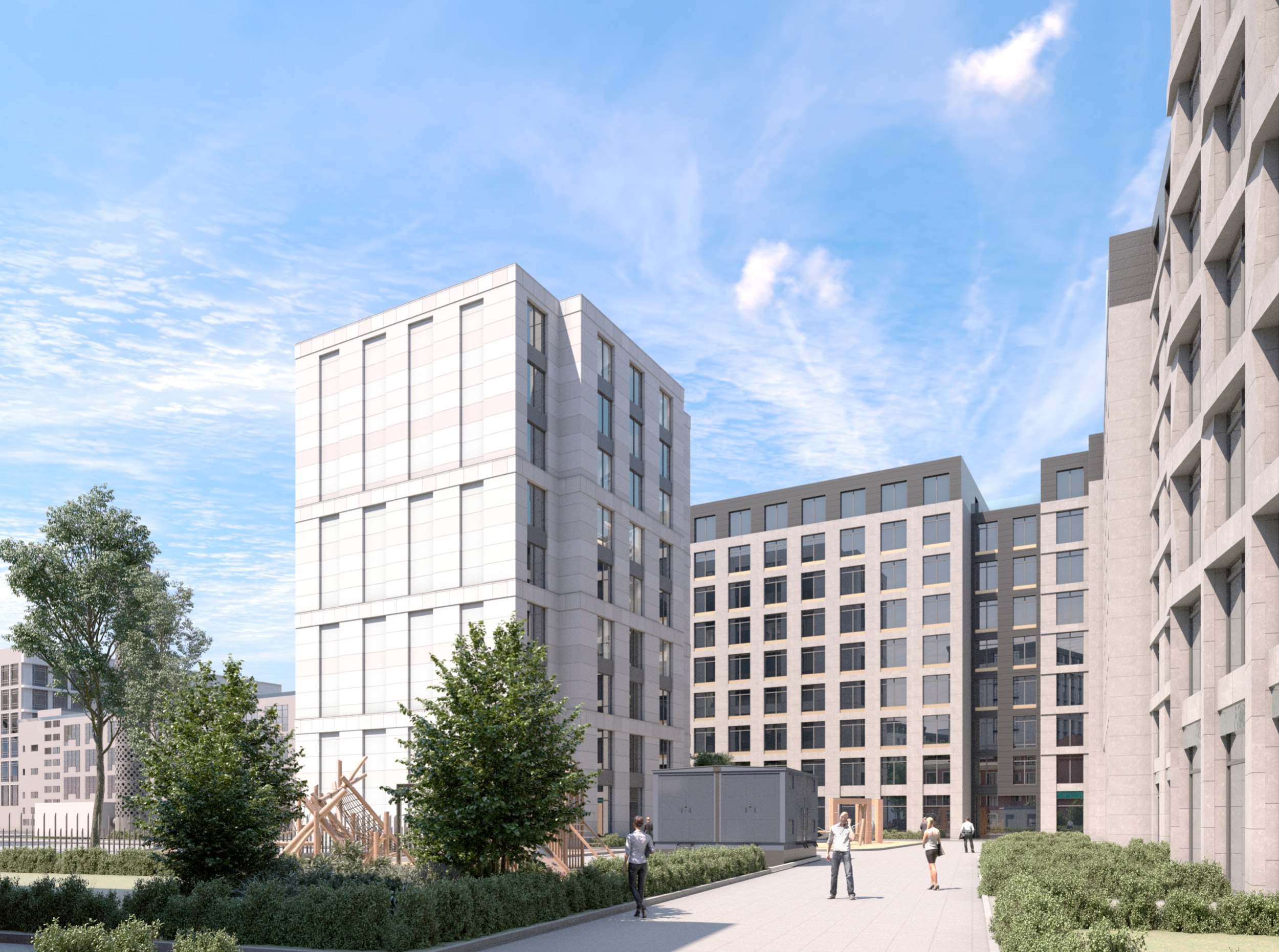

AQUATORI housing complex
Copyright: © INTERCOLUMNIUM / provided by Committee for Urban Planning and Architecture press service


AQUATORI housing complex
Copyright: © INTERCOLUMNIUM / provided by Committee for Urban Planning and Architecture press service


