По-русски

On the Wave

The project of transforming the river port and embankment in the city of Cheboksary, developed by the ATRIUM Architects, involves one of the city’s key areas. The Volga embankment is to be turned into a riverside boulevard – a multifunctional, comfortable, and expressive space for work and leisure activities. The authors propose creating a new link with the city’s main Krasnaya (“Red”) Square, as well as erecting several residential towers inspired by the shape of the traditional national women’s headdress – these towers are likely to become striking accents on the Volga panorama.

11 September 2025
Object
mainImg
Cheboksary, the current capital of the Chuvash Republic, was founded by Ivan the Terrible shortly after the capture of Kazan. The city has its own history, but it is far less known than Kazan itself or Nizhny Novgorod. Today, Cheboksary is a large city with a population of about half a million, more of a port and industrial center than a tourist destination. Its main attractions – from the giant statue of the Mother-Patroness to several theaters and the famous Grand Staircase – are all concentrated downtown, around an artificial bay.

Riverside boulevard in Cheboksary
Copyright: © ATRIUM


The Cheboksary Bay is a landmark in its own right. It was created as a result of the construction of a large hydroelectric power station on the Volga downstream, in Novocheboksarsk. When it became clear that the water level would rise, the bed of the Cheboksarka River was shifted and widened. This formed an estuary about a kilometer wide and five kilometers long, which became the core of the city center. The bay is navigable but shallow, with limited shipping.

At the entrance to the bay, where the right bank of the Cheboksarka meets the Volga, a pier – and later the city’s port and river terminal – had existed since 1917. Construction of the new terminal building began in 1984, then continued with expansions from 1992 to 2006, so in the end it turned out to be even larger than it was originally planned. With its orange balconies and large triangular bay windows, the building belongs stylistically more to the 2000s.

However, the construction of the terminal did not settle the issue of developing the river port: not only because, by the time it was completed, it was somewhat behind the latest architectural trends, and not only because of the lack of a well-designed, “comfortable-city-oriented” embankment, but also because – despite its proximity to the city center – getting to the port was quite a chore. For example, from Cheboksary’s Red Square it is only 300 meters in a straight line, yet they are separated by a busy highway, and to get to the other side one has to take a lengthy detour.

Riverside boulevard in Cheboksary
Copyright: © ATRIUM


In addition, although the river terminal complex built in 2006 has a throughput capacity of up to 400 vessels a year, this is no longer sufficient: in recent decades river tourism has been developing rapidly in Russia, and Cheboksary is losing revenue because it can berth only six cruise liners at a time.

Riverside boulevard in Cheboksary
Copyright: © ATRIUM


ATRIUM Architects were tasked with a comprehensive brief: to connect the port with the city center, extend the quay and increase its area, and completely redevelop the territory by adding functions it currently lacks – such as dining and retail – thus transforming the port into the River Boulevard, another point of attraction and a new signature site for the city.

What will be built there

The architectural plan envisions the redevelopment in several stages: first, the reconstruction of the embankment, followed by the construction of a residential complex consisting of three high-rise buildings and a hotel.

  • zooming
    Riverside boulevard in Cheboksary
    Copyright: © ATRIUM
  • zooming
    Riverside boulevard in Cheboksary
    Copyright: © ATRIUM


At present, the quay wall of the Cheboksary river port is 426 meters long. Under the project, it will be extended by another 330 meters, enabling the port to receive 12 vessels at once. The total length of the River Boulevard will reach 1,400 meters: starting from Red Square, it will continue toward Kazanskaya Embankment and end at the entrance to Victory Park, yet another key spot on the city map. This will make the central promenade running through Cheboksary logical and convenient.

Riverside boulevard in Cheboksary
Copyright: © ATRIUM


The quay area will be greatly expanded – literally turning into a boulevard. In addition, it will become multi-level. The plan provides for the construction of shopping arcades on the old quay with a total floor area of 3,500 square meters and operational rooftops. The facades of the arcades facing the Volga will have a wave-like curve, evoking the river’s flow and adding rhythmic variety to the embankment’s composition.

Riverside boulevard in Cheboksary
Copyright: © ATRIUM


On the new quay, according to ATRIUM’s concept, three buildings ranging from two to four stories will be built, united by a shared stylobate. A single-story block will house a café with an area of 5,304 square meters, a three-story block will accommodate a food court of about 3,500 square meters, and a four-story building will contain a retail pavilion of 2,319 square meters, also adaptable for cultural events and presentations. The facades of these new structures, just like the line of the arcades, have smooth contours, reminiscent of natural forms such as river pebbles. Spacious multi-height atriums inside the buildings make them look much more dynamic.

The stylobate of the new quay will house passenger service areas, technical and commercial facilities, a luggage room, and ticket offices. Closer to the water, the quay will feature waiting areas and a security checkpoint through which passengers will board and disembark. This layout will allow for the efficient organization of both passenger flows and all of the port’s operations.

The total floor area of the facilities across the two quays will be about 19,000 square meters. The project envisions functional zoning in which port, business, dining, and cultural elements are integrated into a single architectural and landscape complex. The port will continue to function as a transport hub while also becoming an important business location and a popular leisure destination.

Routes

In their work on the project, the architects followed several principles. First, they oriented the new buildings toward the water as much as possible, creating the city’s “riverfront façade”. Second, the embankment was not just transformed into a public center but combined with a landscaped park. Landscaping plays just as significant a role in the design as the buildings themselves: more than 2,000 square meters of the complex will be occupied by greenery.

Riverside boulevard in Cheboksary
Copyright: © ATRIUM


The third principle was to create multi-level spaces and routes, including walkways at the level of the accessible and operational rooftops, featuring viewing platforms. Since the riverfront embankment is designed primarily for pedestrians, the main idea of the landscaping component was to provide several movement scenarios: for example, you can walk one way along the lower level and return along the upper level without having to backtrack your route.

Riverside boulevard in Cheboksary
Copyright: © ATRIUM


Particular attention was given to the smooth transition between functional zones and levels via a system of bridges and ramps. The embankment will be comfortable to walk along in any season and in any weather: the architects planned non-slip materials for pedestrian paths and provided shelter from precipitation.

The tunnel

Even seemingly minor details have been designed with pedestrians in mind, such as the treatment of retaining walls: in some cases, they may feature decorative lighting and narrow flowerbeds, while in others, they incorporate built-in wooden benches.

Riverside boulevard in Cheboksary
Copyright: © ATRIUM


The project also includes well-developed infrastructure for drivers: the capacity of the surface parking lot at the end of the quay is planned for 421 cars, of which 250 spaces already exist and 171 will be added as part of the new construction. The combination of transport accessibility and a landscaped embankment is also intended to turn the River Boulevard into a place of urban attraction.

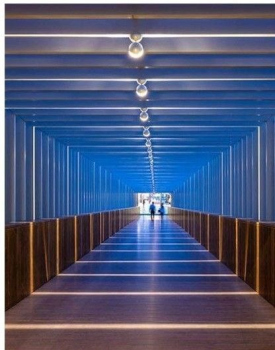
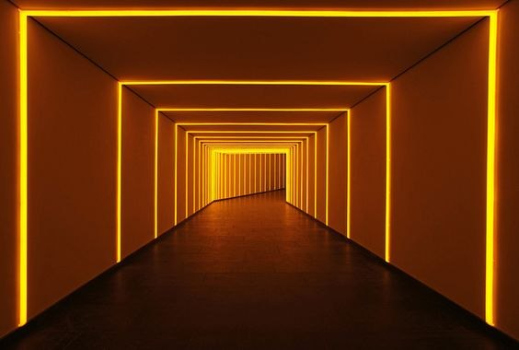
The connection between the port and the main square of Cheboksary has been solved elegantly and rationally: the architects proposed a tunnel beneath Konstantin Ivanov Street, which separates the two sites. This new pedestrian route will reduce the walk from Red Square to the embankment to just five minutes, effectively merging these key zones into a single urban space.

  • zooming
    1 / 3
    Riverside boulevard in Cheboksary
    Copyright: © ATRIUM
  • zooming
    2 / 3
    Riverside boulevard in Cheboksary
    Copyright: © ATRIUM
  • zooming
    3 / 3
    Riverside boulevard in Cheboksary
    Copyright: © ATRIUM


The tunnel is conceived not only as a functional passage but also as a striking architectural feature. Several design options are possible: for example, vertical light strips in a cool blue palette could be placed along the walls to create a futuristic atmosphere, or a warm yellow-orange linear lighting scheme could be used, especially effective after dark.

The tunnel entrance is approached via a ramp, making it accessible for people with limited mobility as well. Walking through the tunnel from the port toward Red Square, pedestrians will first see the building of the Drama Theater in the Stalinist Empire style – a striking highlight of the route.

Second phase

As part of the project’s second phase, a multifunctional residential complex is planned next to the River Boulevard. It will include three residential towers ranging from 22 to 28 stories and a hotel with 140 rooms, all set on a two-story stylobate.

  • zooming
    1 / 5
    Riverside boulevard in Cheboksary
    Copyright: © ATRIUM
  • zooming
    2 / 5
    Riverside boulevard in Cheboksary
    Copyright: © ATRIUM
  • zooming
    3 / 5
    Riverside boulevard in Cheboksary
    Copyright: © ATRIUM
  • zooming
    4 / 5
    Riverside boulevard in Cheboksary
    Copyright: © ATRIUM
  • zooming
    5 / 5
    Riverside boulevard in Cheboksary
    Copyright: © ATRIUM


The stylobate, with an area of 26,500 square meters, will house a supermarket, a fitness center, a conference zone and business spaces, retail areas, and medical and childcare facilities. The roof of the stylobate is designed as an active space, with a courtyard and walking areas for residents, as well as an open-air swimming pool and a “beach” zone for the hotel. Its irregular footprint creates a network of landscaped plazas at ground level, one of which serves as the endpoint of the pedestrian descent from Victory Park. The underground floors will include parking for 1,100 cars.

Riverside boulevard in Cheboksary
Copyright: © ATRIUM


The facades of the complex, built with modern energy-efficient materials, are designed not only for durability and architectural expression but also for the integration of cultural codes: white-and-red rhomboid frames, stylized as Chuvash ornaments, highlight the terminal’s link with local identity.

  • zooming
    Riverside boulevard in Cheboksary
    Copyright: © ATRIUM
  • zooming
    Riverside boulevard in Cheboksary
    Copyright: © ATRIUM


The residential towers taper upwards in a silhouette inspired by the traditional women’s headdress “khushpu”. This approach ties contemporary architecture to the genius loci. The overall composition descends toward Red Square and the Ascension Church, expressing respect for and blending into the city panorama. If successfully realized, the complex could well become a new landmark of Cheboksary.

The riverfront redevelopment project has already been reviewed by the city’s Urban Planning Council. The transformation of the embankment was met with approval, while the architecture of the residential towers sparked debate for its bold forms. Implementation of the first stage depends on resolving land issues, but under favorable conditions construction could begin in 2026. The new riverfront, with its tunnel, multi-level routes, retail and leisure zones, viewing platforms, and modern port, will turn what is now a closed utilitarian area into a vibrant public hub. It also promises to become a tourist magnet and a new architectural dominant on the banks of the Volga.
Riverside boulevard in Cheboksary
Copyright: © ATRIUM


11 September 2025

Headlines now
Home Base
Working on the new building for Letovo Junior School – opened to students in autumn 2025 in the MSU Valley – the architects of UNK, following the client’s vision, subordinated both façades and interiors to the theme of “home”. Multiple variations of pitched roofs, a city skyline traced across glass balustrades, wooden textures, and a whole series of micro-spaces for retreat within public areas are all at the disposal of primary and middle school students. We take a closer look at the new school building – and at how it interprets current trends in educational environments.
Doubles Match
The architecture of the Tennis Palace built in Luzhniki Olympic Complex, designed by Arena Design Institute, was shaped by three factors: the proximity of the brutalist Druzhba Arena, the closeness of the Moskva River and the metro bridge overpass, as well as the specifics of the function – tennis courts require large spans, abundant light, yet at the same time protection from direct sunlight. The architects divided the building into several blocks, playing on contrast, which is further emphasized by the façades developed in collaboration with TPO Reserve and Vladimir Plotkin.
Microdynamics of Macroprocesses
Given the proximity of the multifunctional complex SOLOS to Sokolniki Park and to a major transport hub, Kleinewelt Architekten embedded in the design of the two high-rise towers a sense of dynamism more characteristic of natural phenomena than of man-made objects. Without the authors’ diagrams, this logic is not easy to decipher, although the eye immediately detects a pattern and tries to grasp it. It seems to us that one tower contains the impulse of a bud about to open, while the other evokes the movement of a lithospheric plate. Let us try to unravel it together.
The Space of Post-Cubism
Sergei Tchoban and Alexandra Sheiner, of Studio CHART, created for the exhibition of “post-cubist” sculpture by Beatrice Sandomirskaya – a talented and even “mainstream” artist, yet almost unknown even to art historians – a space akin to her sculptural language: solidly built, confidently stereometric, and subtly expressive. It curves, emphasizing the mass of the sculpture, envelops the viewer, and guides them from one perspective to another, from a generic “shrine” to a “Madonna”.
The Value of Open Space
For the site near the Barrikadnaya Metro Station, Sergey Skuratov developed five projects between 2020 and 2025. Two of them were ones that won the client’s invitation-only competitions. The fifth was recently selected by the Mayor of Moscow for implementation. The project is vivid and sculptural, expressive, eye-catching, and engaging – very much in line with the spirit of our time. And yet, this project is mid-rise rather than tall. In its northwestern part, near the metro and Druzhinnikovskaya Street, it shapes a comfortable urban environment. On the opposite side, it opens up, allowing sunlight into the courtyard and creating a spatial pause within the dense city fabric. How it is organized, what geometric principles underlie it, and why it takes this form – all this is explored in our article.
Coming From the Cold
The ArchBukhta Festival remains one of the few events in Russia where participants go through the entire process of creating an architectural object – from concept to construction. And they do so on the shores of Lake Baikal, in dedication to it. This year, GAFA took part and shared its experience: a local legend, a team-specific design code, friendship, as well as ice skating and endurance in freezing temperatures all contributed to gaining something more than just an award.
Symphony of Water and Brick
The Alter residential complex, designed by Stepan Liphart and built on a bend of the Okhta River, is an example of a “drawn house”: the number of original architectural details is virtually immeasurable. As a result, ribs, projections, and recesses create a picturesque silhouette even without a significant variation in height. Both composition and material respond to the proximity of the river and to the red-brick factory building dating back to the early 20th century. The project was also significantly shaped by recommendations from the city’s chief architect. More details in our article.
The Penguin House
The building with a curved façade on Brestskaya Street is one of the manifestos of Russian neomodernism of the early 2000s, a sculpture – this is how Anatoly Belov interprets it, speaking of “breaking from the modernist canon and the contextual approach”. We do not fully agree with the author, but his perspective is an interesting one.
Wave and Vertical
The premium residential complex designed by GAFA for a site in the Khoroshevsky District responds to multiple constraints – the arc of a planned roadway, the water protection zone of the Khodynka River, and insolation requirements – through inventive massing. The composition is built on the interplay of two spatial layers: an elongated perimeter block and three towers concealed behind it generate the silhouette and key viewpoints, while also adding semantic depth reinforced by the façade solutions. Another defining feature is a large private courtyard, complemented by a citywide linear park.
Office on Trubnaya
We continue publishing projects by Valery Kanyashin. A building once described, a quarter century ago, as an example of “quiet modernism” has remained just that in some people’s memory. According to Anatoly Belov, its main quality is its unobtrusiveness. The architects from Ostozhenka say the leading role here is played by context and landscape – the change in elevation. Yet is it really so inconspicuous?
The First International
With this publication, we begin a series of texts dedicated to works by the late Valery Kanyashin, one of the founders of Ostozhenka Architects. As it happens, the projects he was involved in largely illustrate our understanding of the firm and its history. The first project in this series is the International Moscow Bank on Prechistenskaya Embankment.
In Memory of Valery Kanyashin
On Friday, February 27, architect Valery Kanyashin passed away – co-founder of Ostozhenka Architects and the author of many significant buildings in Moscow. We publish a text by Anatoly Belov in memory of Valery Kanyashin.
Hypertext in Space
As part of the exhibition “What We Have We (Do Not) Keep”, Sergey Tchoban, the Museum of Architecture, and the CHART studio experiment with an eco-conscious approach to exhibition design, with thematic cross-references and even with publicistic reflections on the necessity of preserving modernism, the roots of contemporary architecture, and the birth of ideas. All of this makes the exhibition, with its light and transparent design, look quite innovative. The elements – both “material” and conceptual – are familiar, yet their combination is far from conventional.
The Outline of “Foundation”
In their competition proposal for the Fili transport hub, the consortium led by Alexey Ilyin proposed an “inhabited arch” – a form that is simple yet complex. The architects emphasize that even at the competition stage, the project’s feasibility was fully calculated, taking into account the minimal nighttime closures of Bagration Avenue. How was this achieved? With what functions? Let us take a closer look. In our view, the building would have suited the heroes of Isaac Asimov’s Foundation novels perfectly.
The Flying Horizontal
“A house in the spirit of Wright”, as architect Roman Leonidov describes it, pointing to his source of inspiration, was built on a challenging wedge-shaped site. To achieve a sense of intimacy and secure good views from the windows, the entire volume had to be shifted toward the far boundary, turning the house “back” to the neighboring mansions. The main façade demonstrates time-tested techniques often employed by the company: articulated horizontals, a weightless roofline, and a triad of materials – light plaster, dark slate, and warm wood.
Needles of Horizon Contemplation
The “House of Horizons”, designed by Kleinewelt Architekten in Krylatskoye, is carefully thought out at the stereometric level – from the logic of how the volumes interlock (and, conversely, how gaps are articulated between them) to the triangular balconies that give the building its striking, slightly bristling silhouette.
The Red Thread
A linear park project prepared by Alexey Ilyin studio for the improvement of a riverbank in one of the residential districts seeks to reconnect people with nature. Two levels of the embankment invite visitors to contemplate the landscape while at the same time protecting the riverbank from excessive human impact. The “aerial street” links functional zones and the opposite banks, creating new points of attraction along the way: balconies, bridges, and even a “grotto”.
Spindle and Thread
The concept of the Waver residential complex in Yekaterinburg draws inspiration from the past of the Parkovy district. In order to preserve the memory of the late-19th-century flax spinning mill once located here, the architectural company KPLN turns to the theme of textiles and weaving. The project’s main expressive device is a system of ribbons made of perforated weathering steel – a material that, in such volumes, has arguably not yet been used in Russian residential projects.
From Ski Resorts to Year-Round Recreation Clusters
In mid-December, several architectural firms gathered to discuss a “seasonal” topic: the prospects for the development of domestic ski tourism. Where is modern infrastructure already in place, where do only remnants of the Soviet legacy remain, and where is there still nothing – but projects are underway and soon to be completed? This article explores these questions.
Woven Into Sokolniki
Over the past few years, high-rise residential construction in former industrial zones has become the main theme of Moscow architecture. Towers are springing up here and there – but the question is what kind of towers they are. The residential complex CODE Sokolniki, designed by Ostozhenka Architects, is a project where every detail has been taken care of. The authors are attentive to the history of the site, the continuity of the urban fabric, the skyline, and visual corridors. They also proposed a motif with the lyrical name “scarf”. We take a closer look at the volumetric composition and the large-scale décor “woven”, in this case, out of terraces and balconies.
Stepan Liphart and Yuri Gerth: “Our Program Is Aesthetic”
The studio of Stepan Liphart, an architect known for his distinctive signature style and one-off projects, now has a partner. Yuri Khitrov, a specialist with a broad range of competencies, will take on the part of the work that distracts one from creativity but drives the business forward. One of the aims of this partnership is to improve the urban environment through dialogue with clients and officials. We spoke with both sides about their ambitions, the firm’s development strategy, shared values, and the need for pragmatism. And why the studio is called “Liphart & Gerth” only became clear at the very end of the interview.
The Copper Mirror
The varied-toned sheen of “unsealed” copper, painterly streaks and fingerprints, exposed concrete, and the unusual proportions – when you study the ZILART Museum building by Sergei Tchoban and SPEECH architects, there is plenty to talk about. However, it seems to us that the most interesting thing is how the museum’s composition responds to the realities of the district itself. The residential district has been realized as an open-air exhibition of façade statements by contemporary architects – but without public access to the inner courtyards of the blocks. This building – that is, the museum – is exactly the opposite: on the outside, it is deliberately restrained, while inside it shines spectacularly, creating its own sunbeams in any weather.
“Strangers” in the City
We asked Alexander Skokan for a comment on the results of 2025 – and he sent us a whole article, moreover one devoted to the discussion we recently began on the “appropriateness of high-rises” – or, more broadly speaking, “contrasting insertions into the urban fabric”. The result is a text that is essentially a question: why here? Why like this?
Dmitry Ostroumov: “To use the language of alchemy, we are involved in the process of “transmutation...
What we ended up having was an extremely unusual conversation with Dmitry Ostroumov. Why? At the very least, because he is not just an architect specializing in the construction of Orthodox churches. And not just – which is an extreme rarity – a proponent of developing contemporary stylistics within this still highly conservative field. Dmitry Ostroumov is a Master of Theology. So in addition to the history and specifics of the company, we speak about the very concept of the temple, about canon and tradition, about the living and the eternal, and even about the Russian Logos.
A Glazed Figurine
In searching for an image for a residential building near the Novodevichy Convent, GAFA architects turned to their own perception of the place: it evoked associations with antiquity, plein-air painting, and vintage artifacts. The two towers will be entirely clad in volumetric glazed ceramic – at present, there are no other buildings like this in Russia. The complex will also stand out thanks to its metabolic bay-window cells, streamlined surfaces, a ceremonial “hotel-style” driveway, and a lobby overlooking a lush garden.
A Knight’s Move via the Cour d’Honneur
Intercolumnium Architects presented to the City Planning Council a residential complex project that is set to replace the Aquatoria business center on Vyborgskaya Embankment. Experts praised the overall quality of the work, but expressed reservations about the three cour d’honneurs and suggested softening the contrast between the facades facing the embankment and the Kantemirovsky Bridge.
Mountains, Groves, and Ancestral Towers
The year-round mountain resort Armkhi situated in Russia’s Republic of Ingushetia is positioned as a destination for calm family recreation and has well-established traditions shaped by its hundred-year history and the culture of the region. The development program prepared by the Genplan Institute of Moscow preserves the resort’s identity while expanding its offerings and introducing new types of tourist leisure. In the near future, the resort will feature a balneological center, a thermal complex, an interactive museum, an extreme park, and, of course, new ski slopes.
A Small Country
Mezonproekt is developing a long-term master plan for the MEPhI campus in Obninsk. Over the next ten years, an enclave territory of about 100 hectares, located in a forest on the northern edge of the city, is set to transform into a modern center for the development of the nuclear energy sector. The plan envisions attracting international students and specialists, as well as comprehensive territorial development: both through the contemporary realization of “frozen” plans from the 1980s and through the introduction of new trends – public spaces, an aquapark, a food court, a school, and even a nuclear medicine center. Public and sports facilities are intended to be accessible to city residents as well, and the campus is to be physically and functionally connected to Obninsk.
Pearl Divers
GAFA has designed an apartment complex for Derbent intended to switch people from a work mode to a resort mindset – and to give the surrounding area a much-needed jolt. The building offers two distinct faces: restrained and laconic on the city side, and a lushly ornate façade facing the sea. At the heart of the complex, a hidden pearl lies – an open-air pool with an arch, offering views of a starry sky, and providing direct access to the beach.