
30.01.2026
Genplan Institute of Moscow:
Back to Firm’s Profile
15.12.2025
Alyona Kuznetsova. Mountains, Groves, and Ancestral Towers
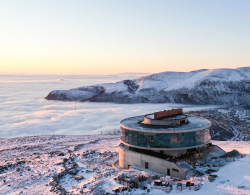
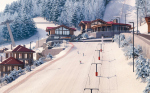
The year-round mountain resort Armkhi situated in Russia’s Republic of Ingushetia is positioned as a destination for calm family recreation and has well-established traditions shaped by its hundred-year history and the culture of the region. The development program prepared by the Genplan Institute of Moscow preserves the resort’s identity while expanding its offerings and introducing new types of tourist leisure. In the near future, the resort will feature a balneological center, a thermal complex, an interactive museum, an extreme park, and, of course, new ski slopes.
09.12.2025
Alyona Kuznetsova. A Satellite Island
The Genplan Institute of Moscow has prepared a master plan for the development of the Sarpinsky and Golodny island system, located within the administrative boundaries of Volgograd and considered among the largest river islands in Russia. By 2045, the plan envisions the implementation of 15 large-scale investment projects, including sports and educational clusters, a congress center with a “Volgonarium”, a film production cluster, and twenty-one theme parks. We explain which engineering, environmental, and transportation challenges must be addressed to turn this vision into reality. The master plan solutions have already been approved and incorporated into the city’s general development plan.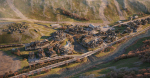
10.11.2025
Alyona Kuznetsova. Peaks of Ossetia
In North Ossetia, a new year-round tourist and recreational cluster, “Mamison”, is being built from scratch – its first section of cable car and ski slopes has already been launched. The comprehensive development plan for this territory was prepared by the Institute for the General Plan of Moscow: in the future, two tourist villages will appear here, along with slopes of varying difficulty, health resorts, and routes that will allow the visitors to explore the region’s historical and cultural heritage in greater depth.
02.09.2025
Julia Tarabarina. Ancient City, Yet Still Somewhat Neglected
The town of Kasimov in the Ryazan Region is Russian-Tatar in character – until as late as 1681 (!) it was the center of a Khanate, albeit under the overall authority of Moscow princes. Today, it is a small tourist town with architectural monuments dating from the 16th-18th centuries and later. The task of the Genplan Institute of Moscow’s summer workshop was to propose interventions for Kasimov that could increase tourist flow while also benefiting local residents. The result was a wide range of ideas – from pedestrian routes to relocating the bus station.
15.05.2025
Dmitry Leonov. Greater Altai: A Systemic Development Plan
The master plan for tourism development in Greater Altai encompasses three regions: Kuzbass, the Altai Republic, and Altai Krai. It is one of twelve projects developed as part of the large-scale state program bearing the simple name of “Tourism Development”. The project’s slogan reads: “Greater Altai – a place of strength, health, and spirit in the very heart of Siberia”. What are the proposed growth points, and how will the plan help increase the flow of both domestic and international tourists? Read on to find out.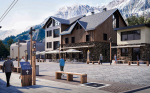
04.03.2025
Alyona Kuznetsova. Elevation 5642
The Genplan Institute of Moscow has developed a comprehensive development project for three ski resorts in the Caucasus, which have been designated as special economic zones of the tourism and recreation type. The first of these zones is Elbrus. The project includes the construction of new ski runs, cable cars, and hotels, as well as the modernization of stations and improvements to the Azau tourist meadow. To expand the audience and enhance year-round appeal, a network of eco-trails is also being developed. In this article, we provide a detailed breakdown of each stage.
24.12.2024
Julia Tarabarina. A Paper Clip above the River
In this article, we talk with Vitaly Lutz from the Genplan Institute of Moscow about the design and unique features of the pedestrian bridge that now links the two banks of the Yauza River in the new cluster of Bauman Moscow State Technical University (MSTU). The bridge’s form and functionality – particularly the inclusion of an amphitheater suspended over the river – were conceived during the planning phase of the territory’s development. Typically, this approach is not standard practice, but the architects advocate for it, referring to this intermediate project phase as the “pre-AGR” stage (AGR stands for Architectural and Urban Planning Approval). Such a practice, they argue, helps define key parameters of future projects and bridge the gap between urban planning and architectural design.
16.12.2024
Julia Tarabarina. Competition: The Price of Creativity?
Any day now, we’re expecting the results of a competition held by the “Samolet” development group for a plot in Kommunarka. In the meantime, we share the impressions of Editor-in-Chief Julia Tarabarina, who managed to conduct a public talk. Though technically focused on the interaction between developers and architects, the public talk turned into a discussion about the pros and cons of architectural competitions.
25.11.2024