студентов, архитекторов, дизайнеров, урбанистов, инженеров, художников, активистов и всех, кто интересуется преобразованием городского пространства
регистрационный взнос:
да
сумма:
от 59 €
награда:
1-я премия 5000 €, 2-я премия 2000 €, 3-я премия 1000 €. 5 золотых упоминаний по 500 €. 10 почетных упоминаний с бесплатным участием в другом конкурсе организатора. 30 финалистов
жюри:
MARYAM MAHVASH, Emily Carr University of Art and Design [Vancouver, Canada]
ANDREA MOLINA CUADRO, Estudio Latente [Los Angeles, USA]
SAMUEL PADILLA LLANO, CUC Universidad de la Costa [Bogotá, Colombia]
LISBET AHON VASQUEZ, Sapienza Universitá di Roma [Rome, Italy]
DIOGO LOPEZ TEXEIRA, Hori-zonte [Porto, Portugal]
организатор:
TerraViva S.r.l. (Италия)
ссылки:
Tactical Urbanism Now! The Revolution of Public Space
Участникам конкурса предлагается представить идеи временных и маломасштабных архитектурных и градостроительных вмешательств в общественное пространство. Конкурс ориентирован на работу с недостаточно рационально используемыми, спорными или заброшенными городскими территориями – от перегруженных улиц до стихийно сформировавшихся общественных зон.
Проекты рассматриваются как прототипы: гибкие, тестируемые и адаптируемые к локальным условиям. Основные акценты: создание условий для активного участия жителей в жизни города, внедрение «зеленых» решений и повышение качества городской среды.
Cities today are navigating a period of intense transition, where environmental pressures, social fragmentation and spatial inequalities increasingly overlap. Heatwaves, sudden rainfall, prolonged droughts and rising temperatures are no longer exceptional events, but recurring conditions shaping everyday urban life. At the same time, public space is being re-evaluated as a crucial common ground: a place where resilience, care and collective action can emerge at the local scale.
In response to these challenges, a growing number of cities are shifting their attention toward lighter, quicker and more adaptable urban strategies. Rather than waiting for long-term, large-scale plans to take effect, communities and designers are experimenting with creative solutions that test ideas in real conditions: transforming car-dominated streets into shared spaces, introducing pop-up green infrastructures to manage water and heat, or activating forgotten pockets of the city to strengthen social ties.
This evolution marks a move from tactical actions as isolated pop-ups toward tactical urbanism as a strategic tool, one that allows cities to prototype change, gather feedback and build evidence before permanent investment. These interventions often rely on modular systems and collective participation, proving that meaningful transformation does not always require complex technology or heavy infrastructure.
The 2026 edition of Tactical Urbanism NOW! focuses on cities as living prototypes, where small, reversible actions help communities adapt to climate stress, reclaim public space and imagine more inclusive urban futures.
Tactical Urbanism
Tactical urbanism offers a hands-on approach to urban transformation, based on short-term, low-cost and community-driven actions capable of generating long-lasting impact. These interventions operate at different scales, from a single street corner to an entire neighbourhood, using experimentation as a way to rethink how public spaces are used and perceived.
Through tactical strategies, underused or problematic spaces can become opportunities: a parking lane can turn into a shaded social area, a traffic island into a small rain garden, or a neglected passage into a safe pedestrian connection. What defines tactical urbanism is not the size of the intervention, but its capacity to test ideas, activate communities and adapt over time.
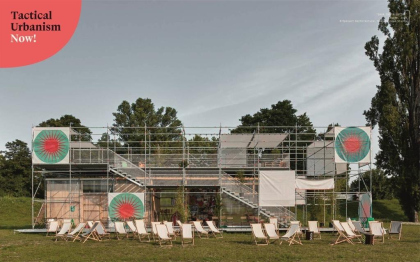
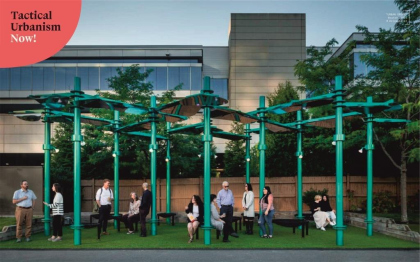
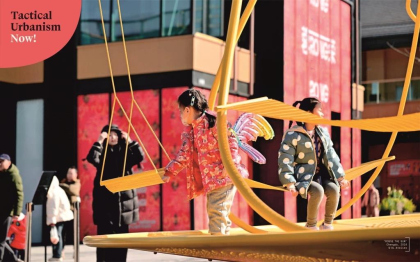
In recent years, this kind of projects have increasingly addressed climate-related issues such as urban heat, water management and lack of greenery, while also reinforcing social inclusion and accessibility. Temporary canopies creating microclimates, modular seating encouraging spontaneous gatherings or painted ground interventions slowing down traffic are just a few examples of how design can act quickly and effectively.
Like urban acupuncture, these precise and targeted actions release energy within the urban fabric, triggering broader transformations that extend beyond their physical footprint.
The Competition
This new edition invites architects, urban designers, planners, artists and creatives from all backgrounds to propose innovative tactical projects that rethink public space through experimentation, adaptability and community engagement.
How can simple, temporary actions help cities cope with climate stress? How can tactical projects reclaim space from cars and give it back to people and nature? How can modular and participatory solutions foster safer, greener and more inclusive urban environments?
Participants are encouraged to explore themes such as:
• People-First Streets: reimagining car-oriented spaces as social, walkable and shared environments; • Community Co-Creation: projects that actively involve residents, users and local stakeholders; • Climate Adaptation: tactical responses to heat, rain, flooding or lack of shade through lightweight and reversible solutions; • Modularity & Flexibility: systems that can be assembled, disassembled and adapted over time.
This competition is an invitation to design realistic, field-ready proposals that can act as catalysts for long-term urban change!
Мы используем файлы cookie как указано в политике конфиденциальности, чтобы обеспечивать правильную работу нашего веб-сайта, функций социальных сетей и анализировать сетевой трафик. Мы также предоставляем информацию об использовании вами нашего веб-сайта аналитическим системам.




 международный