Общий призовой фонд $14 000. Три победителя получают оплаченные приглашения на церемонию награждения; финалисты и обладатели почtтных упоминаний также приглашаются. Вручаются статуэтка, медали и сертификаты, а 20 лучших работ публикуются.
жюри:
Jala Makhzoumi, International Federation of Landscape Architects, Middle, East Region, Lebanon/UK
Carey Duncan, Landscape Architect, Moroccan Society of Landscape Architects, Morocco
Howayda Al-Harithy, Director, School of Architecture and Design, American University of Beirut, Lebanon
Marina Cervera, Adjunct lecturer at Universitat Politècnica de Catalunya, Spanish Society of Landscape Architects, Spain
Ahmed Al-Mallak, Founding director of Tamayouz Excellence Award, Educator at Coventry University, UK
Hayriye Eşbah Tunçay, Professor at the department of Landscape Architecture, Istanbul Technical University, Turkiye
Batoul Faour, Architectural researcher, writer, and filmmaker, Lebanon
организатор:
Tamayouz Excellence Award (Ирак)
при поддержке:
Международной федерации ландшафтных архитекторов (IFLA)
Ближневосточного отделения IFLA
Beirut Urban Lab
American University of Beirut
ссылки:
Rifat Chadirji Prize 2026
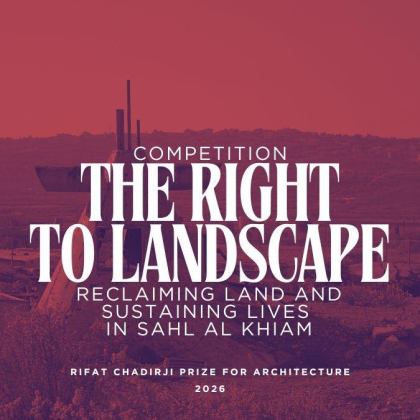
Участникам конкурса предлагается разработать ландшафтную стратегию для восстановления долины Сахль-эль-Хайям на юге Ливана. Она имеет важное сельскохозяйственное и экологическое значение для местного сообщества, но серьезно пострадала от военных действий.
Задача конкурса идей – найти план восстановления, согласно которому ландшафт станет основой для возрождения экономики, поддержания экосистем и повышения качества жизни жителей.
A Landscape Vision for Sahl Al Khiam in Southern Lebanon
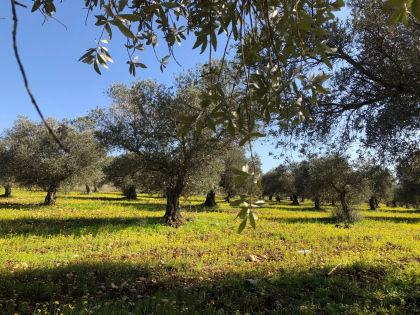
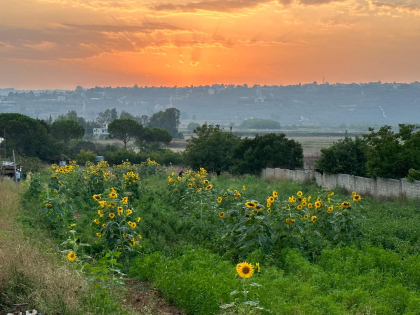
The Rifat Chadirji Award invites landscape architects, architects, and urban planners worldwide to propose a landscape led recovery vision for Sahl Al Khiam in Southern Lebanon. The valley, an agricultural lifeline endured occupation and recurrent bombardment, remains vital to the livelihoods, ecology, and identity of the Khiam community. Despite extensive damage, the Sahl survives as a rare space of continuity and refuge.
This year’s cycle considers Sahl Al Khiam as a key case study for the role of landscape in post war recovery. Participants are invited to address the core design question: How can a landscape led recovery vision for Sahl Al Khiam restore livelihoods, protect ecological systems, and affirm the community’s right to landscape in a landscape that endured occupation and recurrent bombardment?
Proposals should demonstrate how recovery can balance nature conservation with economic regeneration, and community wellbeing with environmental health, through strategic and sustainable interventions that safeguard the long term ecological and spatial integrity of the valley.
Why landscape?
The landscape is part of the land, as perceived by local people or visitors, which evolves through time as a result of being acted upon by natural forces and human beings. Accordingly, landscape is part nature and part culture. It embraces a tangible dimension, physical and spatial, but also intangible cultural perceptions and social valuation associated with a specific context.
The layered meaning of landscape expands the scope of designers, encouraging them to respond not only to what is visible (the land and its nature, the environment), but also to consider intangible social, economic, and political dimensions. The expansive and layered meaning of Landscape has been successfully applied to frame the conservation of natural and cultural heritage, to promote sustainable development, and to address rights and social justice.
A holistic, dynamic landscape reading is not limited to landscape architecture, a new profession in many parts of the world. Rather, it is an approach that can be adopted across design disciplines to write scenarios that respond to the specificity of the place, prioritise social needs, provide for livelihoods and a quality life while ensuring a healthy environment for future generations.
Why Sahl Al-Khiam?
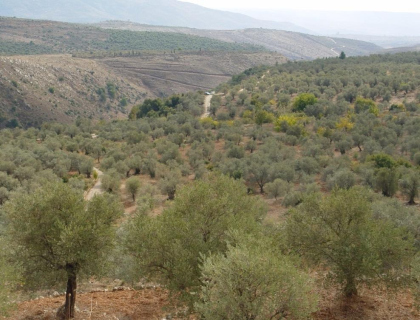
Large valleys such as Sahl Al-Khiam, are distinct geomorphological features of the hilly terrain in southern Lebanon. Whether the valley boasts a river or only seasonal water courses, it plays an important ecological role by contributing to landscape connectivity and the movement of wildlife.
The flat land, fertile soil and environmental sheltering in valleys makes them prime agricultural lands, a shared social and economic asset, their landscape integral to the identity of villages located on ridges that define the valley.
Ecological and cultural significance, the history and scale of Sahl Al-Khiam make it a valued heritage, a cultural landscape, that represents the “combined works of nature and humankind” and that “express a long and intimate relationship between peoples and, their natural environment”.
Valleys in Lebanon are under threat. In times of peace, from the construction of dams and, since 2023, the threat of Israeli bombardment and occupation. The destruction of al-Khiam village has come to amplify the significance of the valley, Sahl Al-Khiam, as a source of income to support the rebuilding of homes, and as a mental refuge from the war-ravaged landscape of the village.
There is as well, the potential threat that residents of destroyed villages might relocate their homes in the flat land of the valley. This would undermine the integrity of the valley landscape, as sustainable ecosystem, as foundation for livelihoods and as heritage with repercussions of transforming the regional landscape character in Southern Lebanon.
Herein lies the challenge of this project, to propose a vision for Sahl Al-Khiam that reaffirms the totality of the valley as a landscape while imagining futures that protect the cultural landscape as central to the survival of people and nature in southern Lebanon.
Мы используем файлы cookie как указано в политике конфиденциальности, чтобы обеспечивать правильную работу нашего веб-сайта, функций социальных сетей и анализировать сетевой трафик. Мы также предоставляем информацию об использовании вами нашего веб-сайта аналитическим системам.




 международный