Три премии за изобретательность, выразительность и устойчивость по $500 каждая и сертификат. 6 поощрительных сертификатов. Топ-30 – сертификат шорт-листа и публикация. Все участники получают сертификат участия.
жюри:
Dr. Khandaker Shabbir Ahmed, Professor of Architecture at Bangladesh University of Engineering and Technology (BUET)
Phnam Bagley, French industrial designer, futurist and aerospace architect
Ar. Rizvi Hasan, Bangladeshi practicing architect whose work focuses on community-driven, context-responsive, and culturally rooted design
Maryam Saleh, Maryam Saleh is a technology and innovation leader dedicated to turning ideas into market-ready solutions that improve lives
организатор:
Платформа Claymire, занимающаяся проектами на стыке дизайна, культуры и социальных изменений
ссылки:
10 Cubic Meter Challenge
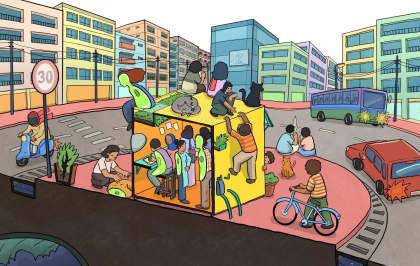
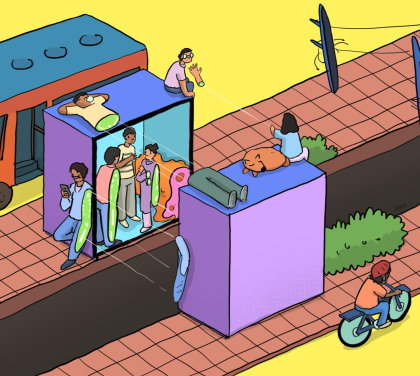
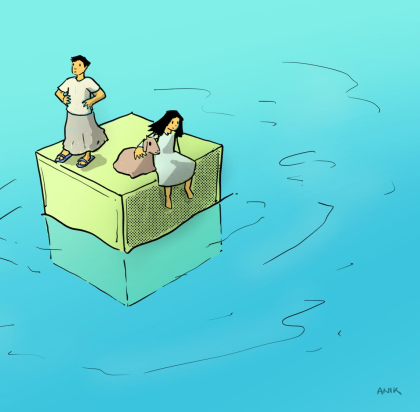
Участникам предлагается представить пространственную идею, объект или инсталляцию, целиком умещающуюся в объем 10 кубических метров. Проект может быть любым по замыслу, форме и назначению. Важен не масштаб сооружения, а глубина идеи и ее выразительность. Проекты оцениваются по трем основным критериям: изобретательность дизайна, смысловая выразительность и способность отвечать на вызовы будущего.
RETHINKING DENSITY, ADAPTABILITY, AND THE FUTURE OF SMALL SPACE
10 Cubic Meter Challenge invites designers, architects, artists, makers, and creative thinkers to reconsider space, meaning, and experience through the discipline of a strict spatial boundary.
Participants are asked to design a spatial idea, structure, object, or installation contained entirely within a maximum volume of 10 cubic meters. Your micro-architecture may be functional, symbolic, emotional, speculative, portable, or expressive — a compact shelter, a ritual chamber, a sculptural monument, a portable module, or a conceptual spatial artifact.
This competition is not about building big, but about thinking deep. A tiny space can be a vessel for memory, care, provocation, adaptation, or future possibility. How can a small volume reveal new ways of living, feeling, or imagining the world?
THE CORE CHALLENGE
Participants must design a spatial concept that fits entirely within:
A fixed maximum volume of 10 cubic meters.
Volume is fixed. Shape is free.
Your 10m³ may explore themes such as placemaking, symbolism, portable systems, modularity, climate-responsive design, outer space micro-habitats, or miniature monumental forms.
There is no thematic restriction. Interpretation is fully open.
ROOTS OF THE MICRO-SPACE
Throughout history, architects and designers have experimented with reducing space to its most essential form. These explorations reveal how compactness can be both a design strategy and a response to human need.
Nakagin Capsule Tower (1972)
Built around the idea of minimal, self-contained capsules, this project explored how compact units could form a flexible and replaceable vertical community. Each capsule functioned as an independent living pod with integrated utilities, demonstrating extreme efficiency within a small footprint. It became an icon of micro-living and modular adaptability in dense urban environments.
Khudi Bari (2020)
Created as a lightweight and transportable dwelling, this project redefines compactness as a tool for resilience. Its small frame can be built quickly using local materials and moved when floodwaters rise, providing secure shelter within a minimal volume. It proves that compact design can carry both practicality and compassion, offering dignity through small space.
THE THREE CORE LENSES
Lens 1 — Design Ingenuity
Architecture as exploration of form, geometry, and spatial intelligence.
This lens celebrates inventive manipulation of the 10m³ volume. Projects may explore expressive or minimal forms, tectonics, compressed spatial sequences, transformable structures, or new relationships between body and micro-space.
Lens 2 — Narrative Depth
Architecture as story, symbolism, and emotional experience.
This lens focuses on meaning — how a tiny space can communicate memory, ritual, identity, movements, emotional atmospheres, or conceptual expression.
Lens 3 — Future Resilience
Architecture as adaptation, utility, and future readiness.
This lens explores the 10m³ space as an adaptive system addressing climate resilience, portability, replicability, outer space habitats, or community micro-hubs.
Мы используем файлы cookie как указано в политике конфиденциальности, чтобы обеспечивать правильную работу нашего веб-сайта, функций социальных сетей и анализировать сетевой трафик. Мы также предоставляем информацию об использовании вами нашего веб-сайта аналитическим системам.




 международный