|
Published on Archi.ru (https://archi.ru) |
|
| 15.12.2025 | |
|
Mountains, Groves, and Ancestral Towers |
|
|
Alyona Kuznetsova |
|
| Studio: | |
| Genplan Institute of Moscow | |
|
The year-round mountain resort Armkhi situated in Russia’s Republic of Ingushetia is positioned as a destination for calm family recreation and has well-established traditions shaped by its hundred-year history and the culture of the region. The development program prepared by the Genplan Institute of Moscow preserves the resort’s identity while expanding its offerings and introducing new types of tourist leisure. In the near future, the resort will feature a balneological center, a thermal complex, an interactive museum, an extreme park, and, of course, new ski slopes. The Armkhi All-Season Tourist and Recreational Complex is one of three special economic zones of the tourist and recreational type in the North Caucasus Federal District being developed by the Genplan Institute of Moscow. Compared to Elbrus and Mamison, it is a relatively small mountain resort where the skiing component is less developed: the total length of the slopes will reach only 10 km. For comparison, in Mamison, which is being built from scratch, this figure is almost ten times higher.  Vladislav Tatarnikov, Project Lead The resort offers a unique combination of services in skiing, wellness, and cultural tourism, addressing the needs of visitors of all age groups while taking into account the cultural traditions of the republics of the Caucasus region. Currently, Armkhi receives 43,000 visitors per year. The resort operates 1.2 km of ski slopes, as well as a double chairlift and a drag lift, with a total length of 800 meters. Accommodation capacity stands at 350 beds. However, the resort’s potential makes it possible to significantly increase these figures and more fully reveal the natural beauty and cultural richness of Ingushetia.   Yulia Barkovskaya, Chief Architect of the Project Given the complexity of the terrain, the overall planning structure of the complex is effectively defined by the existing and proposed ski slopes, lifts, and planned service roads. In the demand structure for ski infrastructure, beginner-friendly slopes classified as blue and green are the most sought-after. The project proposes increasing the total length of the slopes by 9 kilometers. To improve the resort’s capacity, a combined gondola-chairlift system with a length of 1.68 km and one intermediate station will be constructed. The ski season will be extended through an artificial snowmaking system. Special facilities will also be provided for tubing, training, and children’s slopes, including a “magic carpet” conveyor-type lift and a support-free baby lift. The total hourly capacity of all lifts will reach 2,520 people. The development objectives of the resort, the structure of the tourist and guided-tour flow, and the diversity of its resources allowed the project team to distribute visitor groups across different elevation levels, defining three main recreational zones. Active Zone “Summit” The “Summit” zone is intended for the most active visitors and is located near the upper station of the planned cable car at an elevation of 1,866 meters. In summer, it will be accessible via a service road running from the mid-station to the upper levels of the resort, or via the “health trail”, which forms part of a pedestrian route from the foothills to the observation tower. The “Summit” area includes several points of interest beyond the skiing context. Foremost among them is an interactive museum complex dedicated to Ingush culture and history, featuring a 30-meter observation tower offering views of the gorge and Mounts Stolovaya and Kazbek. A restaurant and an amphitheater with panoramic views of the Dzheyrakh-Assa State Historical, Architectural and Natural Museum-Reserve further expand the museum’s functions: the venue can host cultural events, symposia, conferences, and educational programs. From the “Summit” sightseeing platform, the visitors will be able to access the upper zones of the Snow and Extreme Park, located on the northern slope of the Okhnur ridge at an elevation of 1,700 meters. It will include various hiking routes, a two-level ropes course, a rodelbahn, a pump track, and a zip line. The total area of this facility will be about 45 hectares. Hotel Complex “Slope” The mid-level of the resort is the most active area, concentrating the main facilities: an all-season pool complex, a hotel complex, an apartment hotel, a restaurant, cafés, a children’s center, a sports center, guest houses, and villas. The composition of the main complex is shaped by the terrain, while the proposed façade design – with variable heights and terraced development – opens views in all directions, allowing visitors to appreciate the surrounding landscape. The center of the resort is the training slope, located between the intermediate cable car station and the hotel complex. It is surrounded by supporting facilities: a rental point, the Erzi restaurant, a sports center with a shop and café, as well as a multifunctional complex building. Given the resort’s year-round operation, a second focal point is the pool (thermal) complex with panoramic views, designed to cater for 1,000 visitors. It includes a spa area, a bath complex, and medical services. The thermal complex adjoins a 3-4* hotel building with a capacity of 945 guests, which, in addition to standard rooms, includes apartments, guest houses, and villas, as well as a restaurant, cafés, and children’s and sports centers. Along branches extending from the main axis are guest houses accommodating up to 113 people, while two separate sites feature panoramic villas designed to cater for an additional 52 guests. Between the service facilities and the accommodation units, a park of a tourist village is planned, with health paths, children’s and sports areas, and landscaped elements. Pedestrian routes are organized so that visitors can move from one part of the village to another either via longer, traversing paths or via more direct routes incorporating stair connections. Balneological Complex “Foothill” Finally, closest to the pine forest and set apart from the main activity areas is an intimate 5* hotel complex designed for 100 guests. It includes a spa area and a scenic pool, a restaurant and café, and also provides access to the ski slopes, from which it is separated by a small park zone. The accommodation stock consists of hotel rooms and panoramic villas. In this area, an eco-trail approximately 13 km long will begin, forming part of the hiking routes leading to the Lyazhgi waterfall.  Ekaterina Katkanova, Chief Architect of the Project The main objective in shaping the planning structure was to position capital construction facilities in a way that preserves as much as possible the existing valuable pine forest. At the same time, despite the relatively compact size of the resort, the project proposes a variety of accommodation types to suit different visitor preferences: guest houses, glamping, apartments, hotels, and even treehouses. The unifying element of the resort’s overall recreational and sports structure is formed by existing natural features (waterfalls, rivers, etc.), which are integrated into the leisure program through a highly developed network of landscaped walking trails. It is also worth noting that an important component enriching the cultural experience is the presence of cultural heritage sites – numerous architecturally unique tower complexes and archaeological monuments.  Dmitry Smirnov, Chief Economist of the Project A gradual increase in tourist flow is projected for the resort as new tourism infrastructure facilities are commissioned, including a variety of hotel-type accommodations, ski lifts and slopes, as well as other visitor attractions. The growth of visitor traffic is expected to be higher and more uneven, due to the significant share of local residents living within a 1.5-hour driving distance from the resort. A distinctive feature of the projected growth in tourist and excursion indicators is that, with proper marketing, they may more than double within 5-10 years after the completion of the main infrastructure facilities of the Armkhi All-Season Tourist and Recreational Complex. Peak of the load on ski infrastructure is expected during holidays and major events, including large-scale sports competitions. In winter, the comfortable peak load will be around 2,000 simultaneous tourists and excursion visitors. A comparable load is expected in summer, with the difference that now this period will represent the high season for the Armkhi resort. Due to the natural and climatic characteristics of the area, the summer tourist season at the resort is 1.5 to 2 times longer than the winter season. This pronounced seasonal character, with a high season occurring during the extended warm period, clearly distinguishes the resort from most existing and planned ski complexes in the North Caucasus. This factor allows the Armkhi complex to function without an extensive network of ski slopes and cable cars, while at the same time requiring a focus on the development of diverse additional activities. During the warm period – from early or mid-May to mid or late September – the majority of tourist and excursion flow will occur, amounting to approximately 100,000 visitors. In the high season, the average occupancy rate of accommodation facilities will be around 66%, with an average stay of 7.2 days. In the low season, which falls in the shoulder periods, hotel occupancy will be at least 35%, with an average stay of about 4.8 days. By 2035, the number of visitors to Armkhi is expected to reach 180,000. The total accommodation capacity within the resort will amount to 1,395 beds, with an average stay of multi-day visitors of 5.5 days. 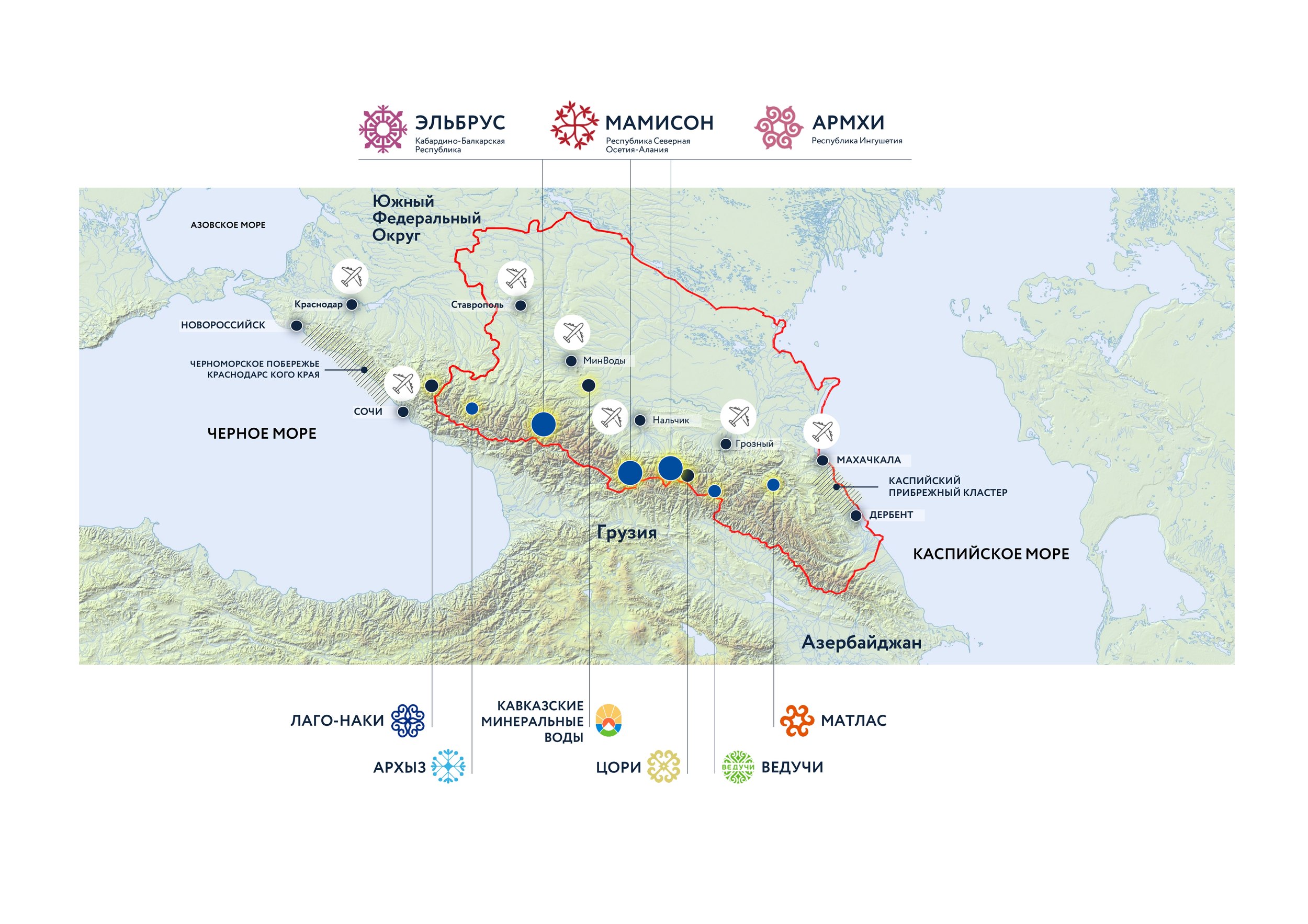 Tourist Cluster of the North Caucasus Federal DistrictCopyright: © Genplan Institute of Moscow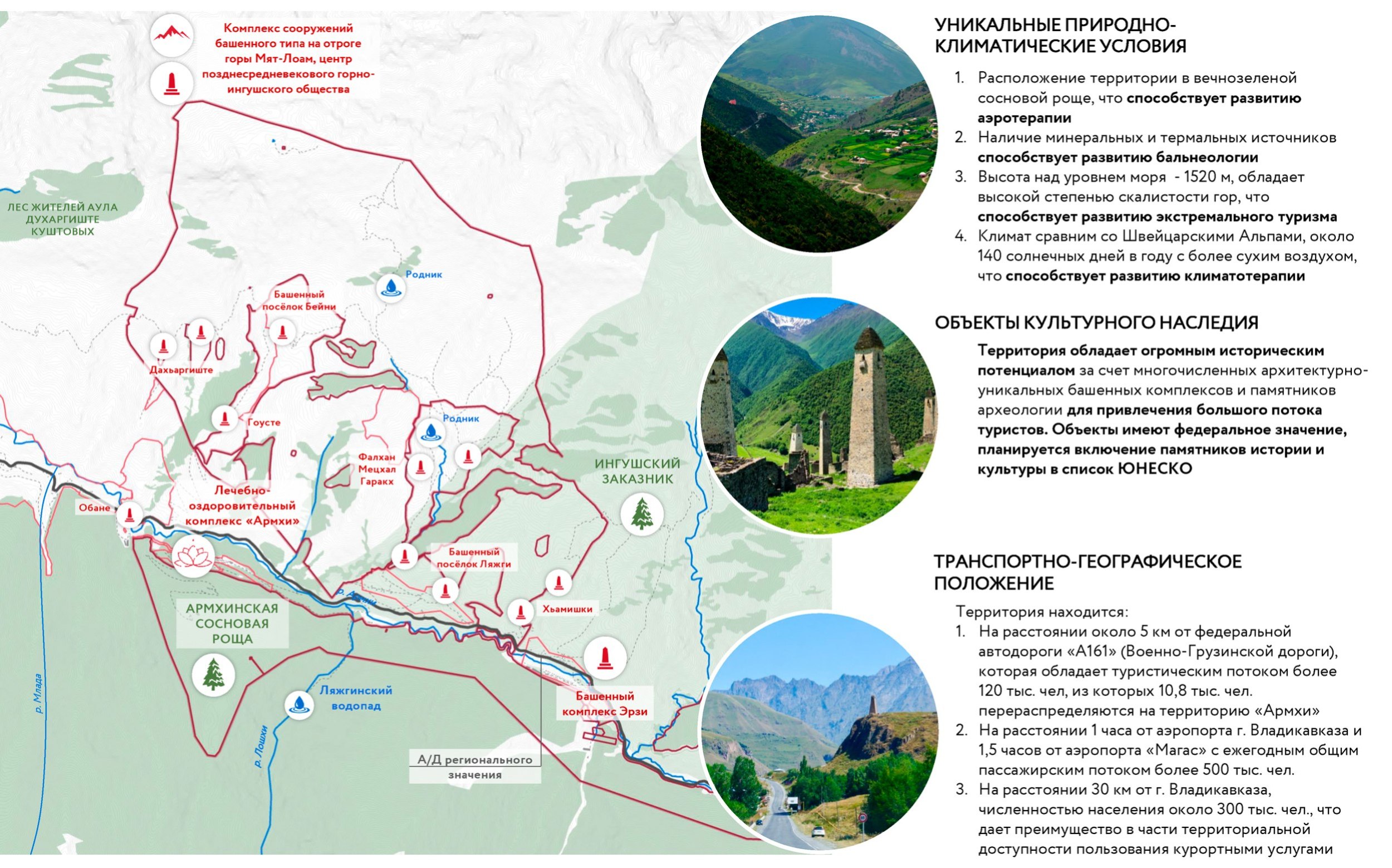 Overview diagram and resort development potentialCopyright: © Genplan Institute of Moscow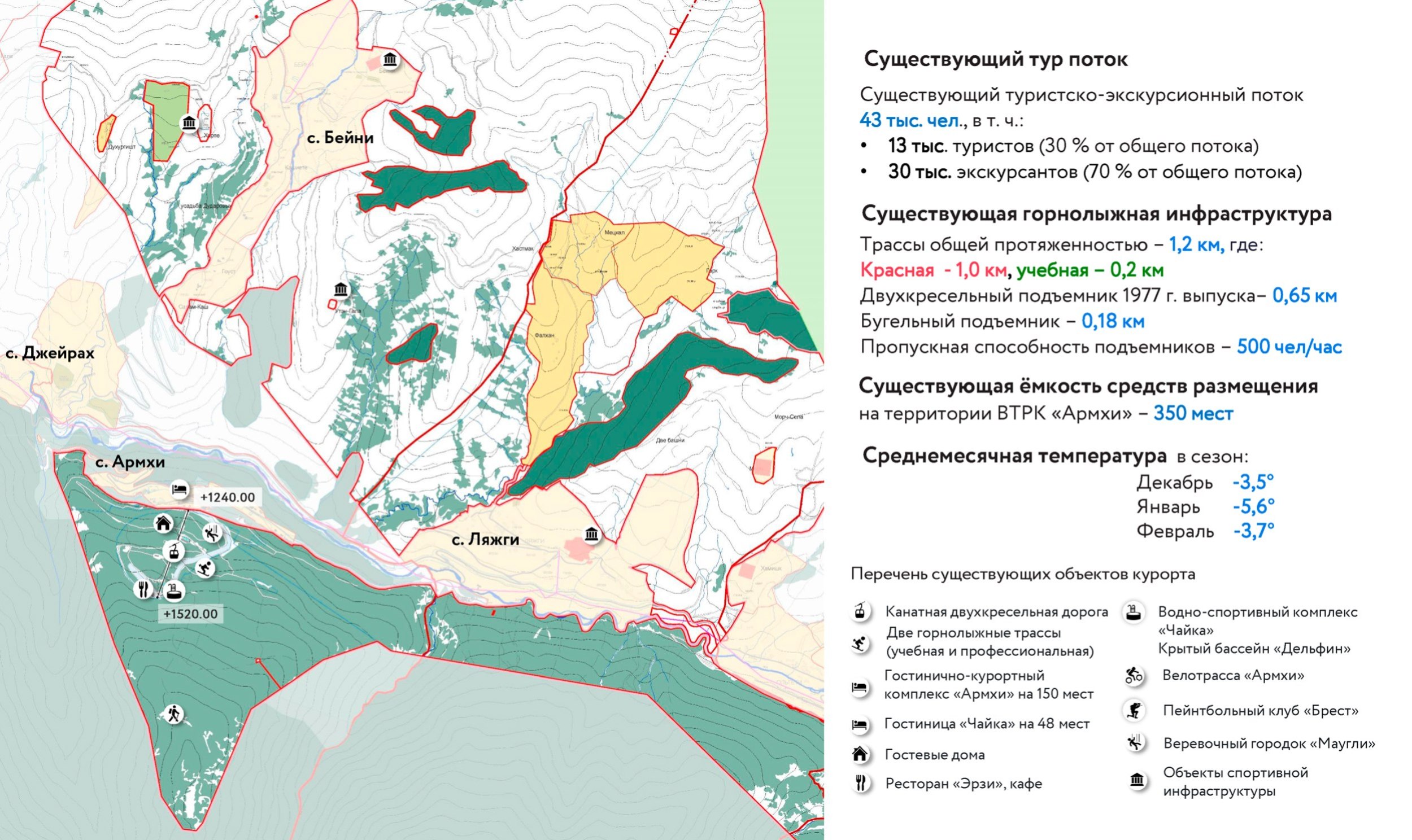 Armkhi all-Season tourist and recreational complex. Current statusCopyright: © Genplan Institute of Moscow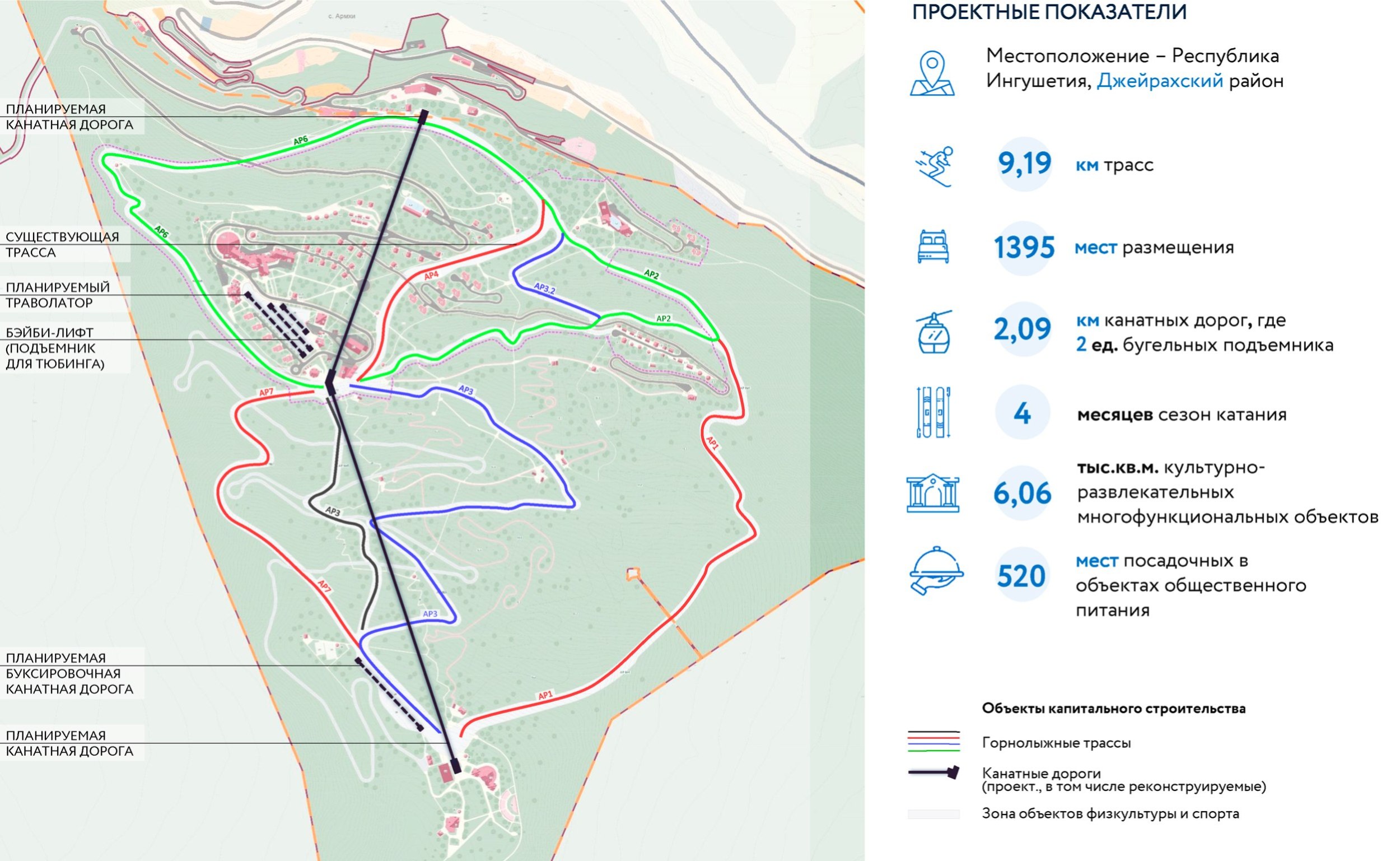 Development of skiing infrastructureCopyright: © Genplan Institute of Moscow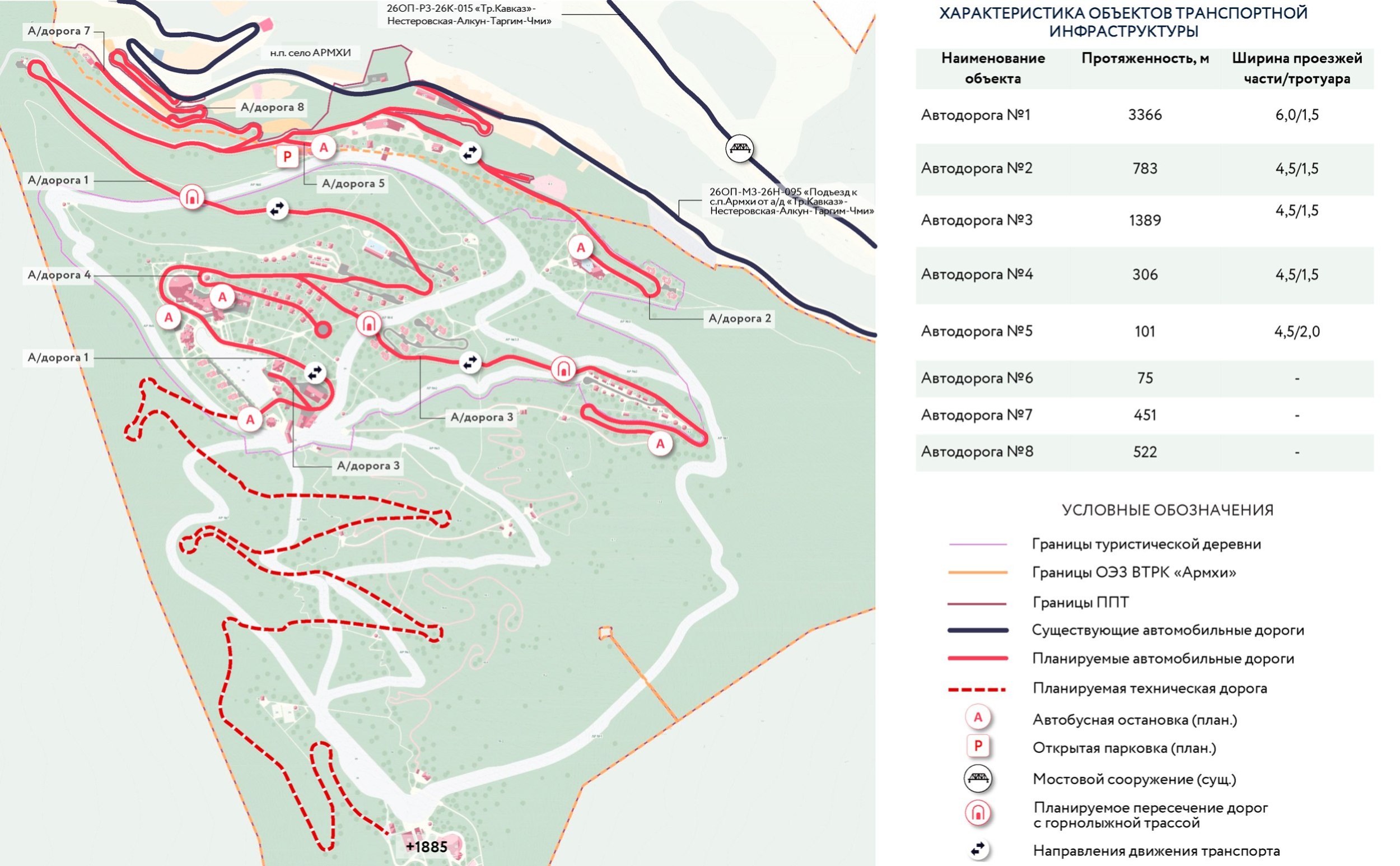 Development of transport infrastructureCopyright: © Genplan Institute of Moscow Armkhi all-Season tourist and recreational complex. The architectural conceptCopyright: © Genplan Institute of Moscow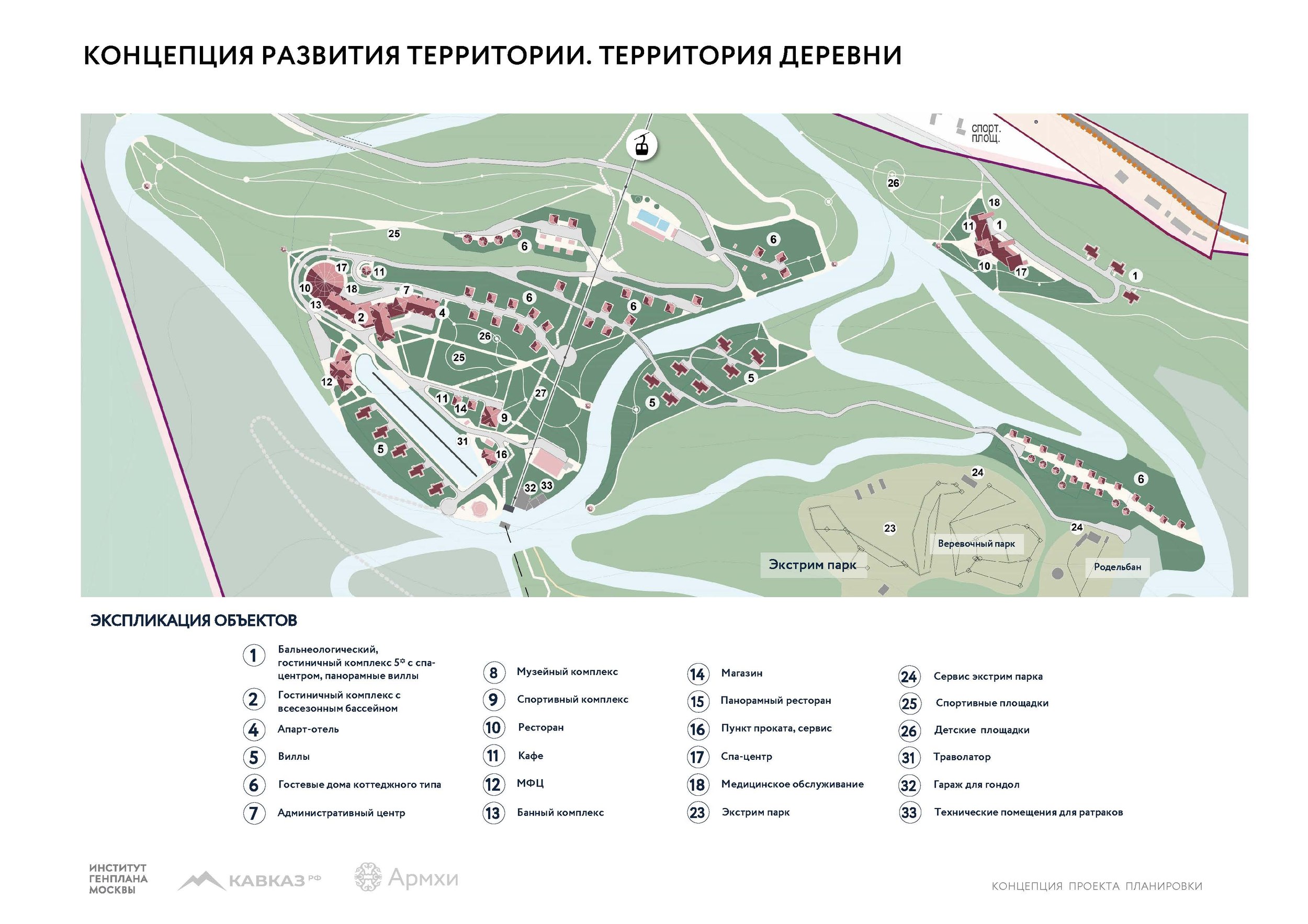 Armkhi all-Season tourist and recreational complex. Development of the tourist villageCopyright: © Genplan Institute of Moscow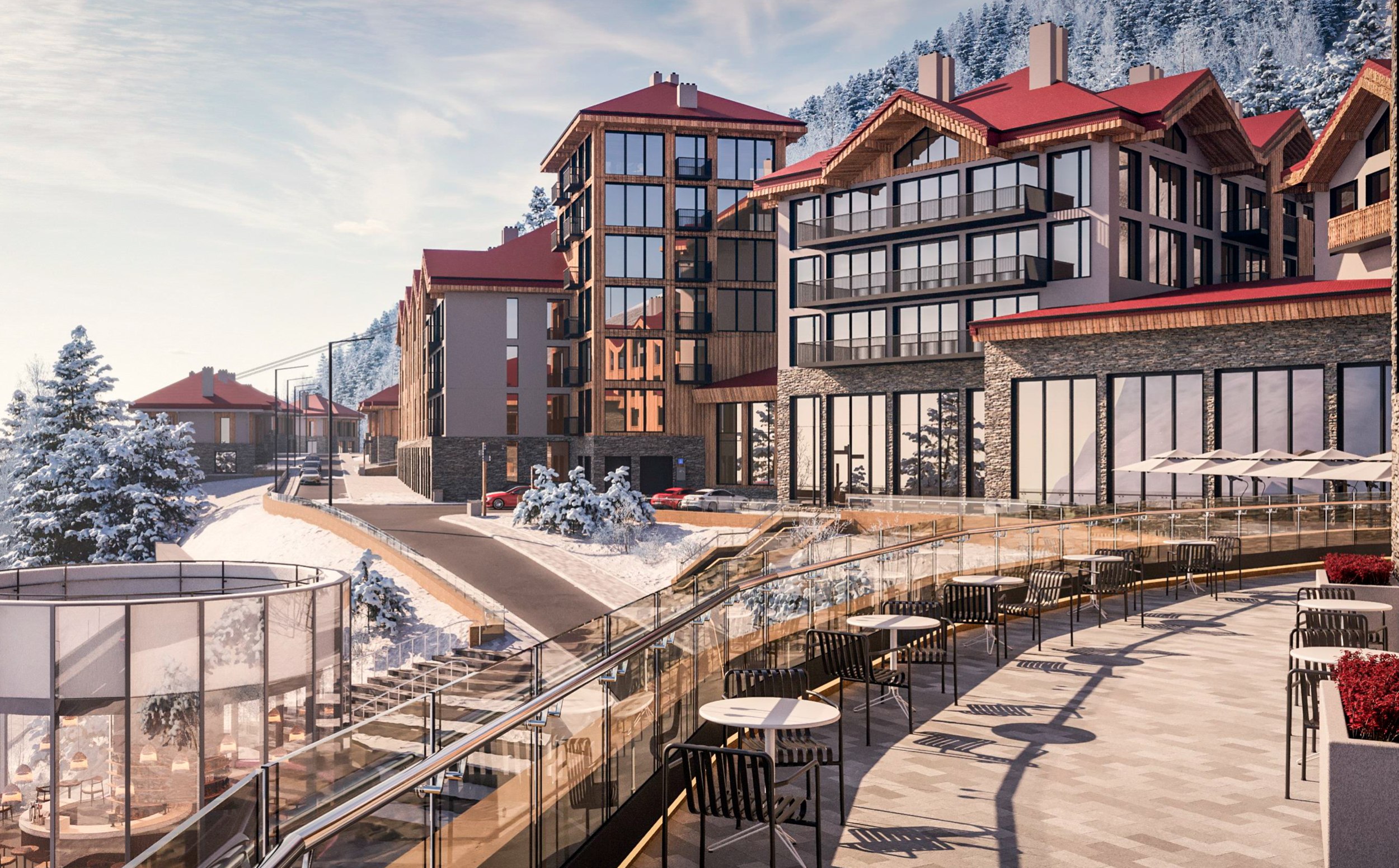 Armkhi all-Season tourist and recreational complex. The architectural conceptCopyright: © Genplan Institute of Moscow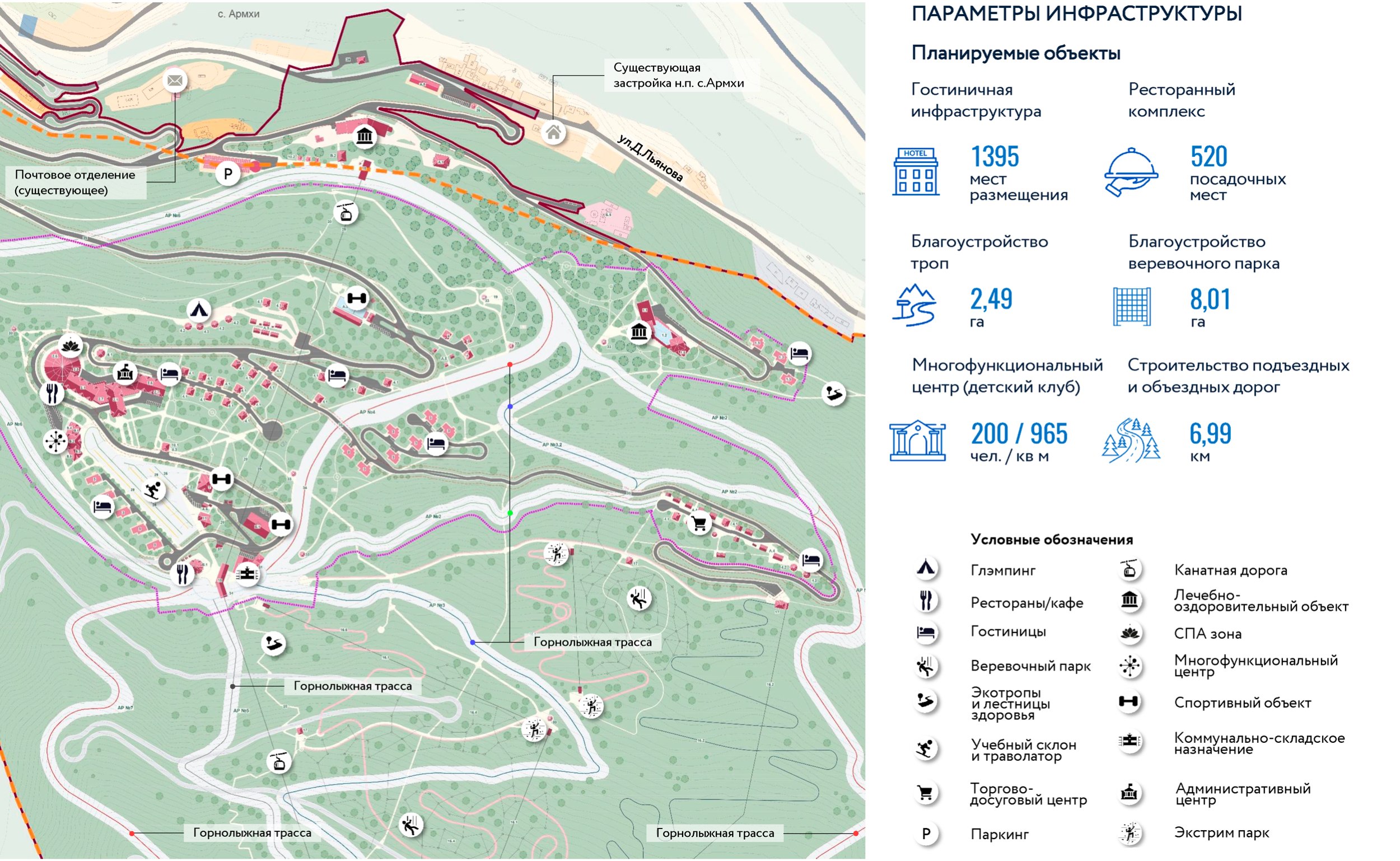 Armkhi all-Season tourist and recreational complex. Development of the tourist villageCopyright: © Genplan Institute of Moscow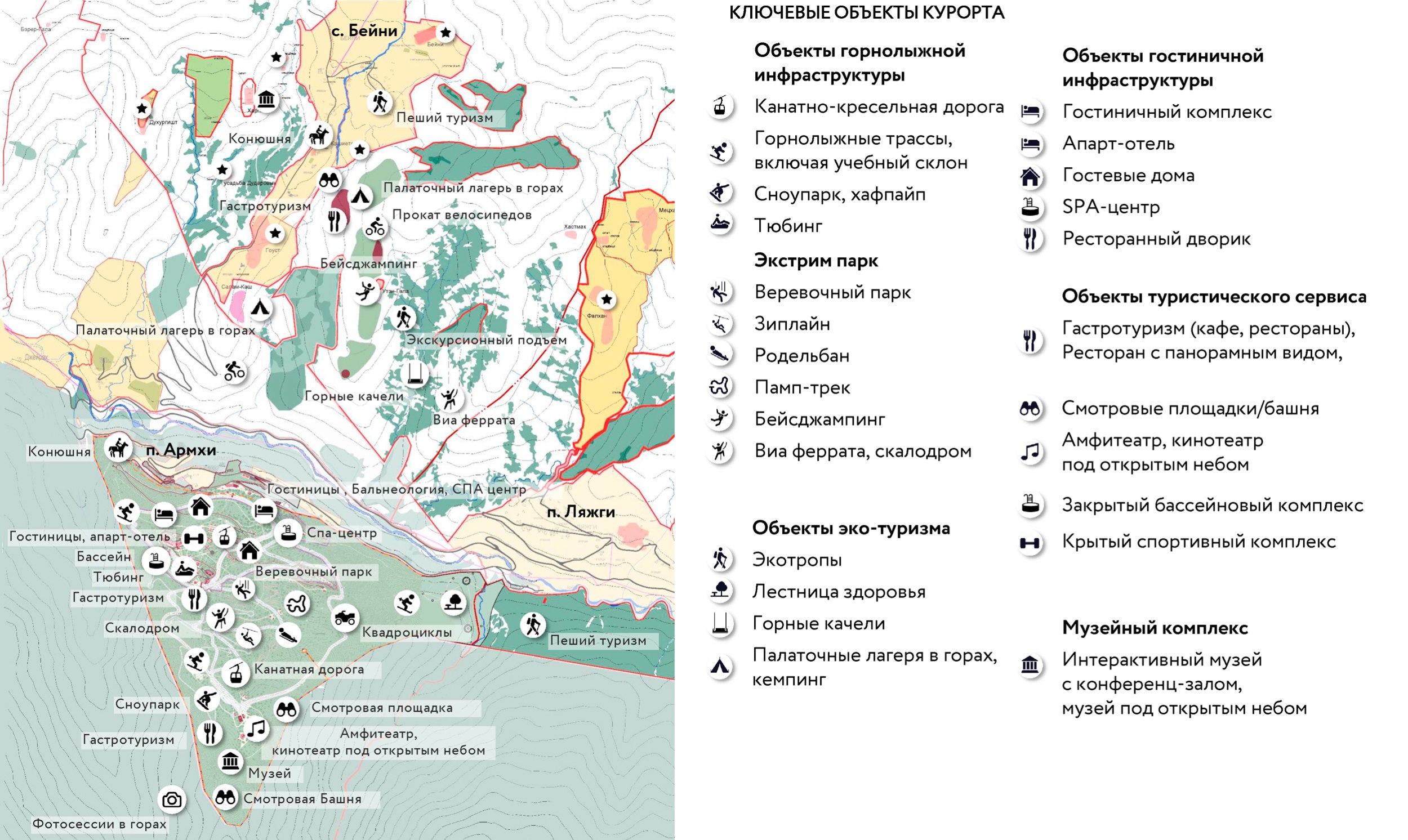 Overview diagram: year-round development conceptCopyright: © Genplan Institute of Moscow |
|