|
Published on Archi.ru (https://archi.ru) |
|
| 10.11.2025 | |
|
Peaks of Ossetia |
|
|
Alyona Kuznetsova |
|
| Studio: | |
| Genplan Institute of Moscow | |
|
In North Ossetia, a new year-round tourist and recreational cluster, “Mamison”, is being built from scratch – its first section of cable car and ski slopes has already been launched. The comprehensive development plan for this territory was prepared by the Institute for the General Plan of Moscow: in the future, two tourist villages will appear here, along with slopes of varying difficulty, health resorts, and routes that will allow the visitors to explore the region’s historical and cultural heritage in greater depth. In March 2025, the new Mamison ski resort in North Ossetia opened in technical mode. Until recently, there were only mountains here: in the village of Kamkho, where two cable car stations now operate, only four people lived in 2021. By 2030, everything will change significantly: Mamison is set to become a worthy alternative to the resorts of Krasnaya Polyana, Elbrus, Arkhyz, and neighboring Ingushetia, with an expected total annual flow of more than 600,000 skiers and snowboarders. The comprehensive development plan for the territory was prepared by the Genplan Institute of Moscow, which is also working in parallel on two other tourist and recreational special economic zones – Elbrus and Armkhi.  Vladislav Tatarnikov, Project Lead Most visitors use ski slopes of medium and low difficulty – the so-called “blue” and “green” runs. From this perspective, Mamison is hardly inferior to the Rosa Khutor resort. The planned slope structure includes nearly 20 kilometers of “green” runs (including training slopes) and about 44 kilometers of “blue” runs. This accounts for 67% of the total length of all slopes at the resort and indicates that every guest will feel comfortable on the slopes, while beginners will not be forced to “survive”. The total length of the slopes will exceed 94 kilometers, while the total length of lifts will reach 36 kilometers (25 cable cars and 10 conveyor lifts).  Treasures of the Ridge Outside the ski season, the resort also has a lot to offer: in the vast mountains, gorges, and passes that are themselves a magnet for lovers of hiking in nature, there are hidden mineral springs and historically significant sites – for example, ancestral settlements dating back to the 15th-18th centuries. In total, within the boundaries of the Mamison All-Season Tourist and Recreational Complex there are 31 federally protected cultural heritage sites, 20 regional cultural heritage sites, and 13 newly identified heritage sites.  Olga Blagodeteleva, chief architect of the project The natural and cultural and historical diversity of the territory, the presence of a large number of architectural monuments, unique landscape features, and mineral water sources make it possible to develop virtually all types of tourism in Mamison, including the most common ones: recreational, cultural, health and wellness, business, sports, extreme, ecological, and rural tourism. Points of interest will be connected by a network of hiking routes running through mountain villages, as well as eco-trails. To attract visitors during the warm season and create a universal year-round resort, it is proposed to develop infrastructure for mountaineering, horseback riding, and cycling (including mountain biking), as well as to build family-oriented active recreation parks. Two Villages Modeling and calculations show that the above activities will attract a significant flow of visitors.  Dmitry Smirnov, chief economist of the project The creation of a fully operational, year-round resort of national significance will make it possible to attract tourists from other regions of Russia who seek to engage with local culture, enjoy a variety of activities, and experience something new. The growth of tourist flow at the Mamison All-Season Tourist and Recreational Complex is expected to be uneven, as it is directly linked to the commissioning of tourism infrastructure facilities – primarily hotels, ski lifts, and slopes. At the same time, the increase in excursion visitors, a significant share of whom will be local residents, will be more gradual, though still with noticeable fluctuations. Peak simultaneous visitor numbers at the Mamison complex will occur during holidays and major events, such as large-scale sports competitions with spectators, festivals, fairs, theatrical performances, or the opening of new key infrastructure facilities. During these periods, the main load on the ski resort infrastructure will come from excursion visitors, as the maximum number of tourists staying within the complex is limited by accommodation capacity and the throughput of infrastructure facilities, with a particular emphasis on ski infrastructure in winter. The Mamison complex will exhibit pronounced seasonal unevenness in both tourist and excursion flows, typical of most ski resorts in the Caucasus. The summer tourist season at Mamison is 1.5 or 2 times shorter than the winter season due to the natural and climatic characteristics of the area. The majority of tourist and excursion flow will occur during the winter period – around 440,000 visitors. In the high season, the average occupancy rate of accommodation facilities will be about 70%, with an average stay of 5.5 days. In the low season, which falls during the warmer months, hotel occupancy will not exceed 40%, with an average stay of around 5 days. The mix of sports, recreational, and tourism facilities proposed for the Mamison complex has been designed to be максимально diverse, so that total tourist and excursion flow during the shoulder seasons and summer remains comparable to that of the high season (winter and part of spring). This will help ensure that occupancy levels outside the high season do not fall below a level that would render such facilities unprofitable. The creation of new ski infrastructure facilities, accommodation, and sports and tourism amenities will make it possible to reach the following indicators by 2040:
Hotels and necessary infrastructure facilities will be distributed across two tourist villages yet to be built here. The first and larger village, “Kalak”, is located in the area of the existing village of Kamkho. Its layout is largely defined by the location of the lower station of the main cable car, squeezed between the foot of the mountain and the main road running along the Mamikhdon River. A planned pedestrian street, around which the system of public spaces is structured, will connect the hotel and public and recreational zone with the lower cable car station. Near the village of Lisri, a museum complex, a family-oriented active recreation park, and balneological facilities will be located. And, finally, near the village of Zgil, a public center will be established. The second village, “Kozykom”, is located closer to the border with South Ossetia and has a similar linear structure formed along the Kozydon and Zemegondon rivers. This village has two planning cores, each consisting of a public square with service facilities, cable car stations, ski run-out zones, and parking areas. Key attractions of this village will include a water park and a cultural center. An architectural code applies to all buildings within the Mamison resort villages. It prohibits the use of profiled steel sheeting and artificial stone cladding, favoring wood, natural stone, glass, and concrete instead. To support the tourist villages, it is necessary to construct a domestic water supply system, sewage and rainwater drainage networks, power transmission lines, treatment facilities, communication nodes, transformer substations, and a range of other engineering infrastructure. Currently, 10 residents are registered within the special economic zone. Two of them operate eco-villages for guests; restaurants and cafés are also functioning, and equipment rental services are available. The Kalak-Zaramag gondola lift, with a length of 3.3 kilometers, is already the longest in the North Caucasus. The grand opening of the first phase of the resort is scheduled for autumn 2025. 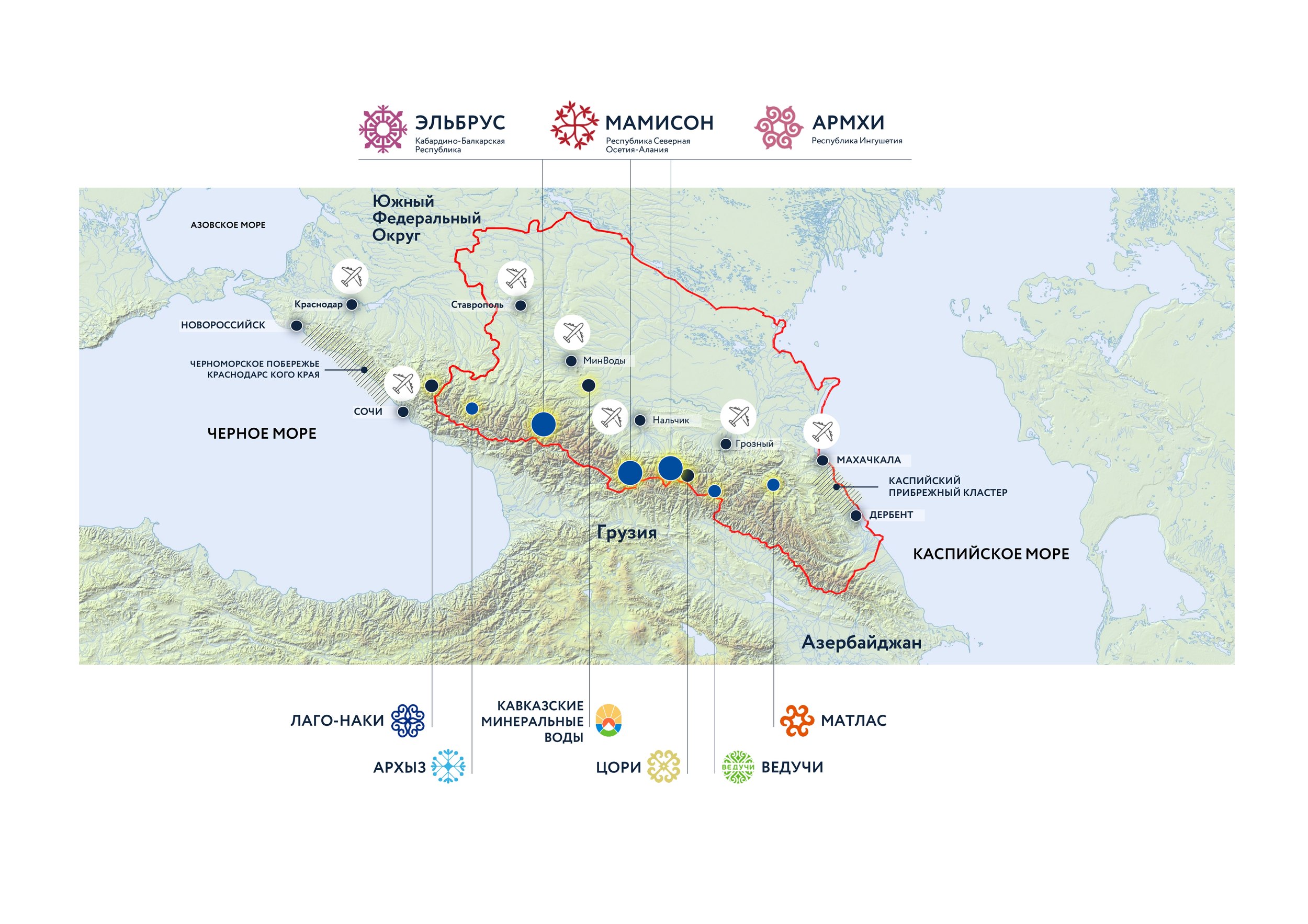 Tourist Cluster of the North Caucasus Federal DistrictCopyright: © Genplan Institute of Moscow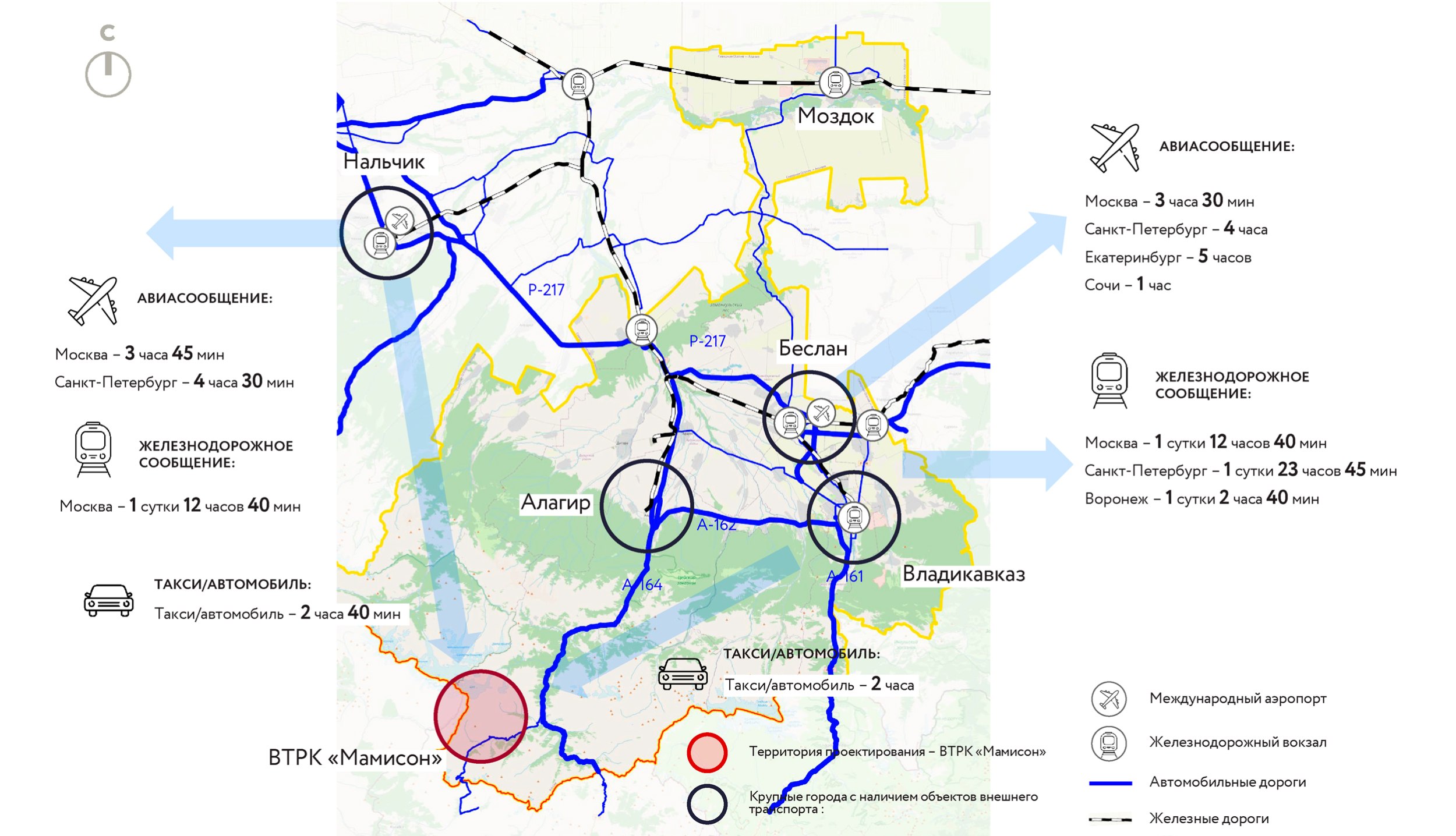 Mamison all-season tourist and recreational complex. Location planCopyright: © Genplan Institute of Moscow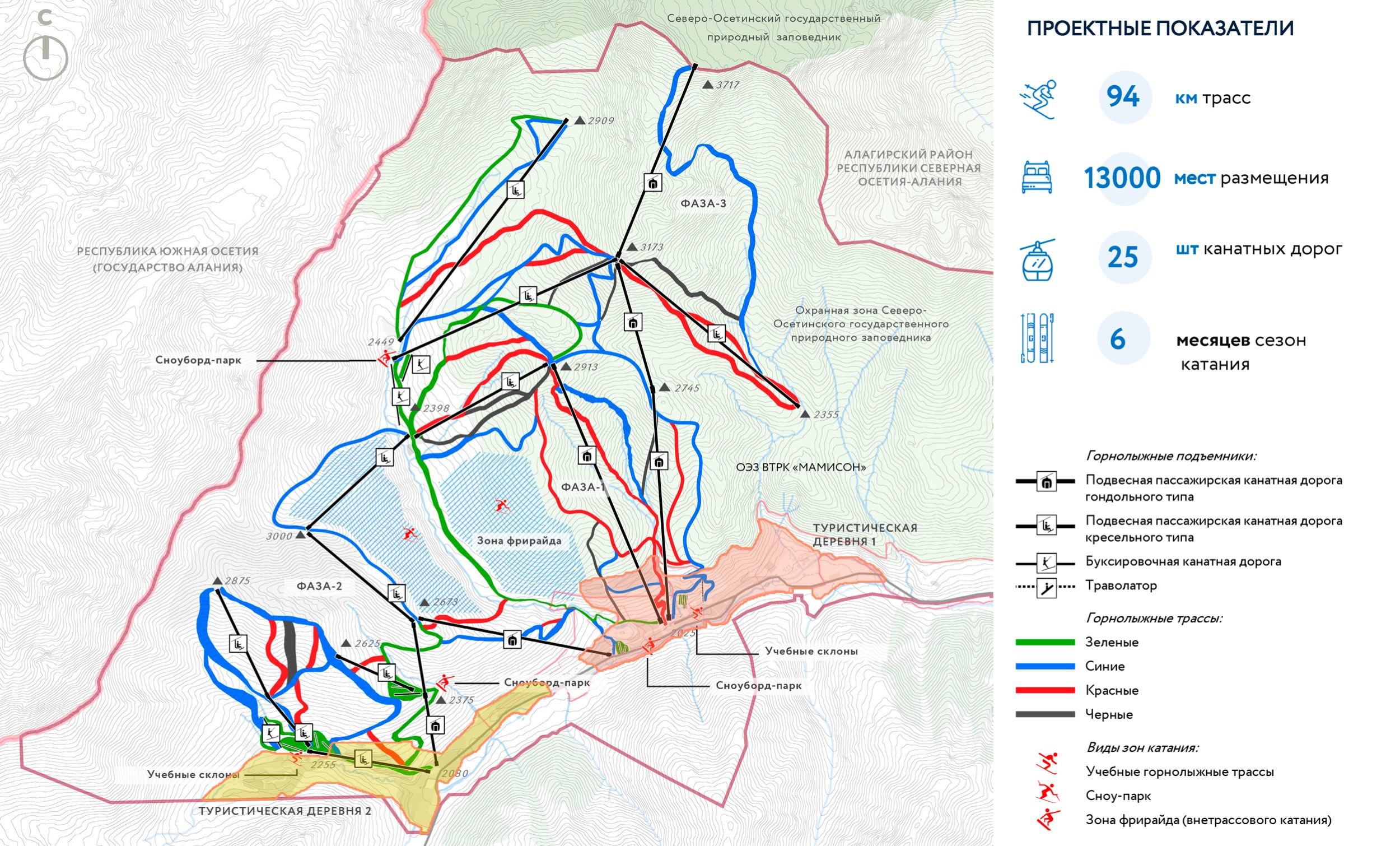 Mamison all-season tourist and recreational complex. . Development of skiing infrastructureCopyright: © Genplan Institute of Moscow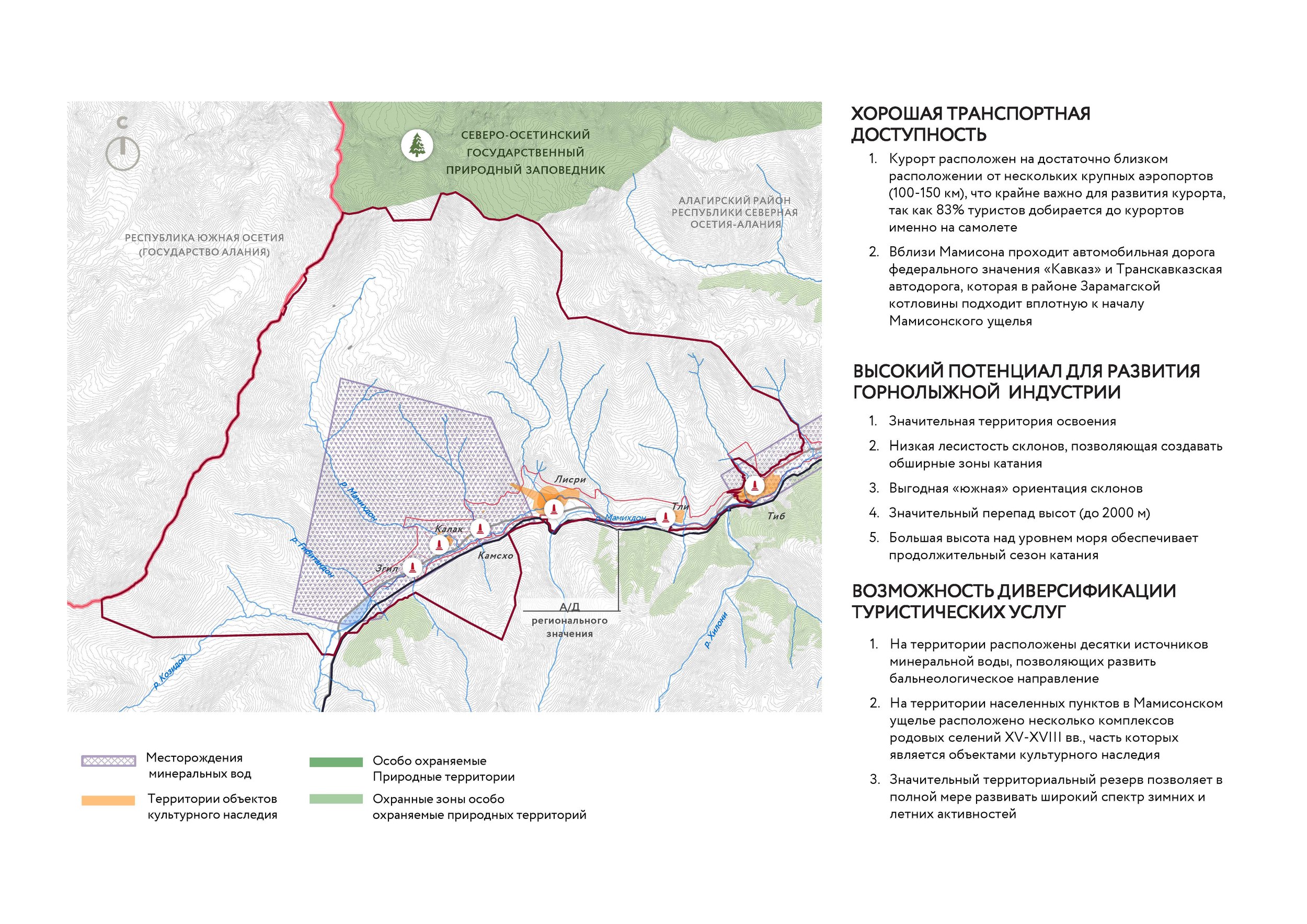 Overview diagram and resort development potentialCopyright: © Genplan Institute of Moscow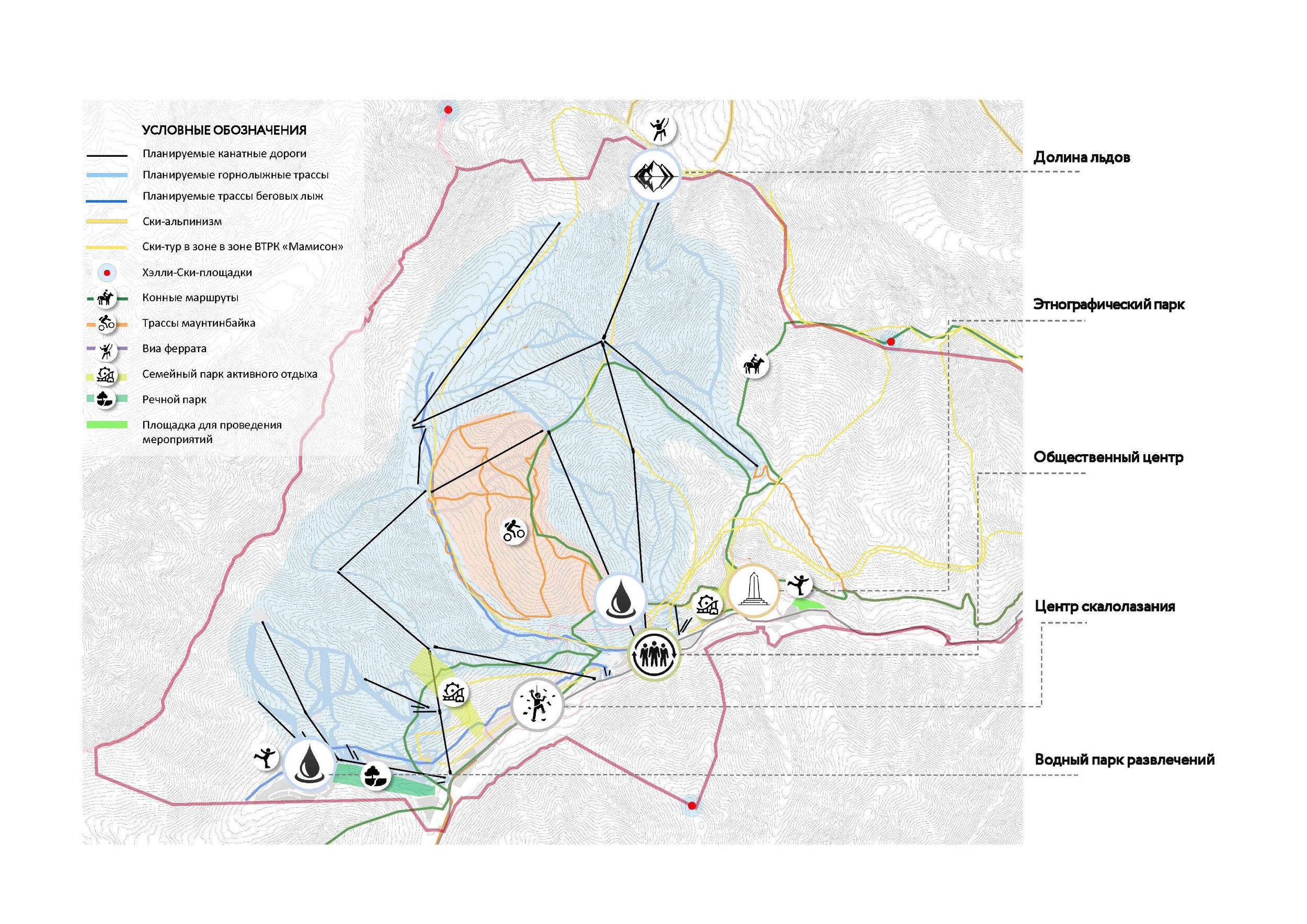 Mamison all-season tourist and recreational complex. Year-round use of the resortCopyright: © Genplan Institute of Moscow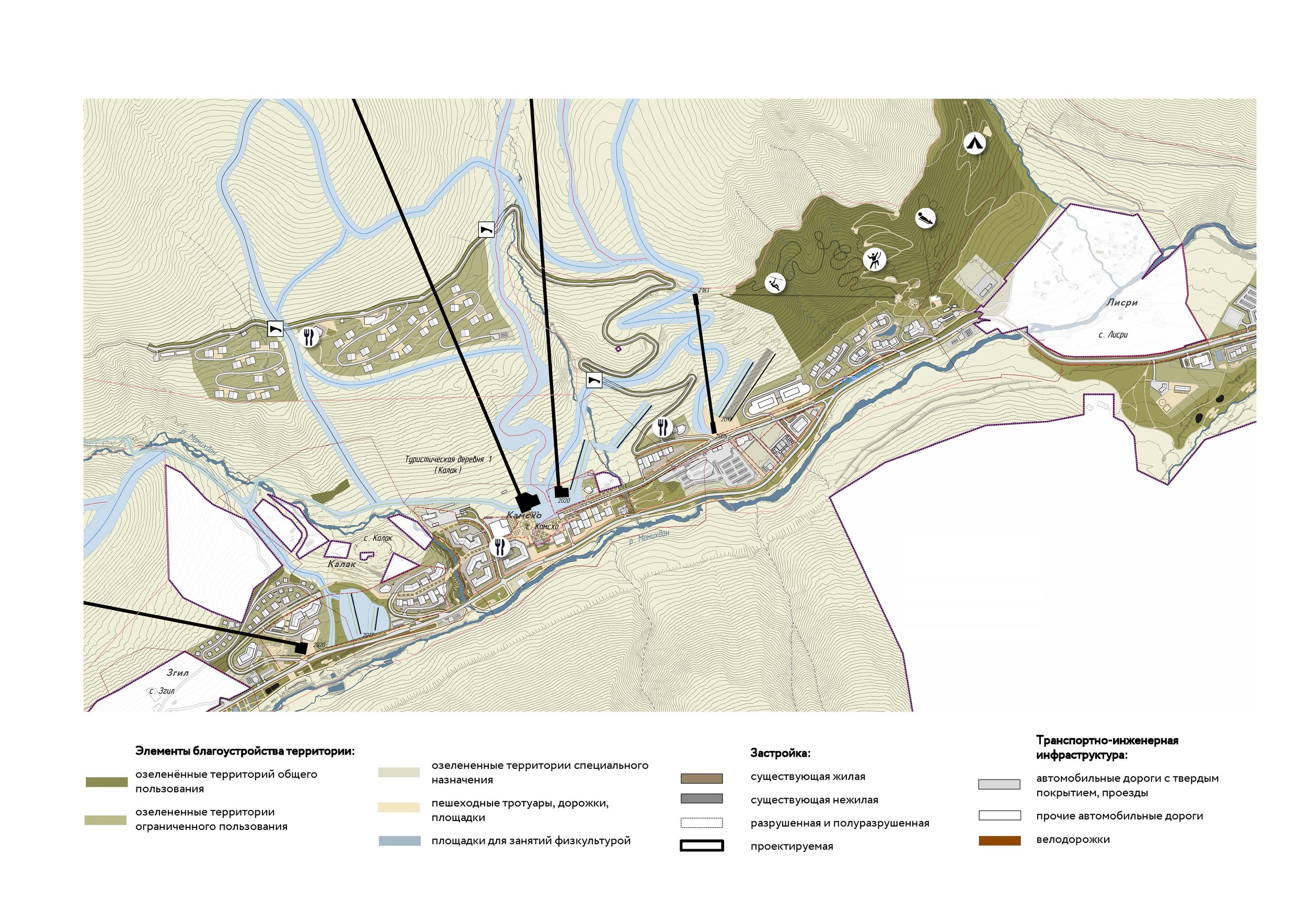 Mamison all-season tourist and recreational complex. Sketch of development for Tourist Village # 1 (fragment)Copyright: © Genplan Institute of Moscow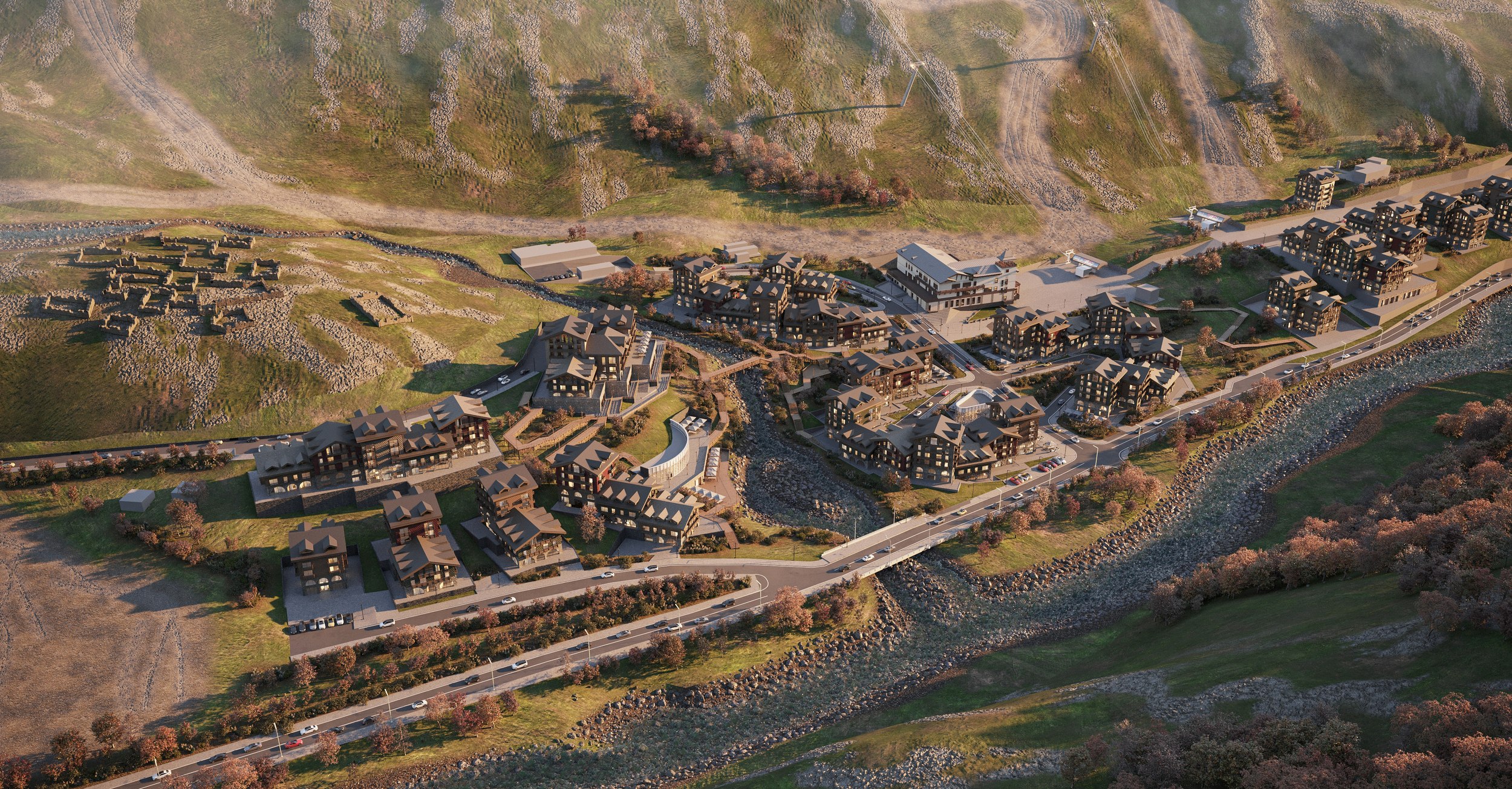 Tourism cluster of the North Caucasus Federal District. Mamison all-season tourist and recreational complexCopyright: © Genplan Institute of Moscow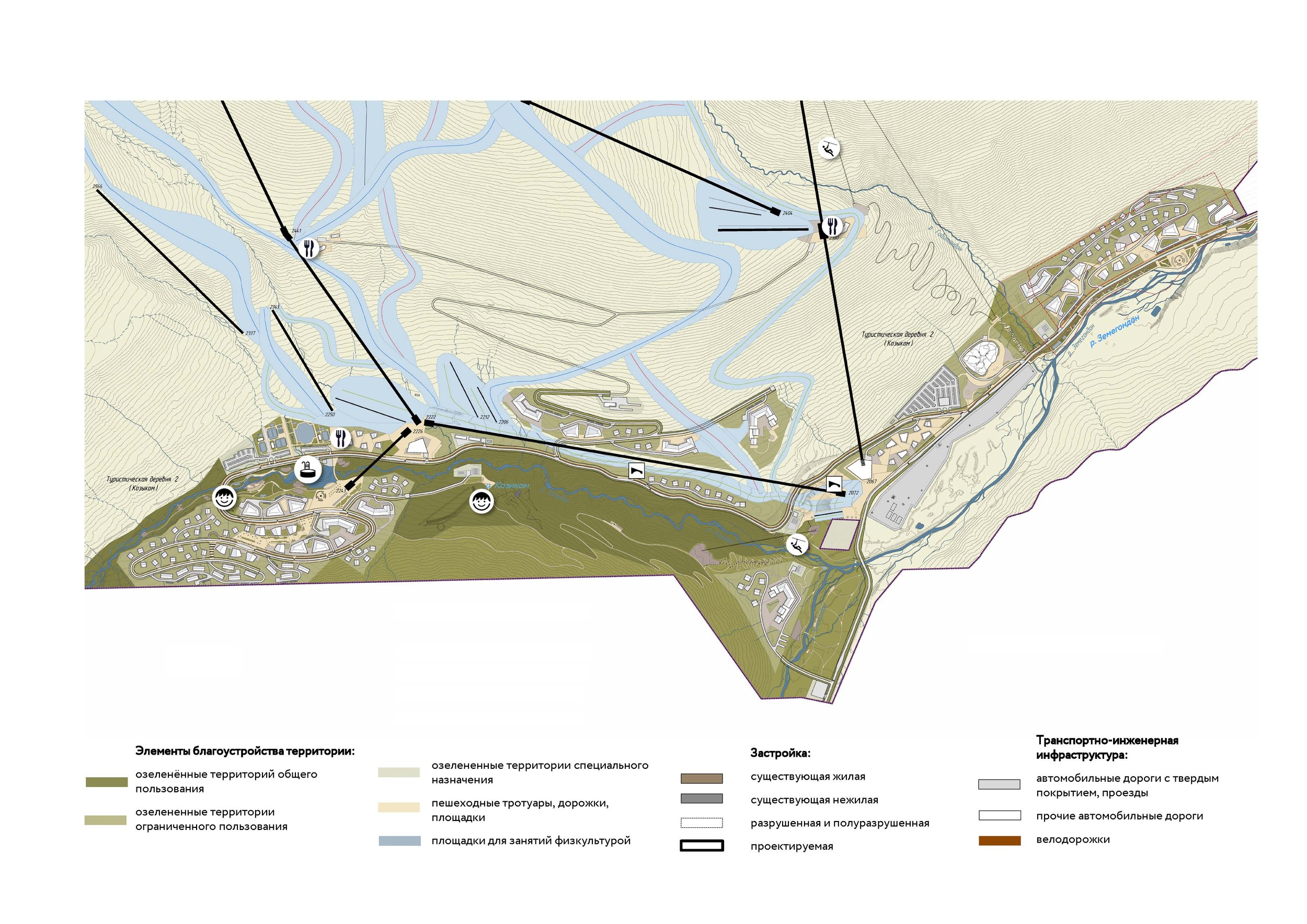 Mamison all-season tourist and recreational complex. Sketch of development for Tourist Village # 2 (fragment)Copyright: © Genplan Institute of Moscow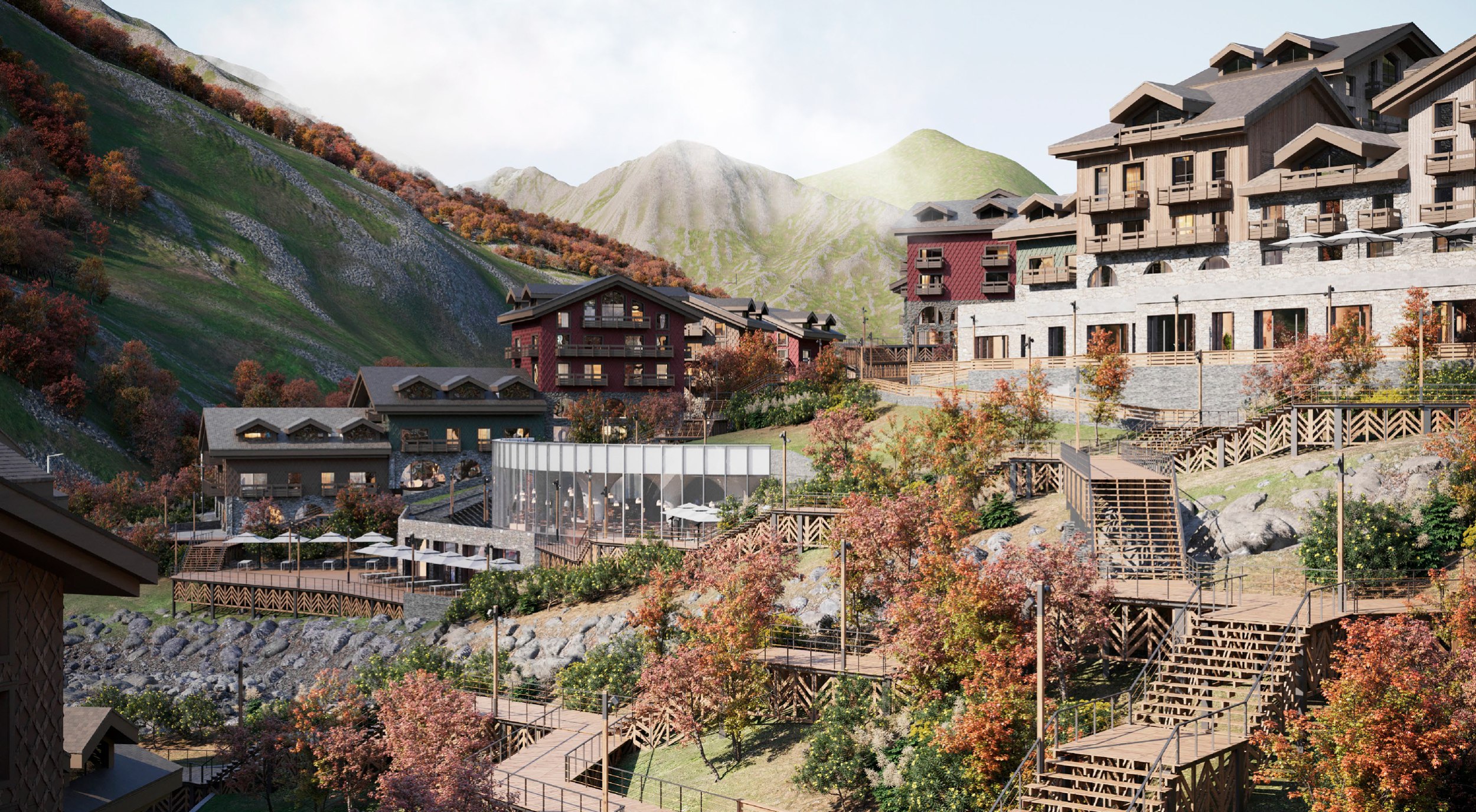 Architectural conceptCopyright: © Genplan Institute of Moscow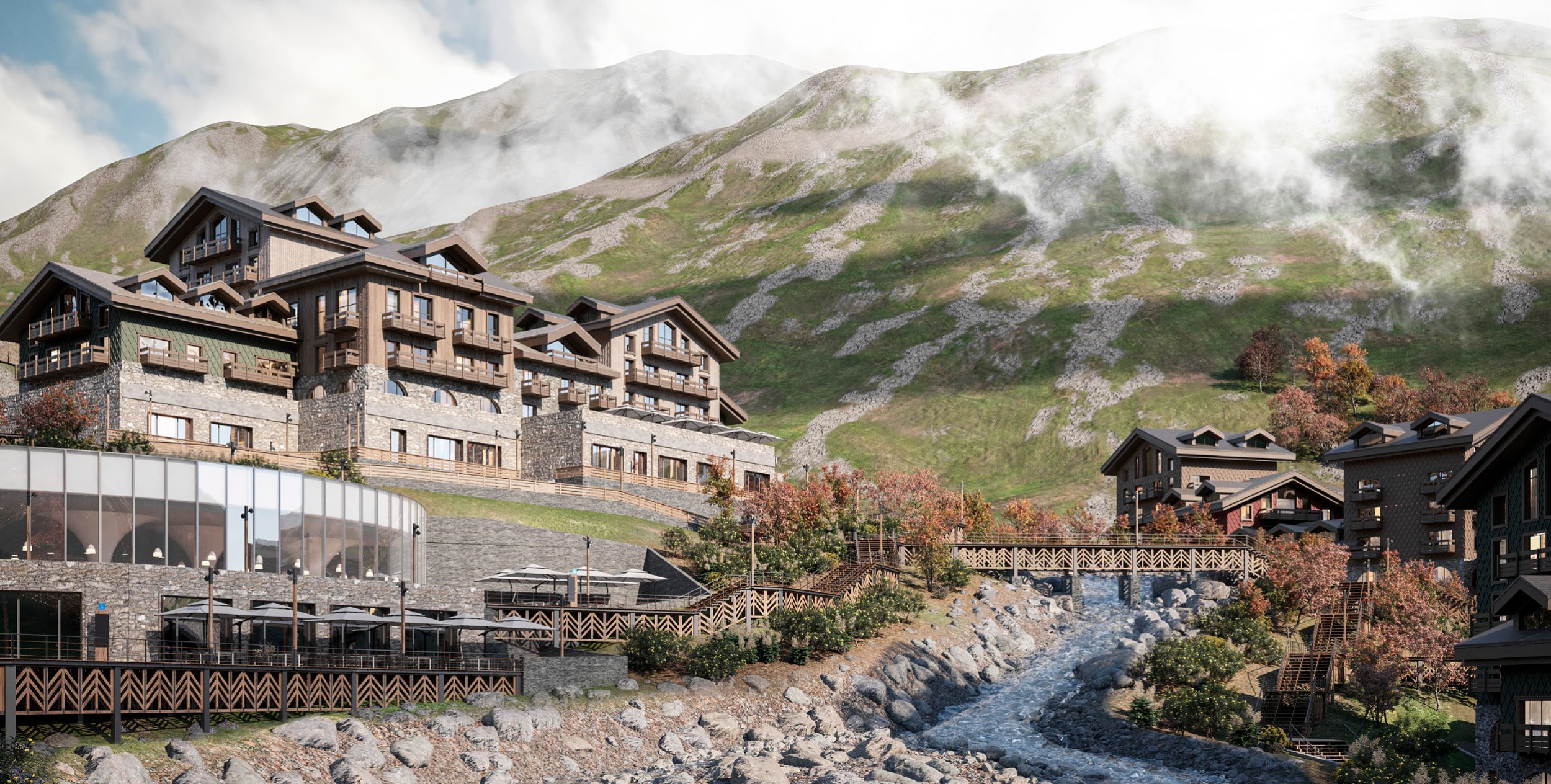 Tourism cluster of the North Caucasus Federal District. Mamison all-season tourist and recreational complex. Architectural conceptCopyright: © Genplan Institute of Moscow |
|