|
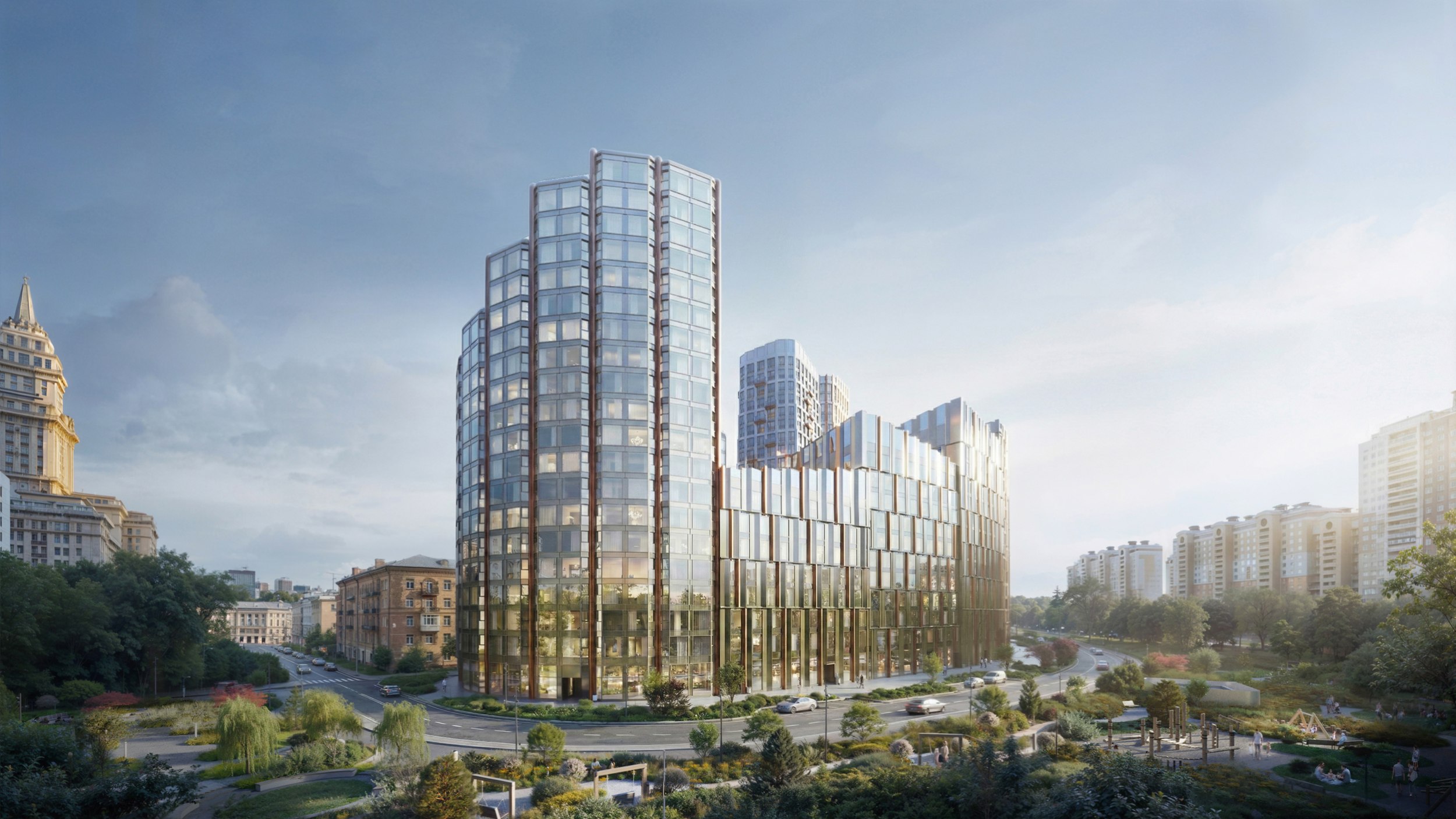
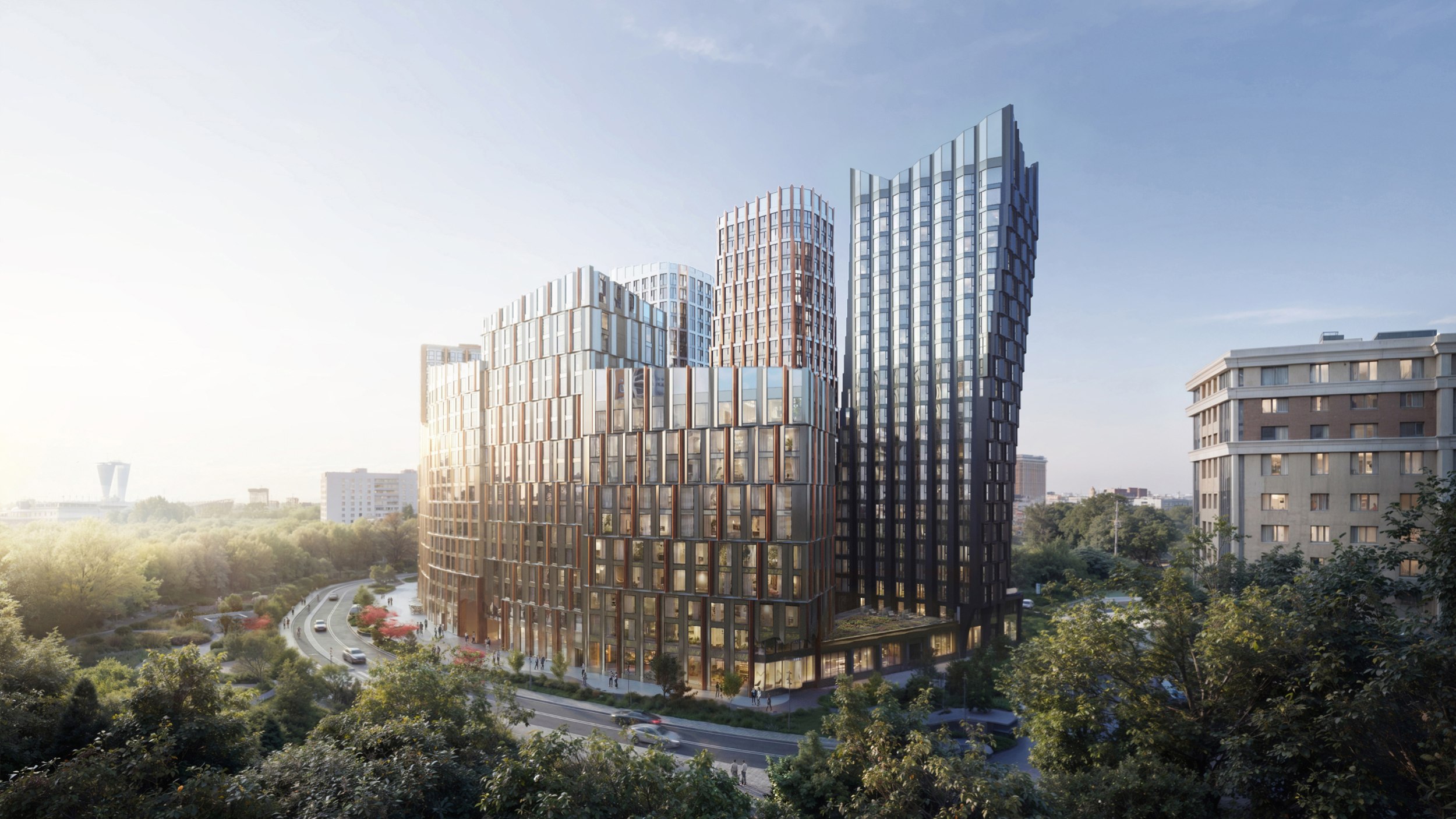
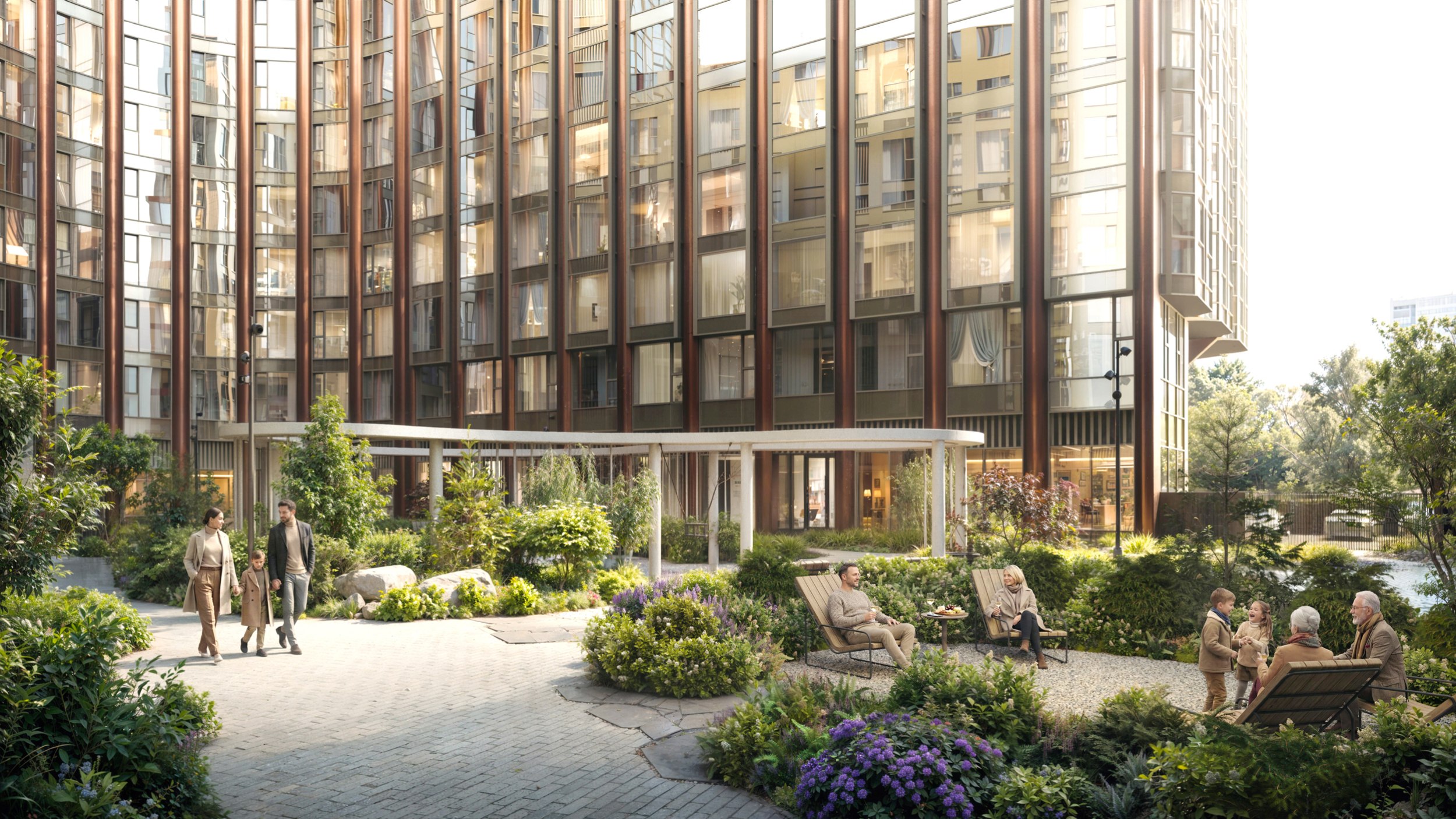
The premium residential complex designed by GAFA for a site in the Khoroshevsky District responds to multiple constraints – the arc of a planned roadway, the water protection zone of the Khodynka River, and insolation requirements – through inventive massing. The composition is built on the interplay of two spatial layers: an elongated perimeter block and three towers concealed behind it generate the silhouette and key viewpoints, while also adding semantic depth reinforced by the façade solutions. Another defining feature is a large private courtyard, complemented by a citywide linear park.
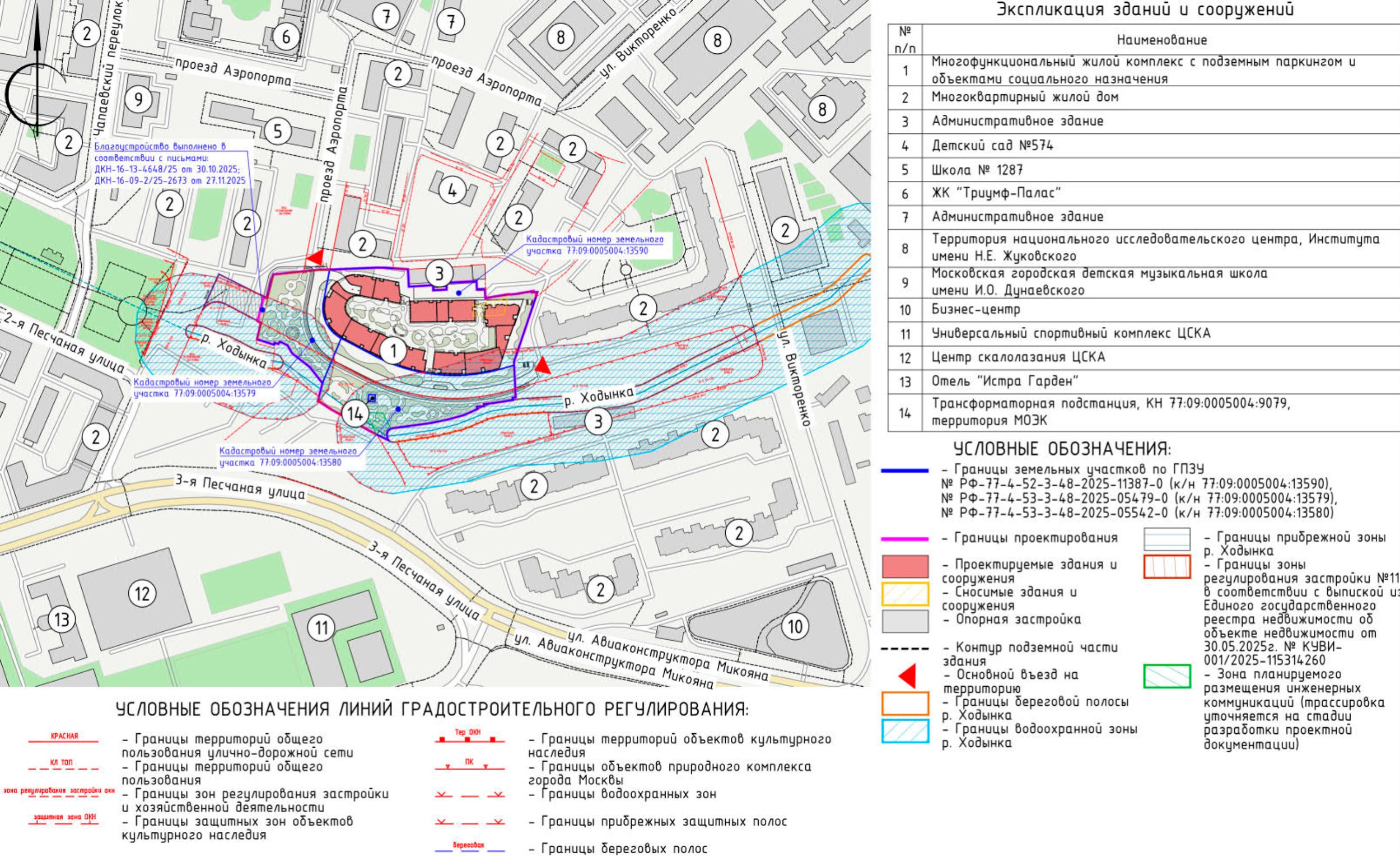
The premium residential development MASTERS will be built to the north of the “slice” of Khodynskoye Field, beyond the curve of 2nd and 3rd Peschanaya Streets, opposite the CSKA sports complex. Despite the density of architectural interventions over the past twenty years, this area has surprisingly retained an undeveloped plot. On the one hand, it is a vacant lot with spontaneous vegetation and an open section of the Khodynka River. On the other, it lies at the intersection of two distinct layers of urban fabric. From the west, the site is approached by relatively orderly rows of Stalin-era residential blocks from the 1950s. From the east, following the course of the largely culverted Khodynka River, the street network bends and warps, and within its “folds” appear residential complexes of the early 2000s alongside remnants of industrial facilities.
Thus, the urban planning task was to connect these two differing urban conditions. At the same time, the location calls for a strong visual accent: the buildings on the site will be clearly visible to visitors arriving at Megasport, VEB Arena, the Aviapark shopping center, or, in the future, one of the business centers along the line of the former runway.
The plot is divided into two parts. The section closer to the Khodynka River is still awaiting its own project, while GAFA worked on the northern half, which is bordered by a yet-designed street. The complexity of the site – the water protection zone and the proximity of residential buildings requiring preserved insolation – has significantly influenced the volumetric and planning solutions.

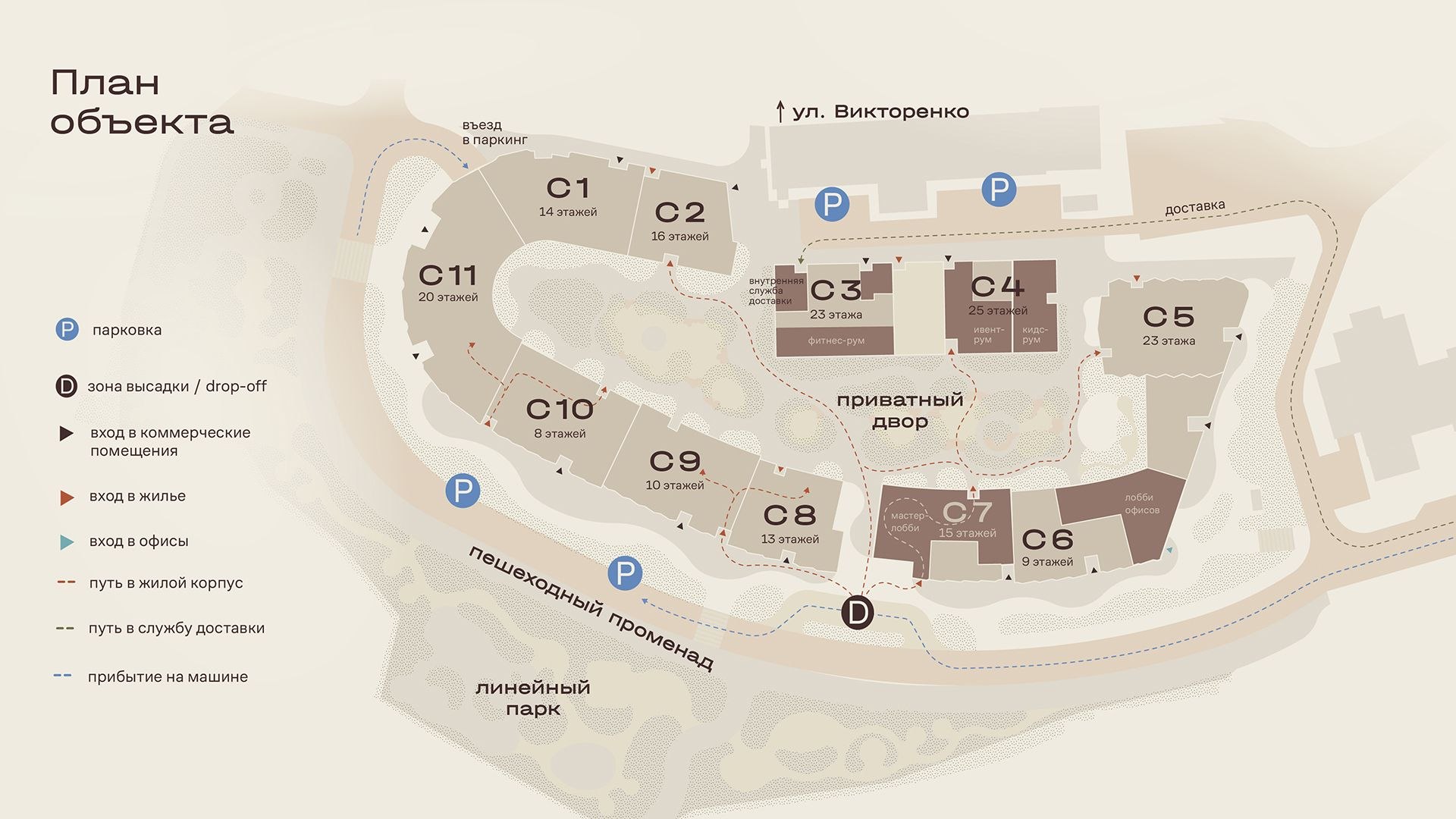
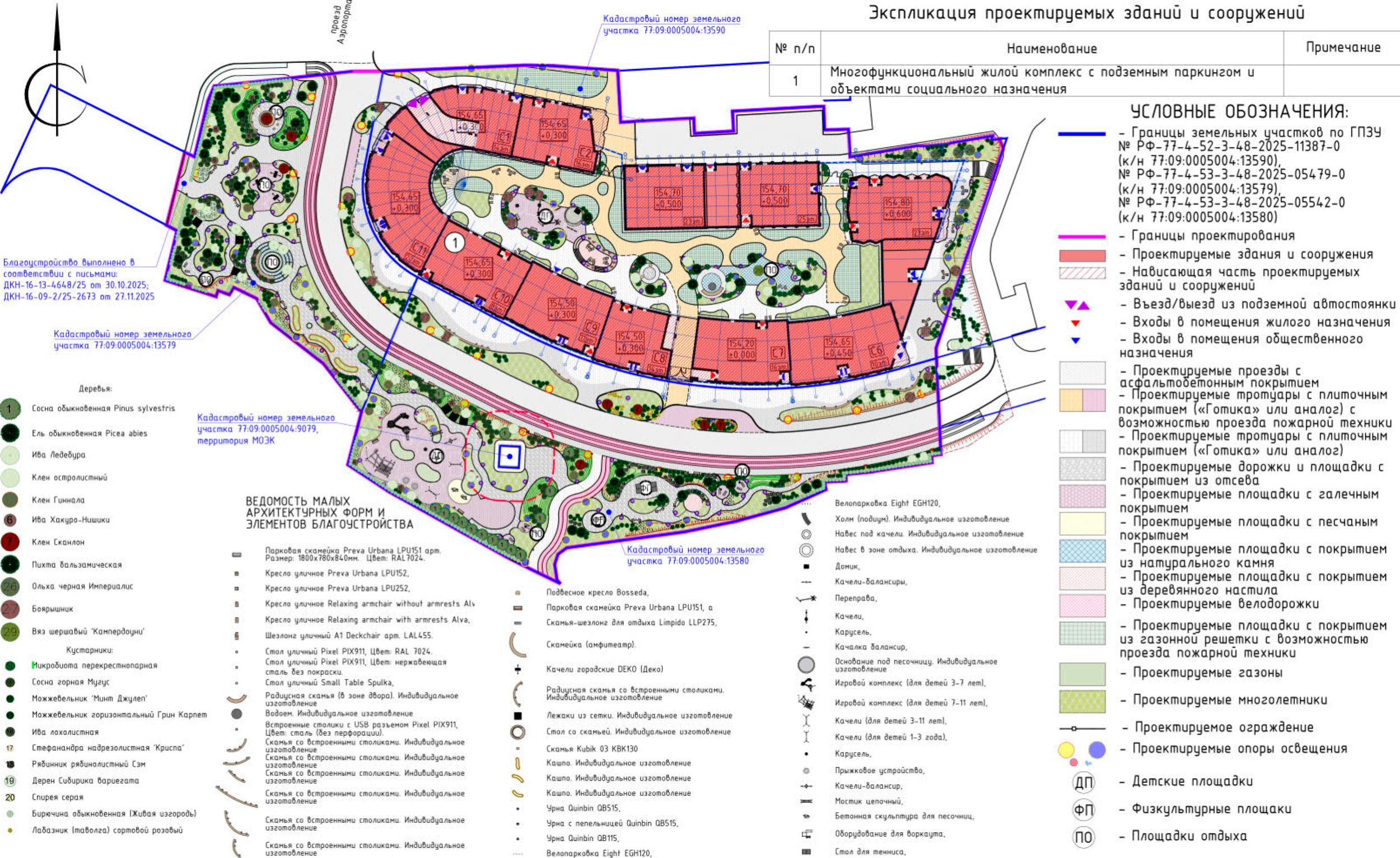
These constraints leave an ellipsoidal buildable area defined by the arc of the roadway. The architects place the residential volumes along the perimeter, preserving the center for a large private courtyard, while everything beyond the line of the road is given over to a public park. As a result, the development acquires two spatial and conceptual layers.
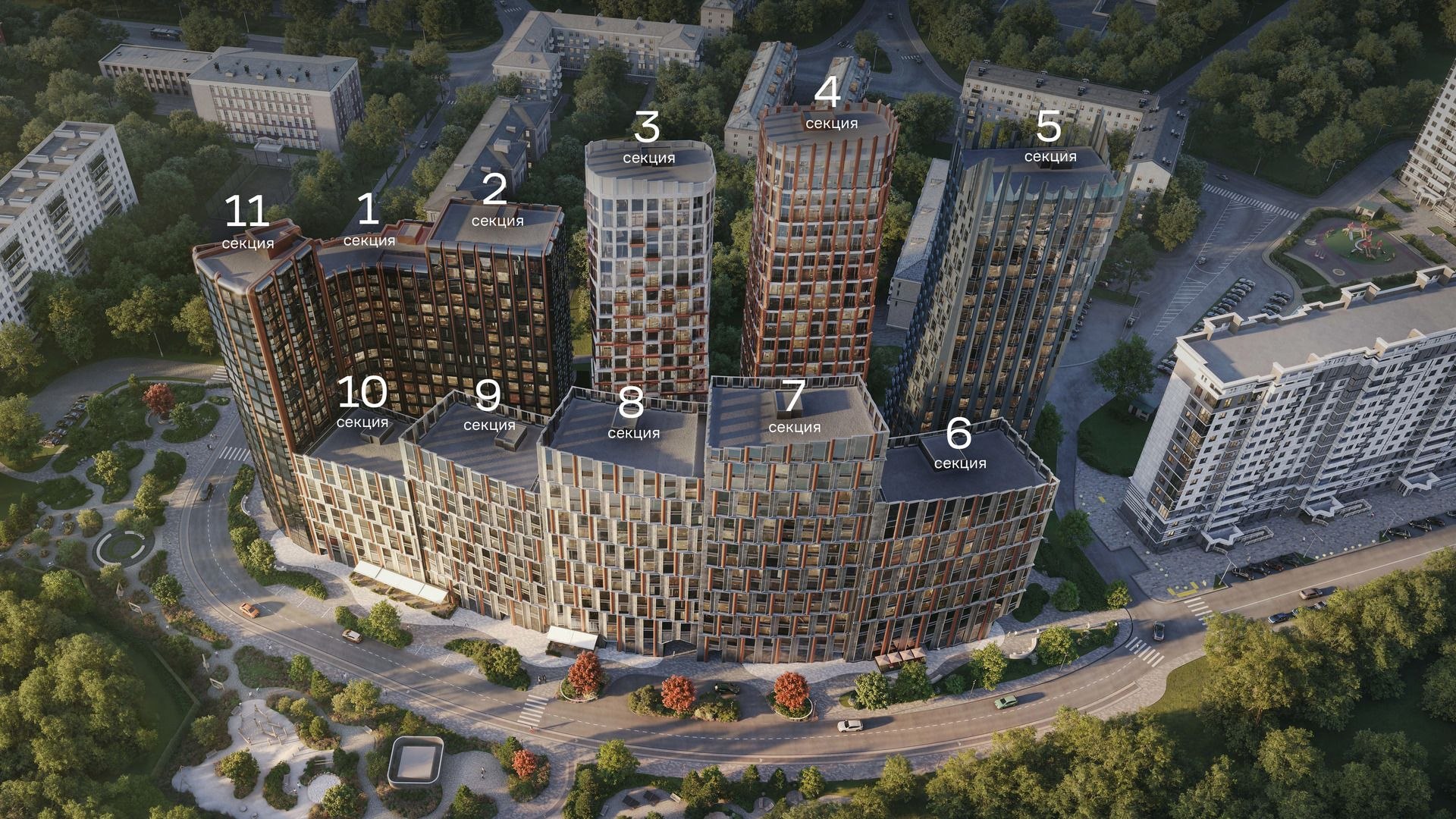
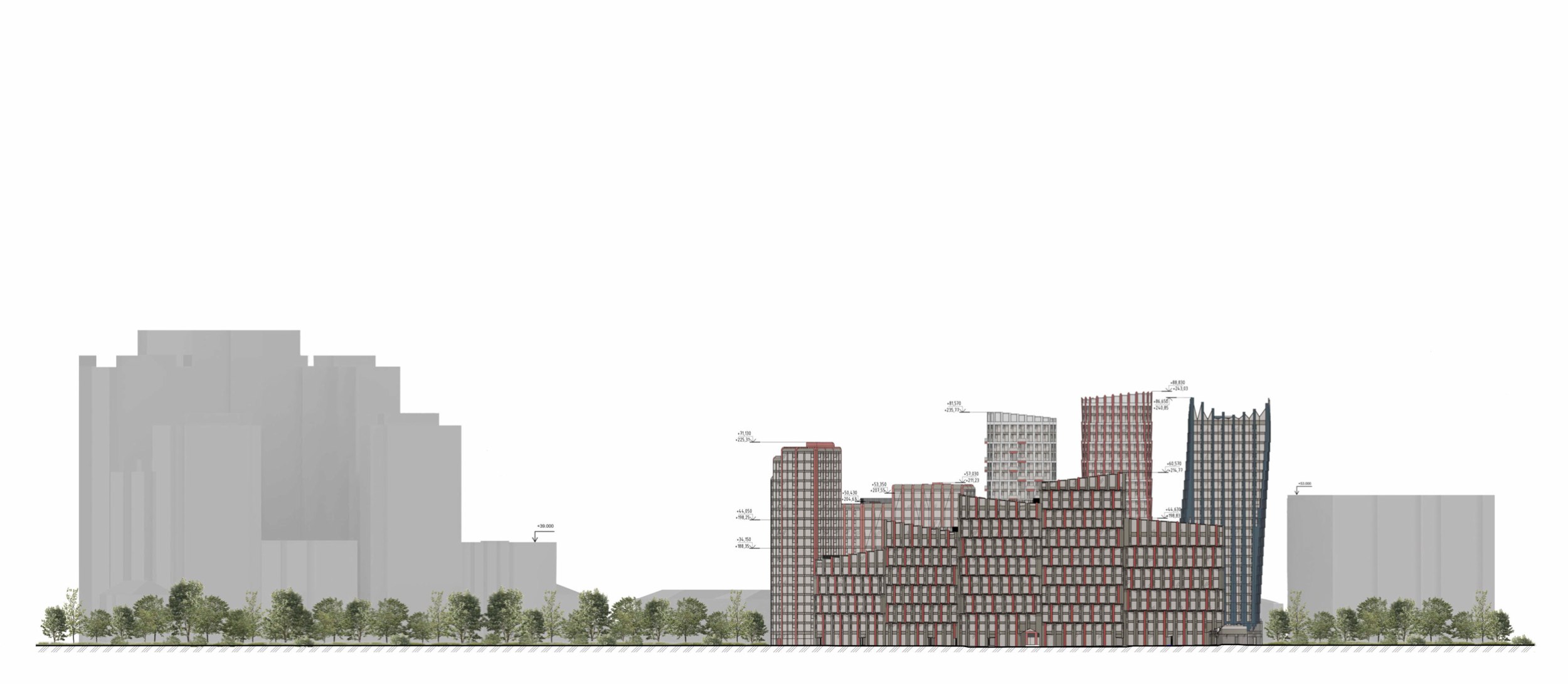
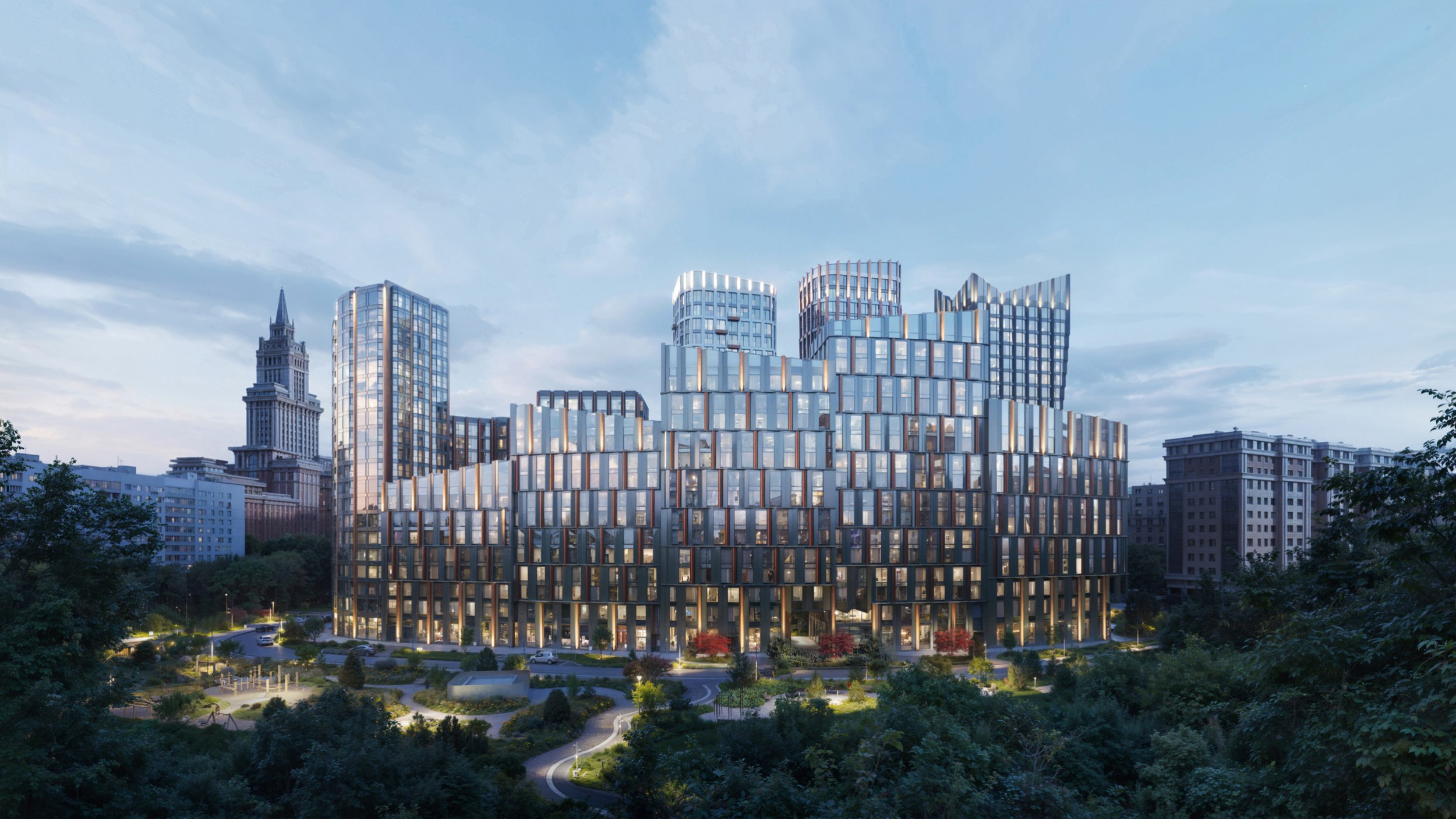
The first layer is a perimeter block with sections ranging from 8 to 20 stories, following the curve of the roadway and meandering deep into the site to form a loose courtyard-like enclosure. The second layer consists of three towers rising 23-25 stories, visually supported by a taller section of the linear block, as well as by the spire of the nearby Triumph Palace complex. The site plan – with its combination of building types, the “moat” of the roadway, and the green park beyond – evokes a “detinets”, the historic fortified core from which a city would grow. The authors, however, also point to another reading: the building sections resemble raised sails filled with currents of wind.
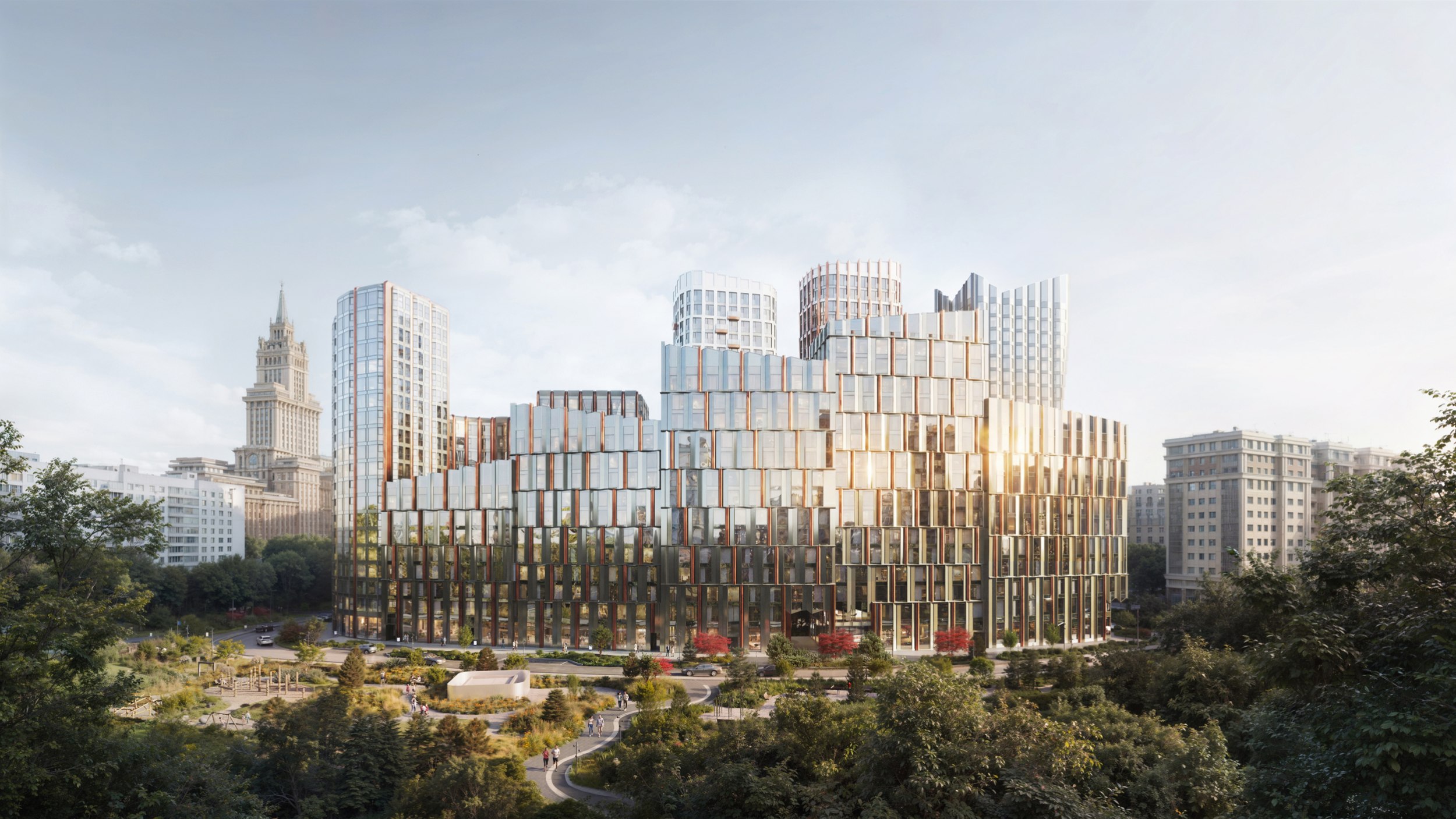
This massing, reinforced by the plasticity and material articulation of the façades, creates a silhouette that works both at close range and from afar. The varying heights open up views toward the city and surrounding parks, and many residents will even be able to overlook the CSKA training grounds.
The first line of the development consists of eight sections, holding the street frontage for nearly 200 meters. To break down the large volume into more human-scaled components, the architects employ several strategies.
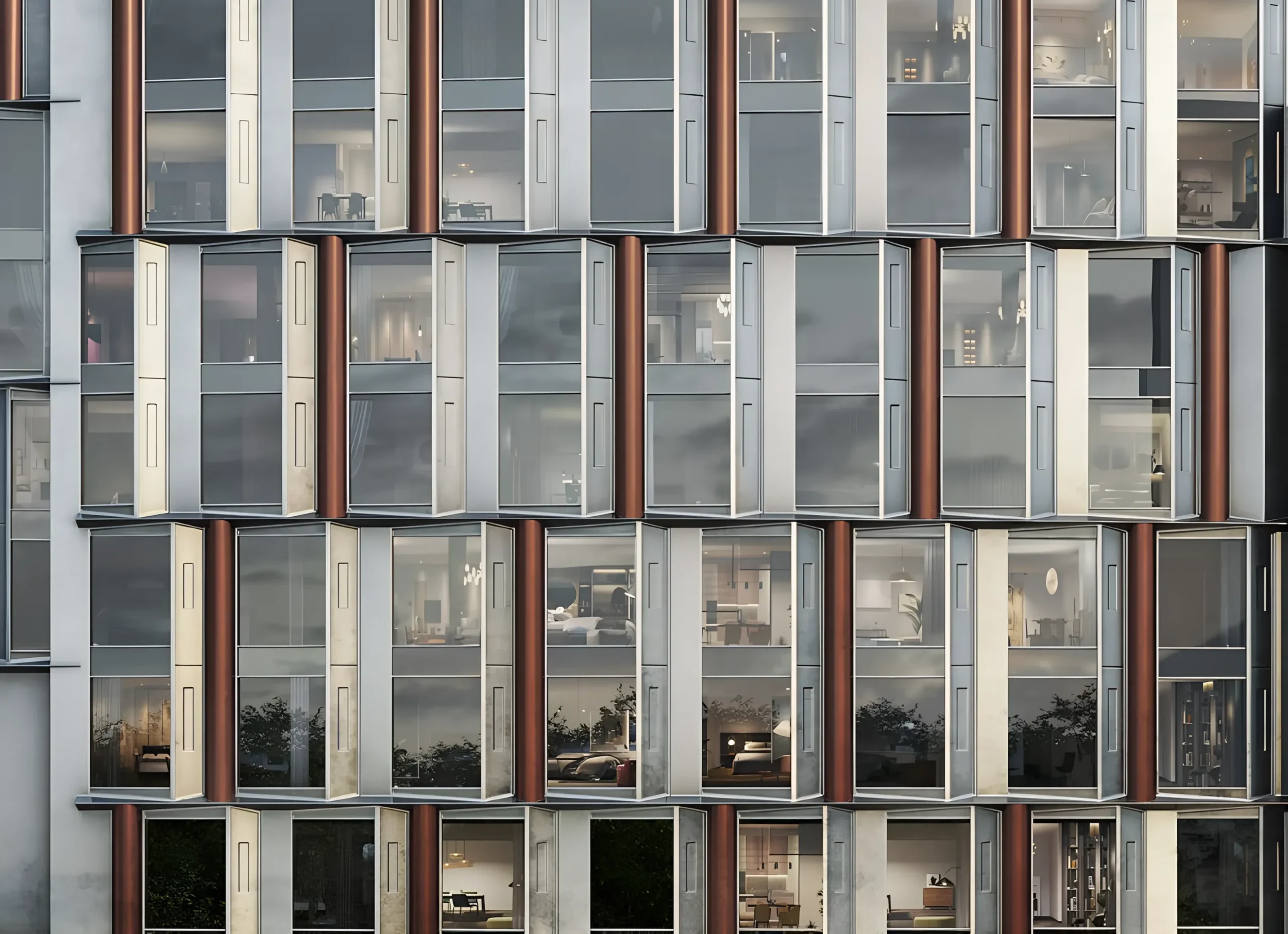
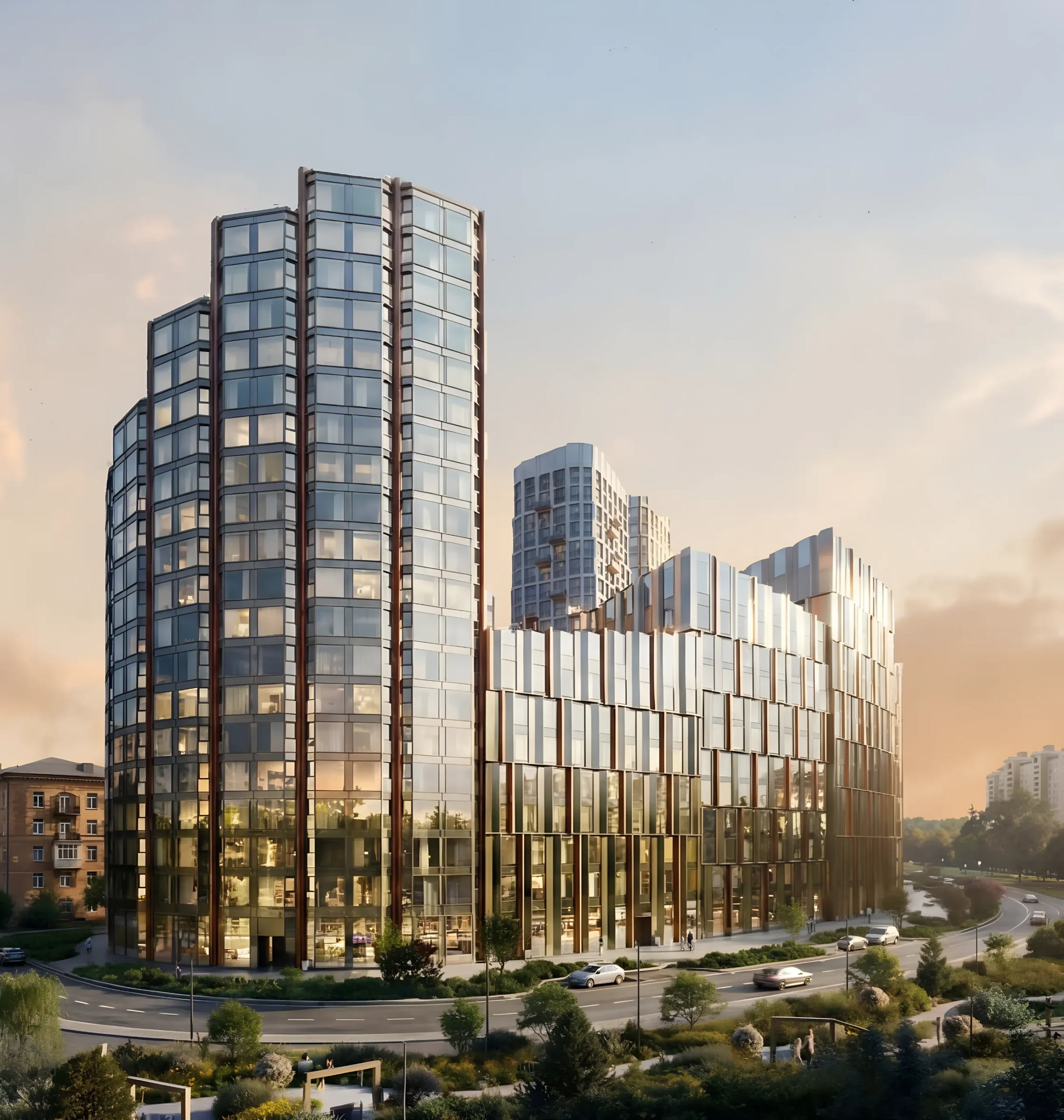
The division into sections is clearly legible thanks to their slight offsets, varying heights, and an irregular façade grid. Its pattern is based on a module of two “folded” bay windows, combined vertically across two or three floors. Along the horizontal axis, these modules are separated by copper cylinders, which guide the movement of the overall pattern. The result is a single underlying motif that nonetheless produces distinct sections: the floors do not merge into a continuous surface but instead form an intricate woven texture. The volumetric depth of the bay windows and copper elements creates a rich play of light and shadow, further emphasized by subtle illumination in the evening.
The accent corner section of the linear block (C11) is treated differently: it features a faceted surface composed of full-height loggias, again divided by the same “downpipes”. Here, the folded motif – enhanced by a spiraling motion and the cascading form of the volume – appears deeper and sharper. Unfolding like a scroll, the building seems to open up, yet a sense of oscillation or vibration persists along its entire length.
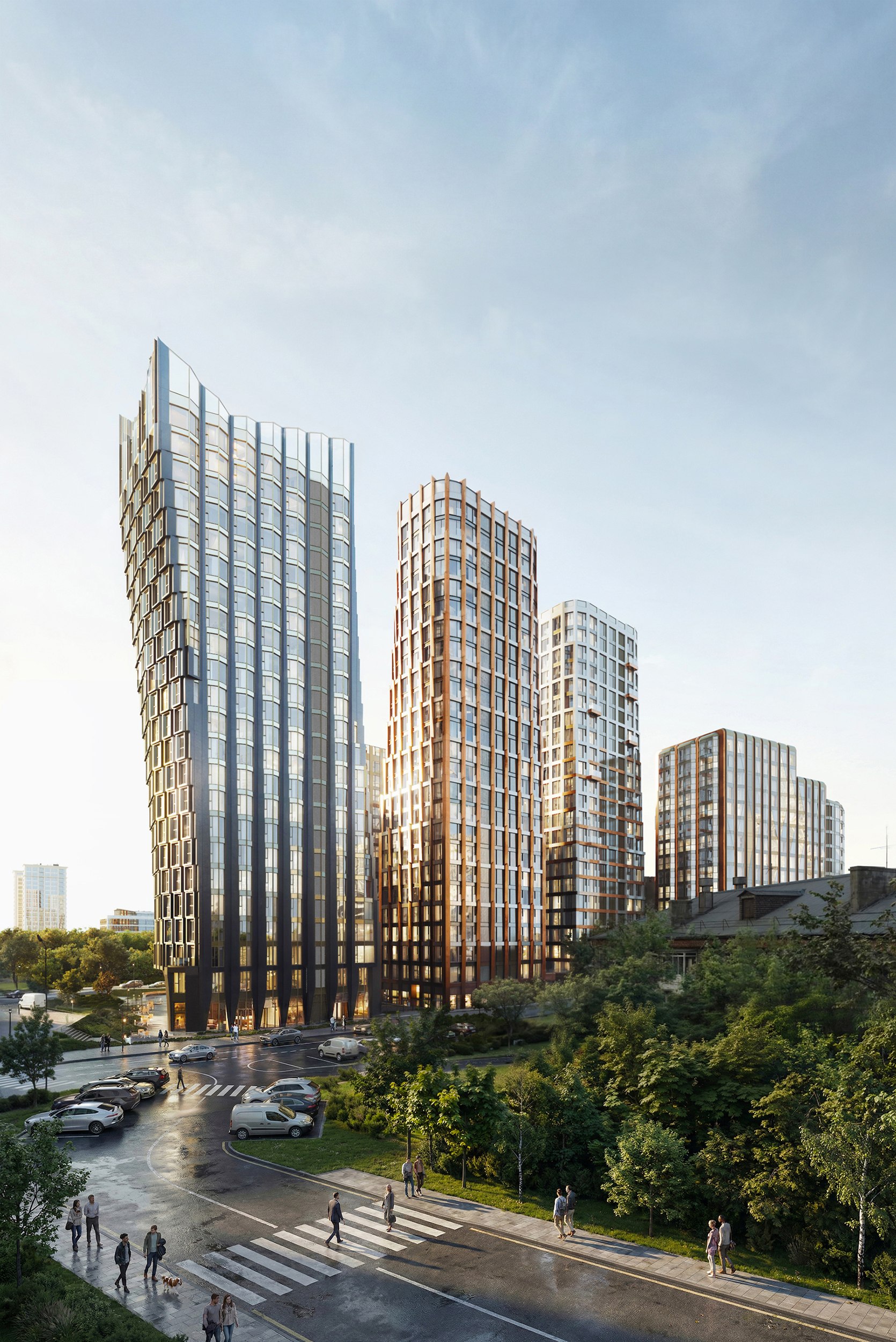
From the opposite side of the complex, a different image emerges: where the three towers were previously only hinted at, here they dominate completely. Each tower is individual, yet they share a common “constitution” – a unified palette, materials, and semi-transparent “diadems” – after which their differences become more pronounced.
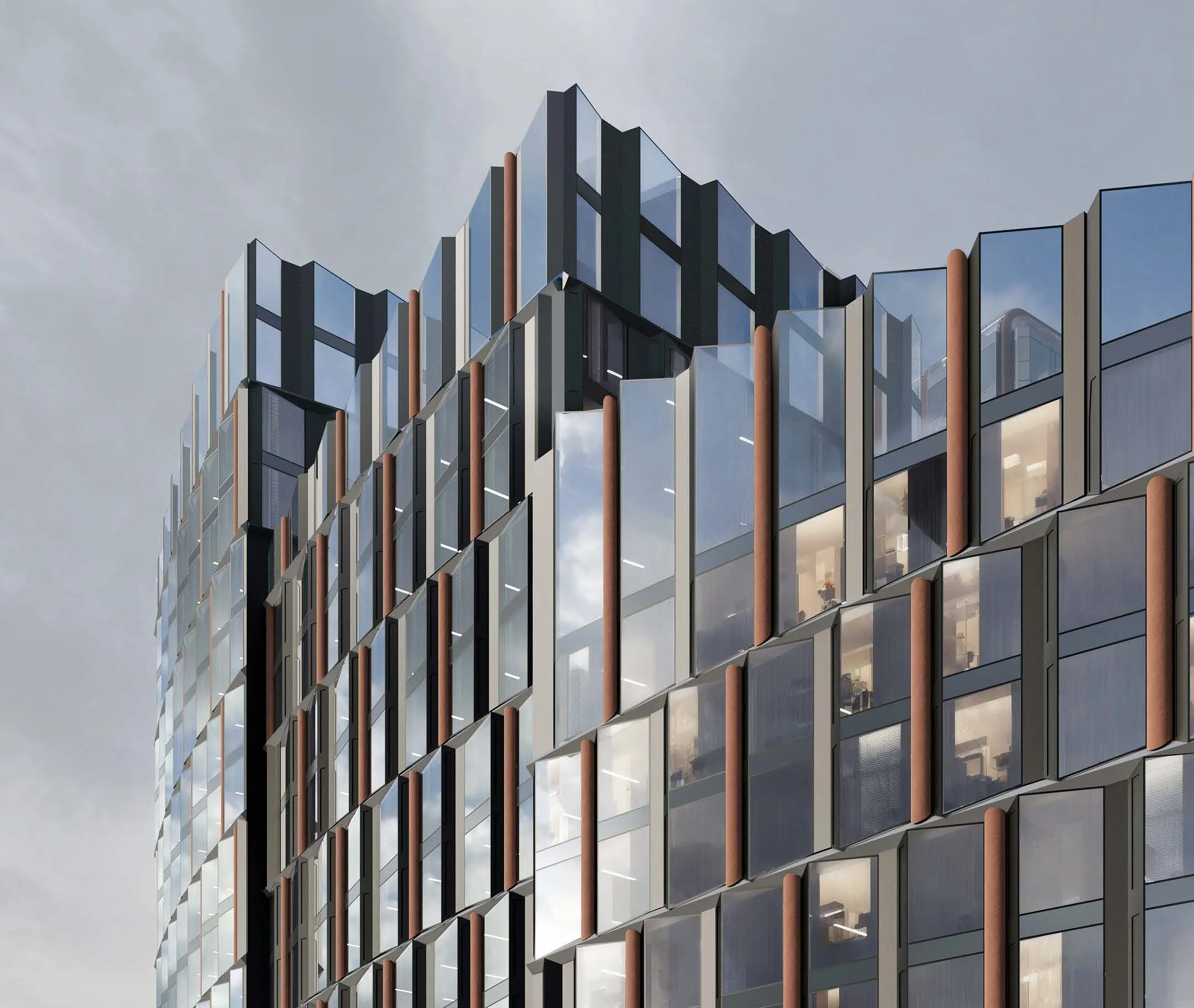
The first tower can probably be described as “the rebel”. Its gothic graphite piers alone are striking: descending toward the ground floor in the form of powerful, gate-like teeth, they thin out as they rise, turning into something akin to the bones of a corset – there is even a hint here of the medieval cult of the beautiful lady. The exaggerated window bevels at the ends emphasize the gradual buildup of volume, while their density recalls the links of chain mail. This logic of rigidity is further developed by the bay windows and the “diadem” crowning the tower – crystalline, icy, yet at the same time sharply defined.
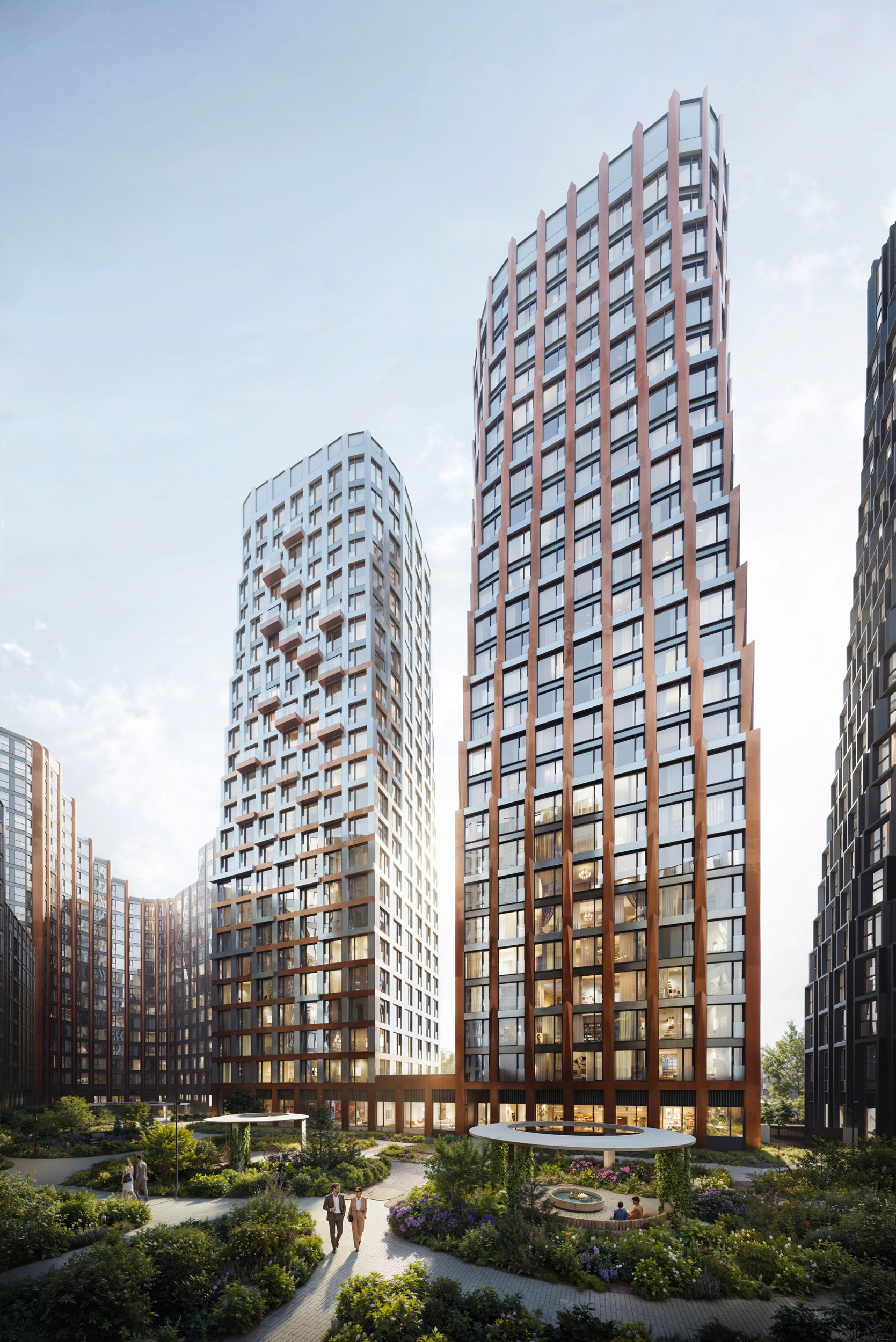
The other two towers are far more conventional, with regular tiers and a rhythmic façade grid. The central tower is distinguished by copper pylons of a complex folded form, while the “younger” one features a scatter of balconies and more finely articulated horizontal divisions.
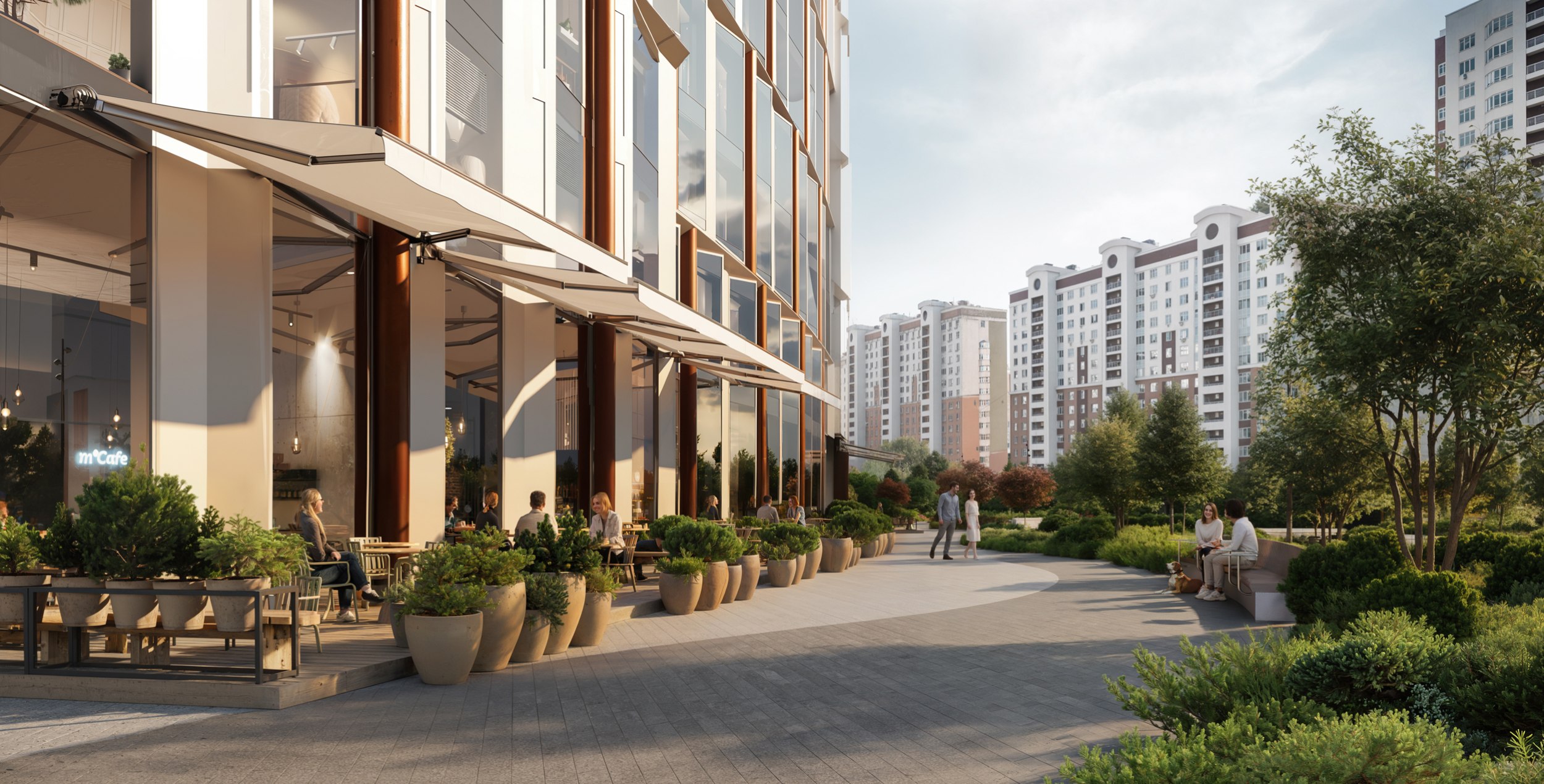
At street level, all parts of the complex are unified by a gallery that creates a continuous line of public spaces: the ground floors house premium retail, fitness facilities, restaurants, a coworking space, a children’s club, a multifunctional event hall, and a grand entrance lobby with a designated drop-off area for taxis.
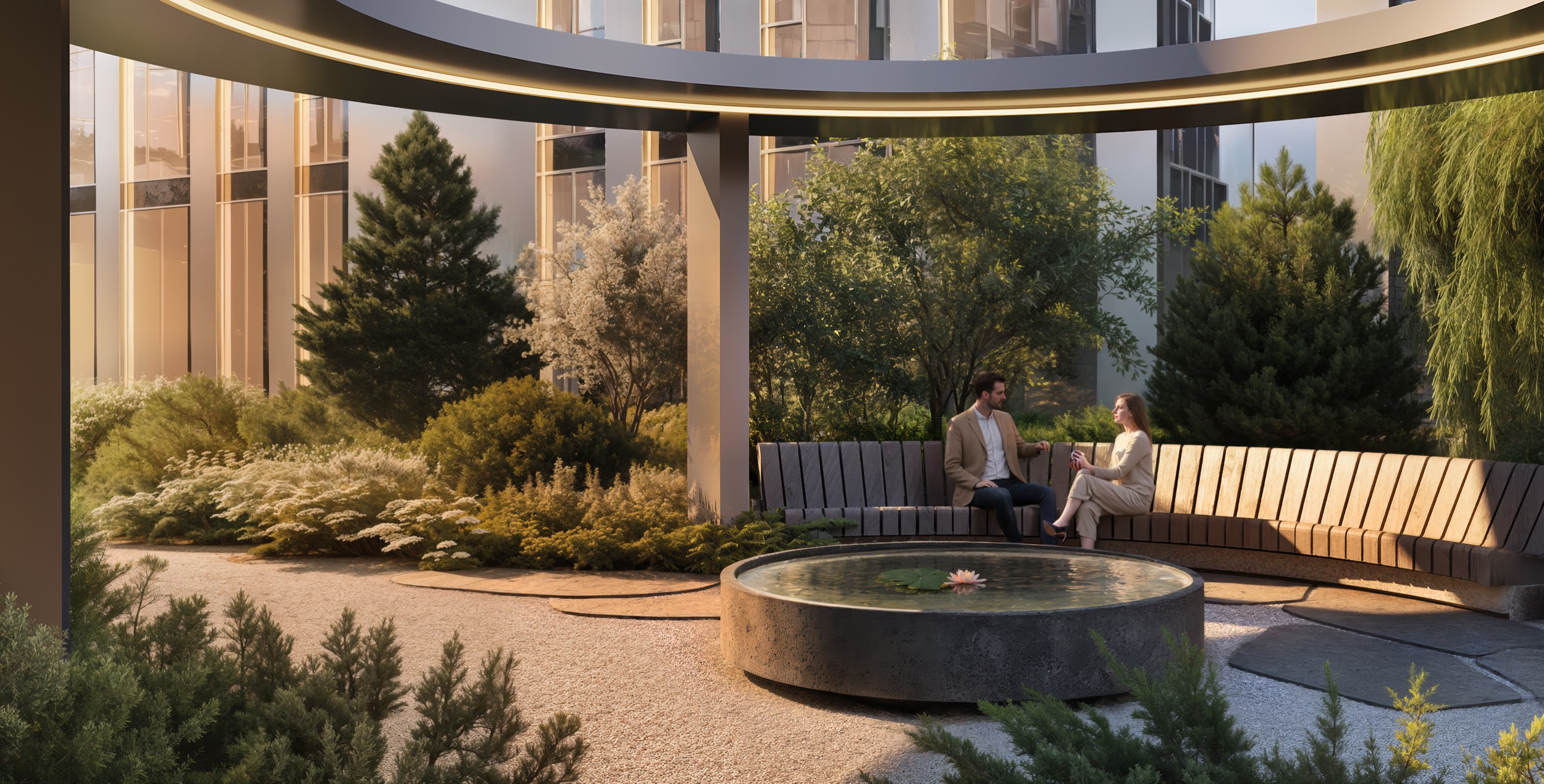
At the center of the multi-section block, the architects introduce a striking arch that connects the private inner courtyard with the lively street, which in turn extends into a public linear park designed by the landscape design firm Derevo Park. In addition to sports and playground areas, the park will include spaces for meditation and outdoor work, as well as an illuminated amphitheater. An extensive network of walking paths will respond to the natural topography and the already existing greenery. New plant species are selected with regard to the climate of the Moscow region, resilience to urban conditions, and aesthetic compatibility. Small architectural forms will lend the space a sense of completion.
The complex is designed to accommodate 672 apartments, ranging up to 160 square meters. A two-level underground parking facility, equipped with electric vehicle charging stations, provides 363 spaces. Storage units for seasonal items and equipment will also be available to residents.
A construction permit has already been obtained, and preparatory work is currently underway on site. Completion of the project is scheduled for 2029. The premium residential complex MASTERS. Location planCopyright: © Genproject
The premium residential complex MASTERSCopyright: © Capital Group
The premium residential complex MASTERSCopyright: © Capital Group
The premium residential complex MASTERSCopyright: © GAFA Architects
The premium residential complex MASTERS. Development drawing from the side of Viktorenko StreetCopyright: © Genproject
The premium residential complex MASTERSCopyright: © GAFA Architects
The premium residential complex MASTERSCopyright: © Capital Group
The premium residential complex MASTERSCopyright: © Capital Group
The premium residential complex MASTERSCopyright: © GAFA Architects
The premium residential complex MASTERSCopyright: © Capital Group
The premium residential complex MASTERSCopyright: © GAFA Architects
The premium residential complex MASTERSCopyright: © GAFA Architects
The premium residential complex MASTERSCopyright: © GAFA Architects
The premium residential complex MASTERSCopyright: © GAFA Architects
The premium residential complex MASTERSCopyright: © GAFA Architects
The premium residential complex MASTERSCopyright: © GAFA Architects
The premium residential complex MASTERS. The improvement and landscaping planCopyright: © Genproject
|