|
Published on Archi.ru (https://archi.ru) |
|
| 25.02.2026 | |
|
The Outline of “Foundation” |
|
|
Julia Tarabarina |
|
| Architect: | |
| Alexey Ilin | |
| Studio: | |
| Alexey Ilin Architects | |
|
In their competition proposal for the Fili transport hub, the consortium led by Alexey Ilyin proposed an “inhabited arch” – a form that is simple yet complex. The architects emphasize that even at the competition stage, the project’s feasibility was fully calculated, taking into account the minimal nighttime closures of Bagration Avenue. How was this achieved? With what functions? Let us take a closer look. In our view, the building would have suited the heroes of Isaac Asimov’s Foundation novels perfectly. The competition for the Fili transport hub was announced in May 2024 as a highly ambitious undertaking. It was initiated by the company Lider, which manages the assets of the Pension Fund of the Russian Federation and also built the toll highway “Bagration”, the high-speed northern bypass of Kutuzovsky Prospekt.  Alexey Ilin, Alexey Ilin Architects When we speak about a “habitable arch”, it is important to understand that this is not merely a flashy gesture. From the outset, the client’s brief was formulated in very straightforward terms: the building had to rise above an active and highly congested transport infrastructure – the MCD, railway tracks, and a high-speed highway. At the same time, traffic could not be halted at any stage. For this reason, we immediately moved toward detailed engineering development and worked in close coordination with the structural engineers. A key co-author of the project was the team at Project 2018, which has a large and highly experienced structural engineering group. Together, we developed a phased construction scheme: first, two towers are erected on either side of the highway; then the main truss structures are assembled at ground level, gradually “rolled in” and lifted into place by cranes – without prolonged road closures, within carefully calculated nighttime windows. None of these scenarios were abstract. They were thoroughly drawn, calculated, and discussed with engineers. For us, this was a fundamental point: to demonstrate that even such a radical form can be entirely feasible, provided that architects and structural engineers work as a unified team from the very beginning.  Indeed, the carefully devised implementation scheme may well be the project’s main competitive edge. Another distinctive feature is the urban-planning orientation of the large form. The frame – whose resemblance to a gate leaves little room for doubt – would, from a certain viewpoint when approaching along Bagration Avenue, neatly “frame” the cluster of Moscow City skyscrapers, turning them into a composed picture. Calmly, through imagery, it would “systematize” the skyline. It is also worth noting that Ilyin’s team proposed constructing an additional exit ramp from Bagration Avenue. At present, there is none, which is inconvenient; in their proposal, it would take the form of a large spiral, tightly coiled into a compact spring. Another distinctive feature is the laconic form. Yes, it is sloping and smoothly rounded – but nothing more. No “explosions” or “dances”. Its “point of departure” seems to be a horizontal window with rounded ends – the word “streamline” is the first thing that comes to mind – a futuristic direction, yet one with an impressive history. One might venture to suggest that the combination of “silvery metal + rounded edges” is already recognizable, from previous projects, as part of Alexey Ilyin’s distinctive signature style. This laconic smoothness – perhaps that is how it can be defined best – intensifies toward the base: as it meets the ground, the frame seems to “melt”. Yet any hint of bionics is kept under strict control: if the building does “melt”, it is not like wax. It does so in a far calmer and more regulated manner. On the lower levels, in addition to entrances and landscaping, the architects placed a food market on the Kutuzovsky side and business showrooms on the Fili side. Above them rises the volume with the most complex plan configuration, connecting the building’s two “legs” over the tracks. This is the station proper – the core part of the transport hub. It is double-height, with space organized as a freely flowing continuum, combining the milky glow of static blocks with the curves of metal plates. Here one finds oneself inside a “sculpture” reflecting the flexible energy of contemporary transport flows. It is not without a certain large-scale, somewhat dark brutality of flowing matter – yet it rests on orthogonal pylons of “pure light”. The station volume – in keeping with the project’s overall principle – is also rounded above and below, so that in section it resembles a measuring instrument. Within the station, the architects proposed installing model airplanes, recalling the aircraft factory that once operated on this site. In the gap of this “measurement instrument”, expressive in its spatial articulation, one can read both a wing and the tool of an engineer who worked here on aircraft wings a century ago. The form also responds to the principal recurring motif of the façade – a rectangle with a rounded end. Here it is sliced and “pulled apart” vertically, opening panoramic views and emphasizing the considerable height of the station hall – eight meters; the entrance canopy cantilever is set at the same level. In the central section, the station atrium, raised above the tracks, is open to the sky – and even to precipitation. This is a welcome gesture: it would prevent the space from feeling like a completely enclosed “greenhouse”. The search for multifunctionality, embedded in the brief itself, is reflected in Ilyin’s team proposal through four different scenarios – one primary and three additional. Yet beyond the station and the food court in one of the “legs”, they share a great deal in common. Take, for example, the upper tier. In the topmost connecting span – at the highest level – the architects propose a sports zone: two floors, each eight meters high. Here there is a swimming pool, with lanes arranged along the walls and a spa/lounge area in the center. There is also a running track, tracing the outer perimeter to achieve maximum length. Running past two tiers of large, elongated “portholes” would likely be a pleasure. At the very top, there are helicopter pads and a slender plate concealing the exits from the technical floor within its depth. Perhaps one of the most intriguing aspects of Ilyin’s team proposal is the functional program they suggest. The core of the main scenario is centered on developers of air taxis – both Russian and international – along with the headquarters of Rostec, presumably intended to complement the company’s campus in Tushino. MAI, STANKIN, and MIPT are also mentioned. In this sense, the entire “inhabited arch” could become a kind of science city. In keeping with the precepts of Isaac Asimov, it would be equipped with all the necessary infrastructure for researchers. One must admit: such a project is appealing by virtue of its program alone, imbued with a certain retrofuturist romanticism – perhaps something worth reviving. It should be noted that this proposal was one of eight submitted to the competition. The contest proved intense and highly competitive; the winning project was designed by Timur Bashkaev. 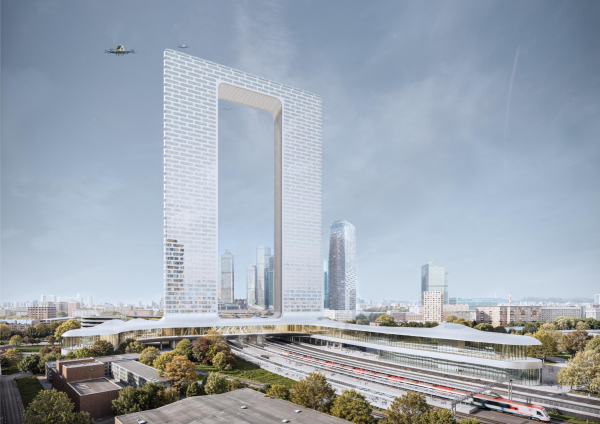 Multifunctional complex of the Fili Transport Hub, competition proposalCopyright: © Aleksey Ilin Architects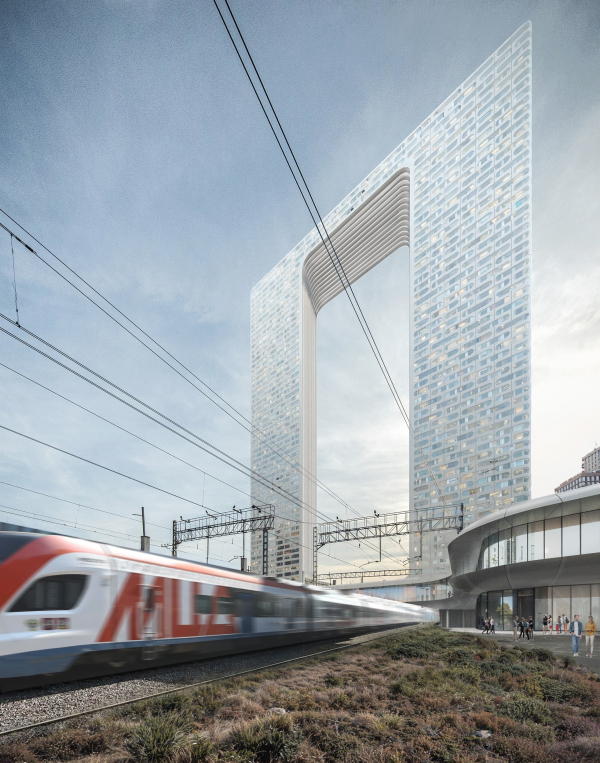 Multifunctional complex of the Fili Transport Hub, competition proposalCopyright: © Aleksey Ilin Architects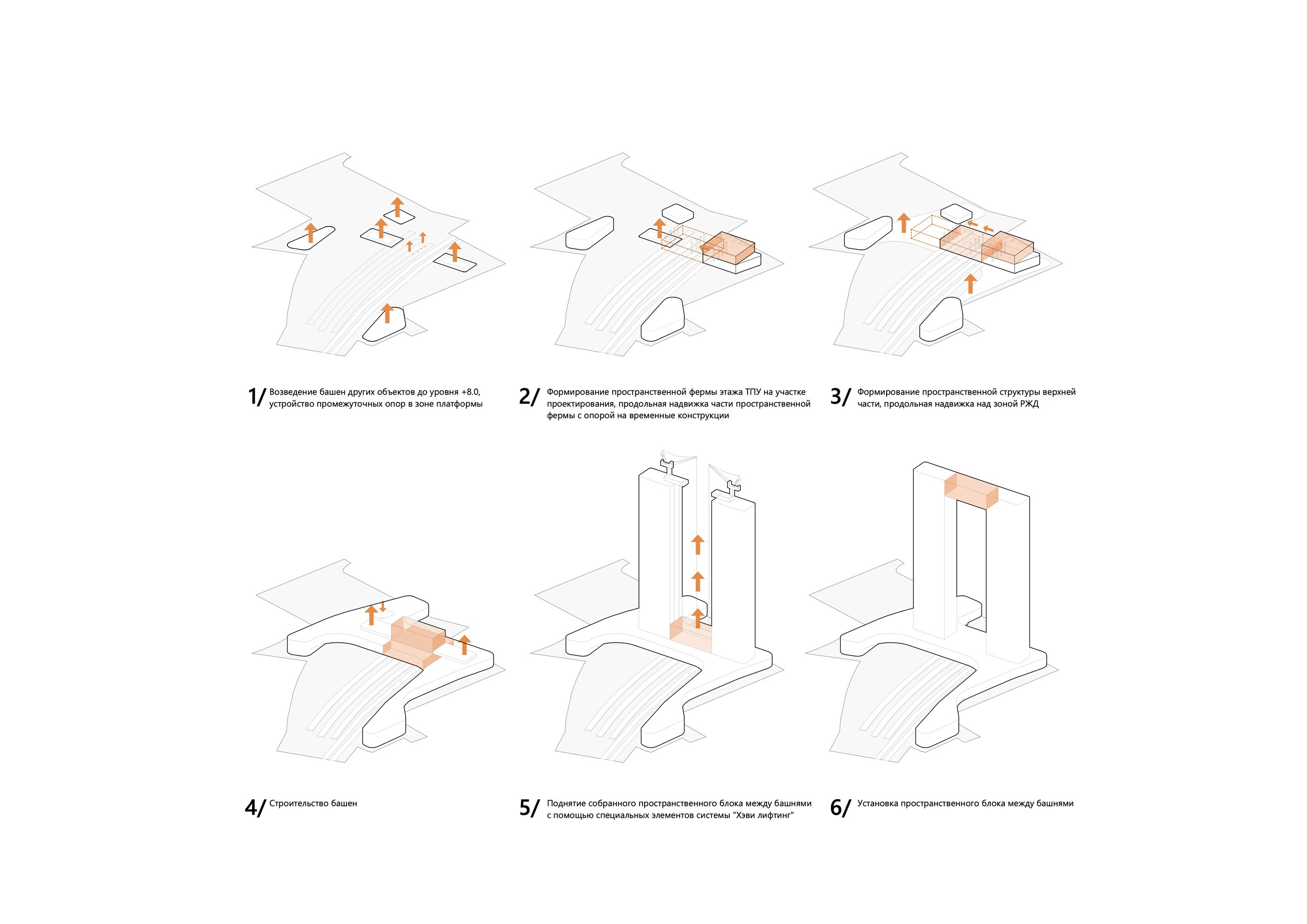 Construction sequence diagram. Multifunctional complex of the Fili Transport Hub, competition proposalCopyright: © Aleksey Ilin Architects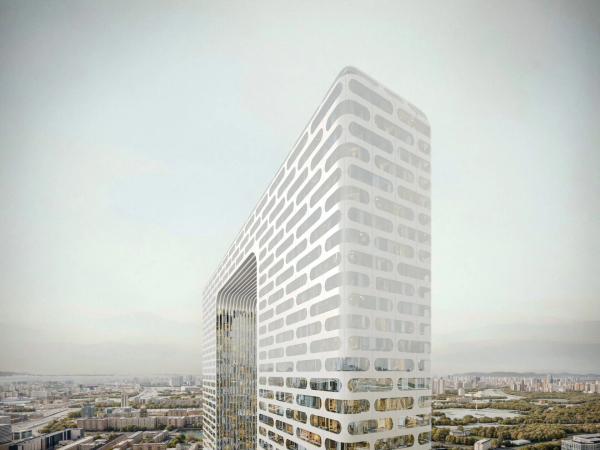 Multifunctional complex of the Fili Transport Hub, competition proposalCopyright: © Aleksey Ilin Architects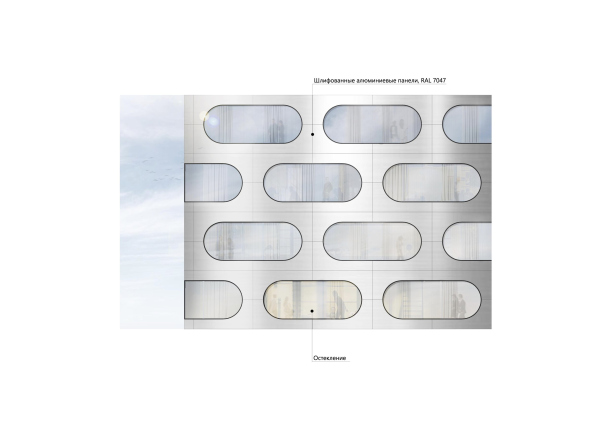 Facade fragment. Multifunctional complex of the Fili Transport Hub, competition proposalCopyright: © Aleksey Ilin Architects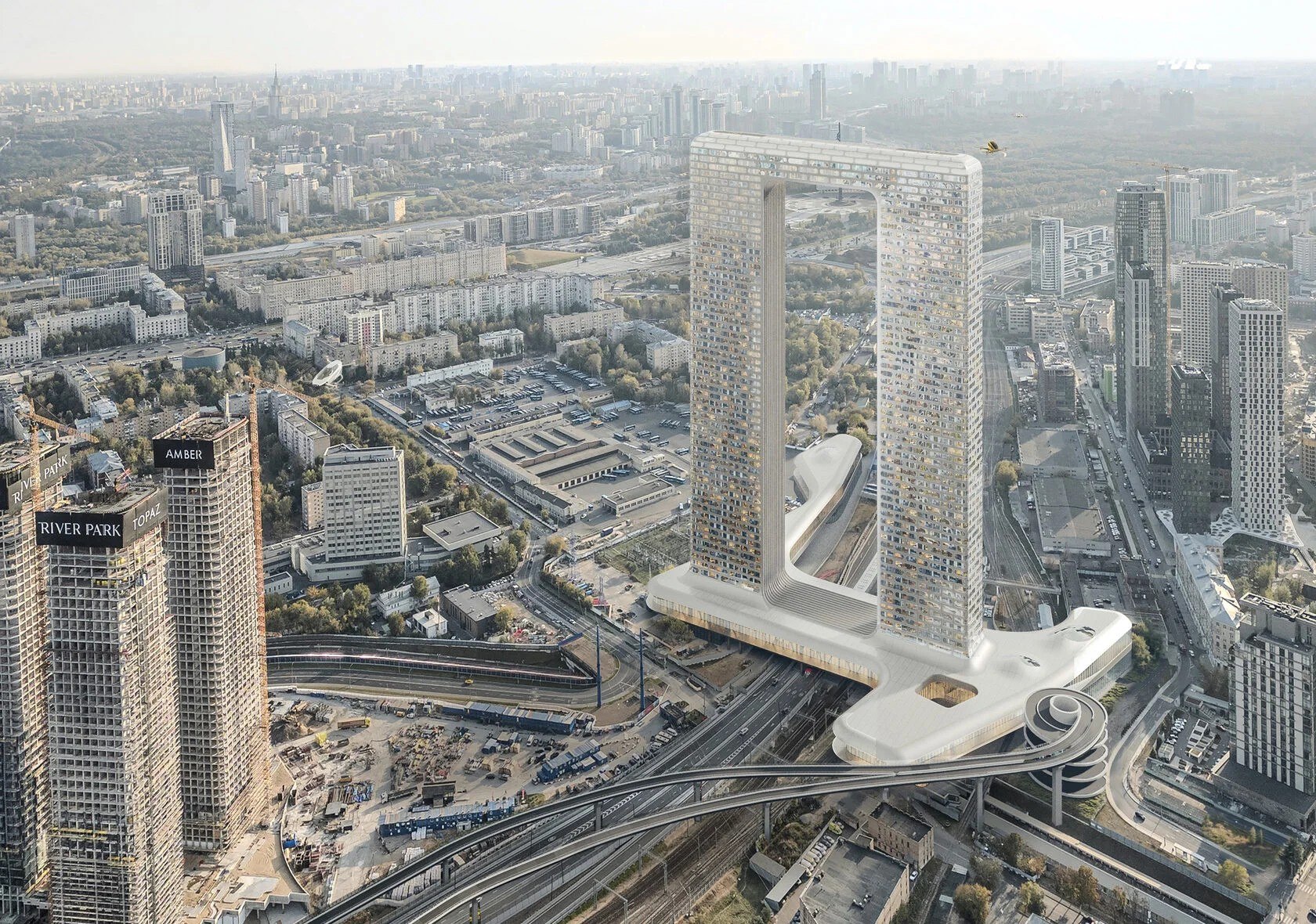 Multifunctional complex of the Fili Transport Hub, competition proposalCopyright: © Aleksey Ilin Architects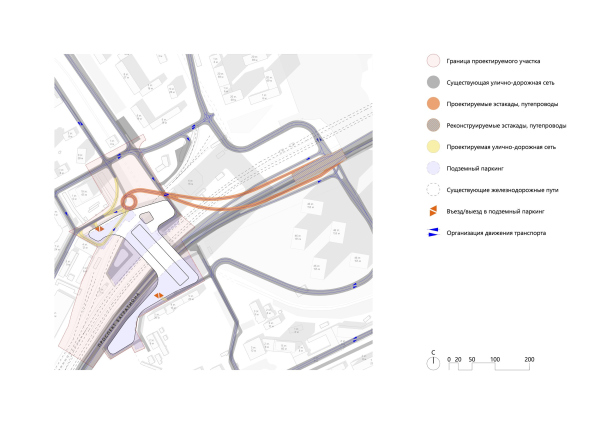 Transport interchange ramp diagram. Multifunctional complex of the Fili Transport Hub, competition proposalCopyright: © Aleksey Ilin Architects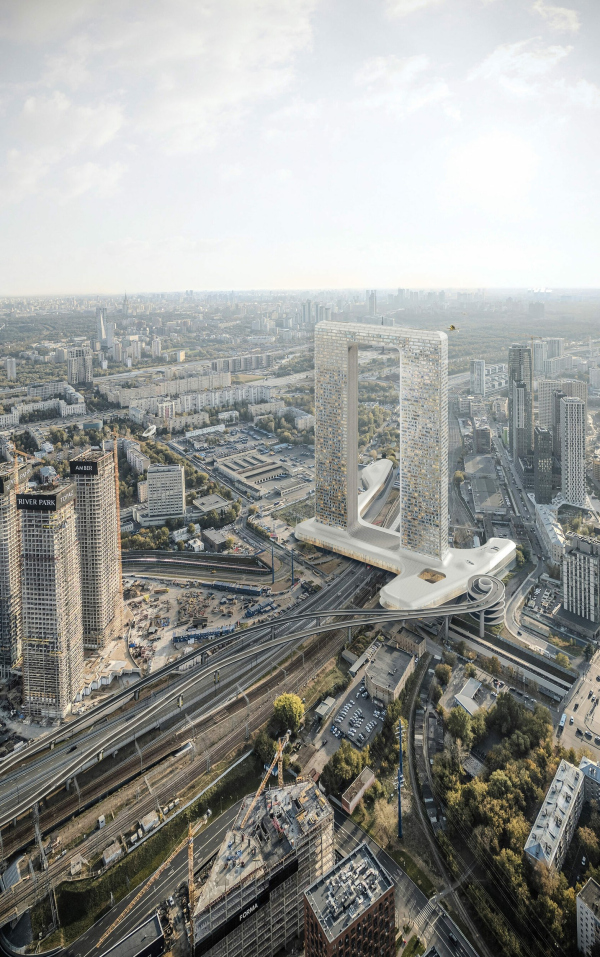 Multifunctional complex of the Fili Transport Hub, competition proposalCopyright: © Aleksey Ilin Architects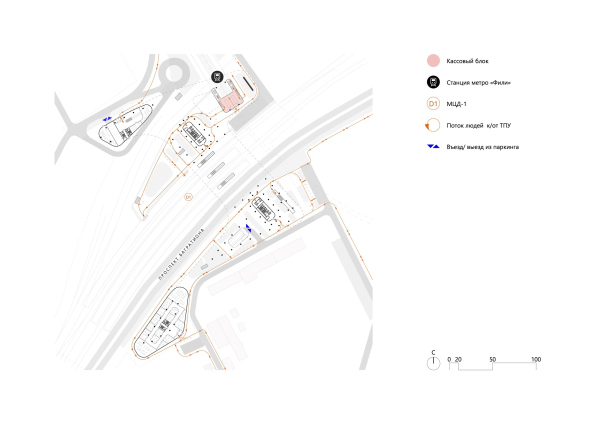 The pedestrian flows. Multifunctional complex of the Fili Transport Hub, competition proposalCopyright: © Aleksey Ilin Architects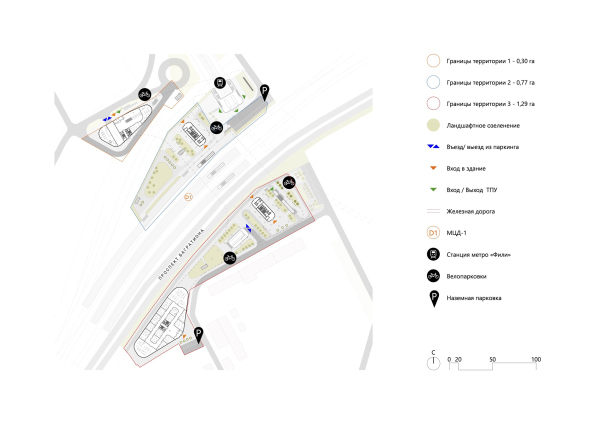 The landscaping. Multifunctional complex of the Fili Transport Hub, competition proposalCopyright: © Aleksey Ilin Architects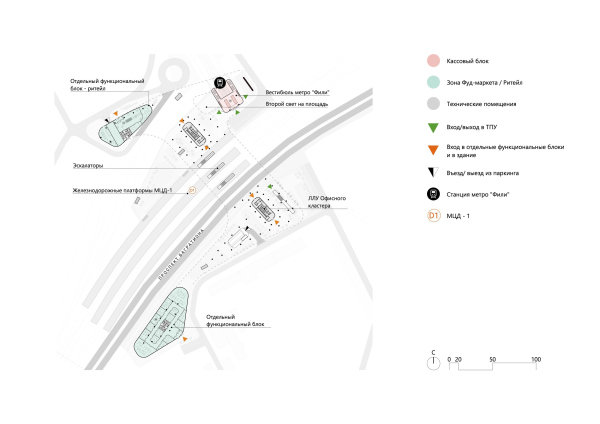 Plans of floors 1 and 2. Multifunctional complex of the Fili Transport Hub, competition proposalCopyright: © Aleksey Ilin Architects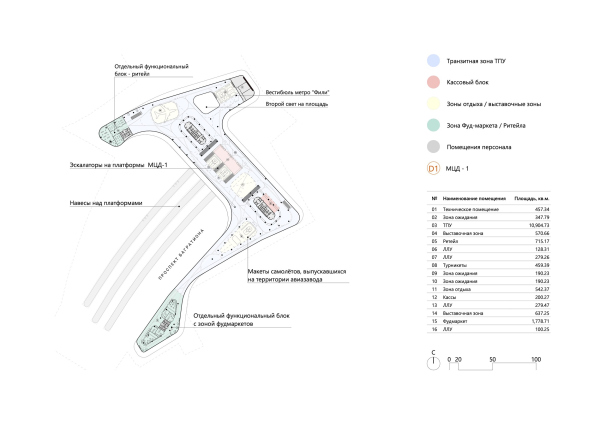 Functional zones. Multifunctional complex of the Fili Transport Hub, competition proposalCopyright: © Aleksey Ilin Architects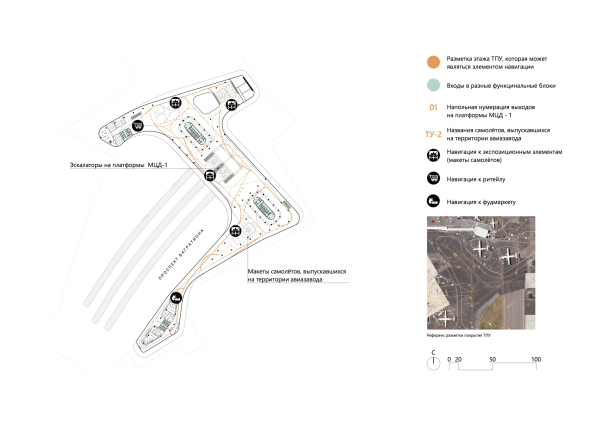 Navigation. Multifunctional complex of the Fili Transport Hub, competition proposalCopyright: © Aleksey Ilin Architects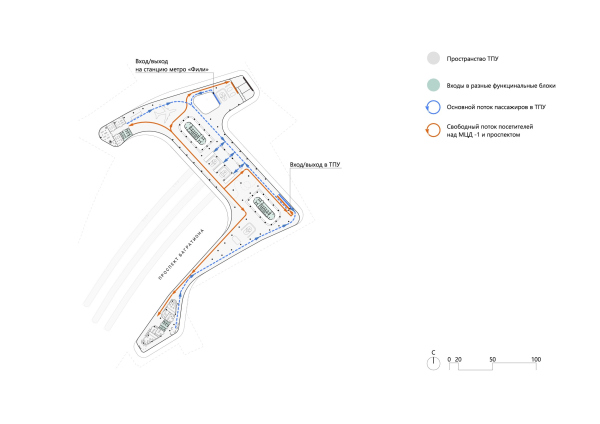 Pedestrian flows. Multifunctional complex of the Fili Transport Hub, competition proposalCopyright: © Aleksey Ilin Architects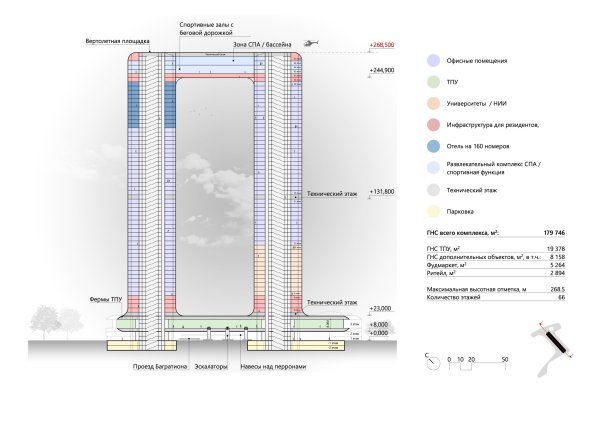 Section view. Multifunctional complex of the Fili Transport Hub, competition proposalCopyright: © Aleksey Ilin Architects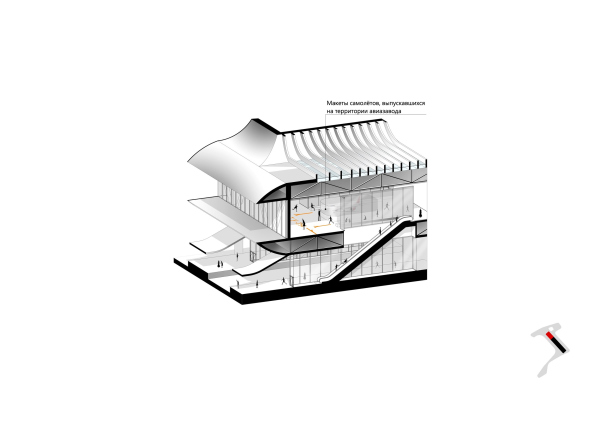 Axonometry. Multifunctional complex of the Fili Transport Hub, competition proposalCopyright: © Aleksey Ilin Architects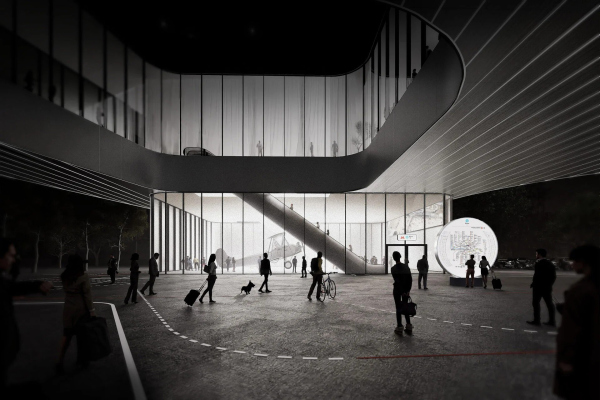 Multifunctional complex of the Fili Transport Hub, competition proposalCopyright: © Aleksey Ilin Architects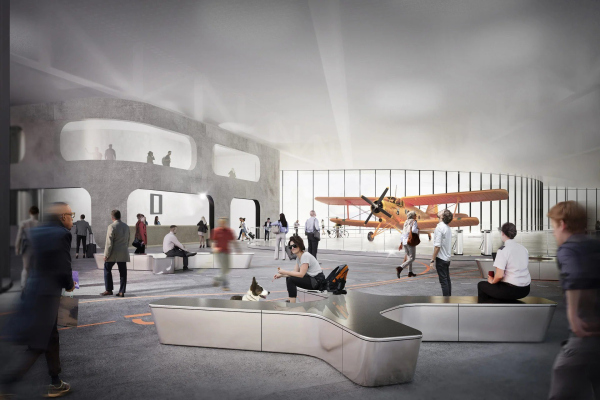 Multifunctional complex of the Fili Transport Hub, competition proposalCopyright: © Aleksey Ilin Architects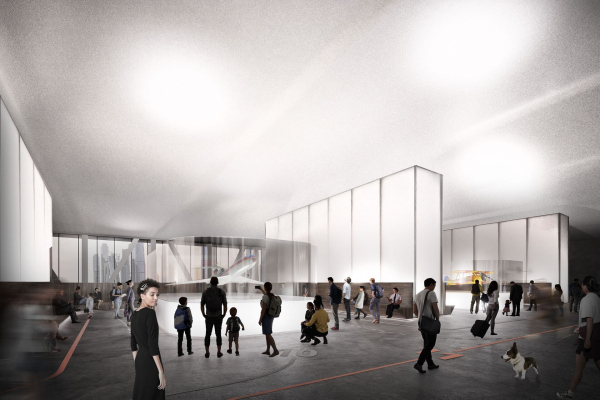 Multifunctional complex of the Fili Transport Hub, competition proposalCopyright: © Aleksey Ilin Architects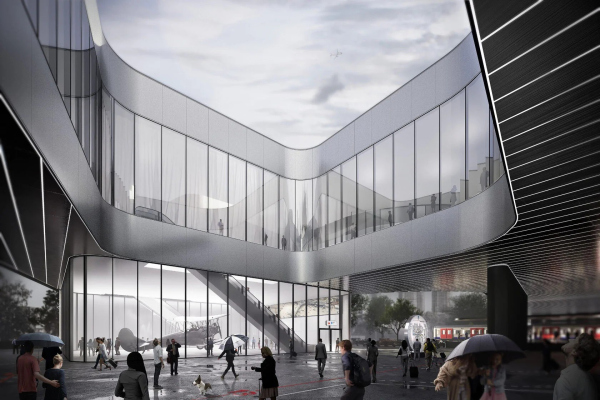 Multifunctional complex of the Fili Transport Hub, competition proposalCopyright: © Aleksey Ilin Architects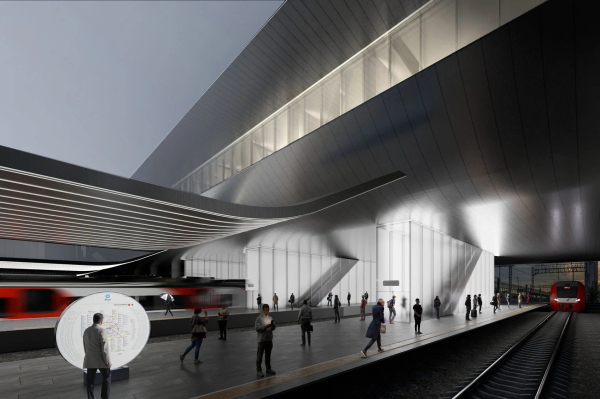 Multifunctional complex of the Fili Transport Hub, competition proposalCopyright: © Aleksey Ilin Architects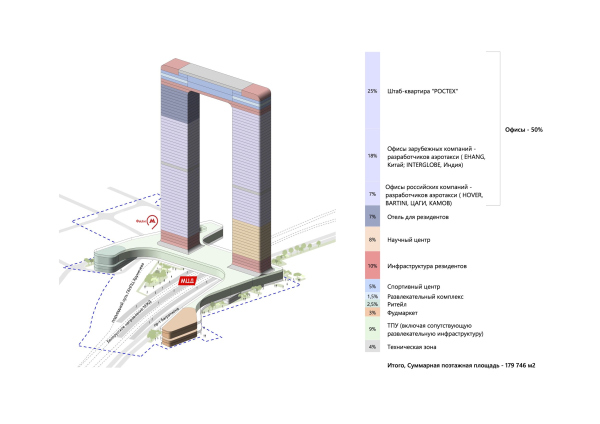 Functional model. Multifunctional complex of the Fili Transport Hub, competition proposalCopyright: © Aleksey Ilin Architects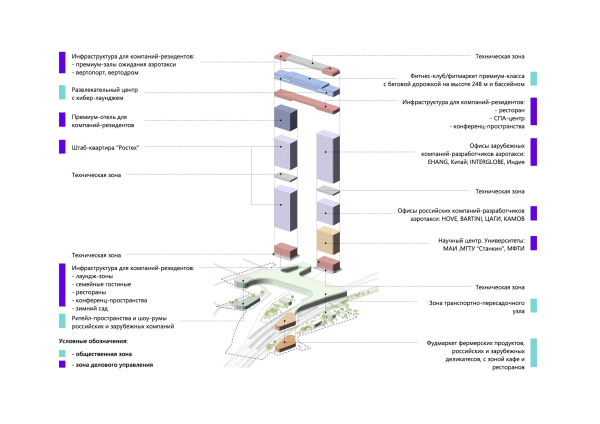 Exploded view. Functional model. Multifunctional complex of the Fili Transport Hub, competition proposalCopyright: © Aleksey Ilin Architects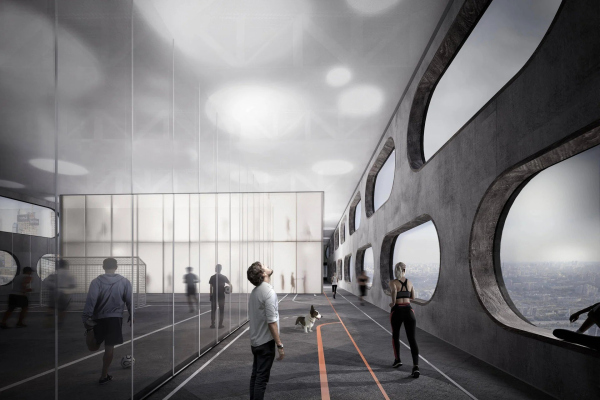 Multifunctional complex of the Fili Transport Hub, competition proposalCopyright: © Aleksey Ilin Architects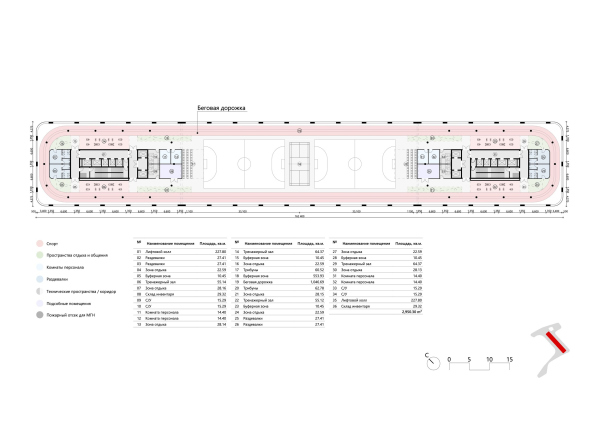 Gyms. Multifunctional complex of the Fili Transport Hub, competition proposalCopyright: © Aleksey Ilin Architects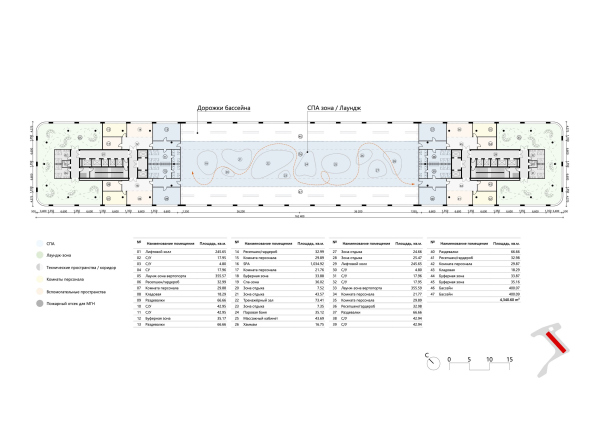 Spa zone and swimming pools. Multifunctional complex of the Fili Transport Hub, competition proposalCopyright: © Aleksey Ilin Architects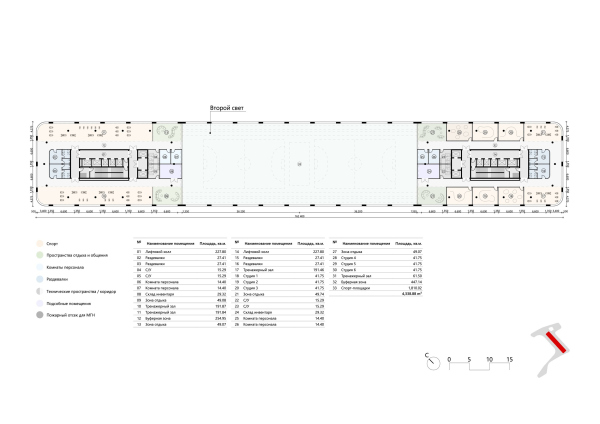 The fitness club. Multifunctional complex of the Fili Transport Hub, competition proposalCopyright: © Aleksey Ilin Architects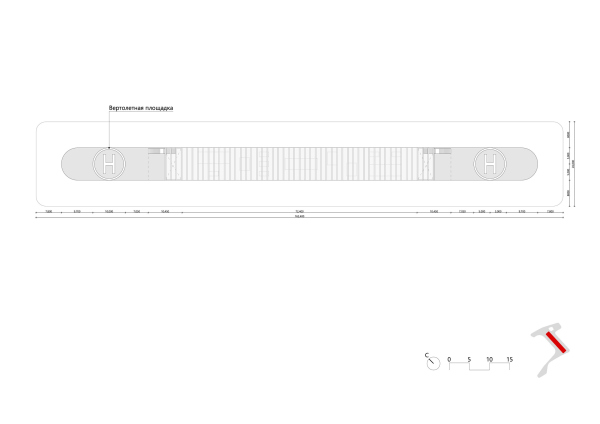 The roof plan. Multifunctional complex of the Fili Transport Hub, competition proposalCopyright: © Aleksey Ilin Architects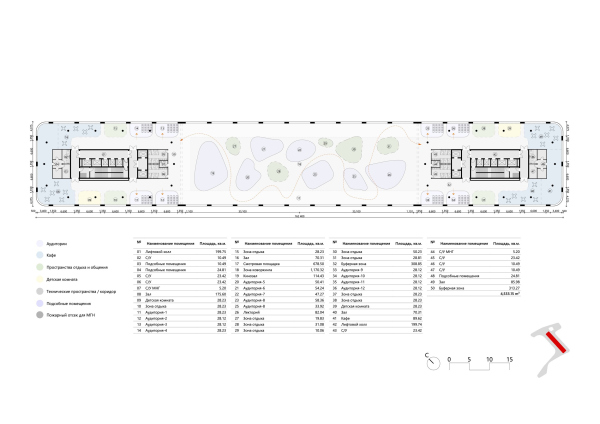 Conference halls. Multifunctional complex of the Fili Transport Hub, competition proposalCopyright: © Aleksey Ilin Architects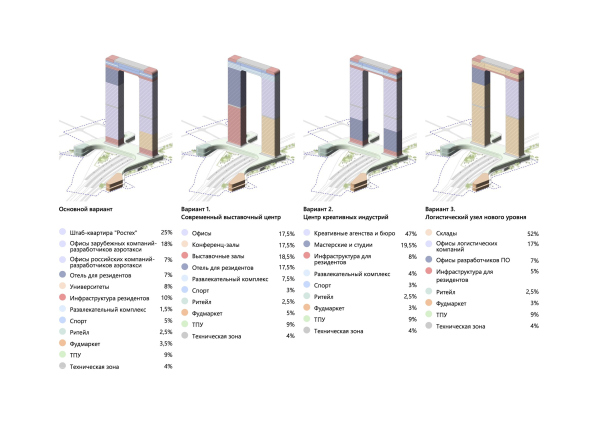 Comparison of functional layout options. Multifunctional complex of the Fili Transport Hub, competition proposalCopyright: © Aleksey Ilin Architects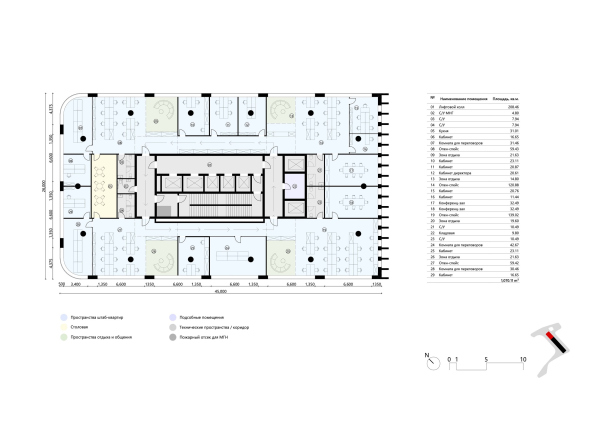 Typical floor plan diagram, headquarters. Multifunctional complex of the Fili Transport Hub, competition proposalCopyright: © Aleksey Ilin Architects |
|