|
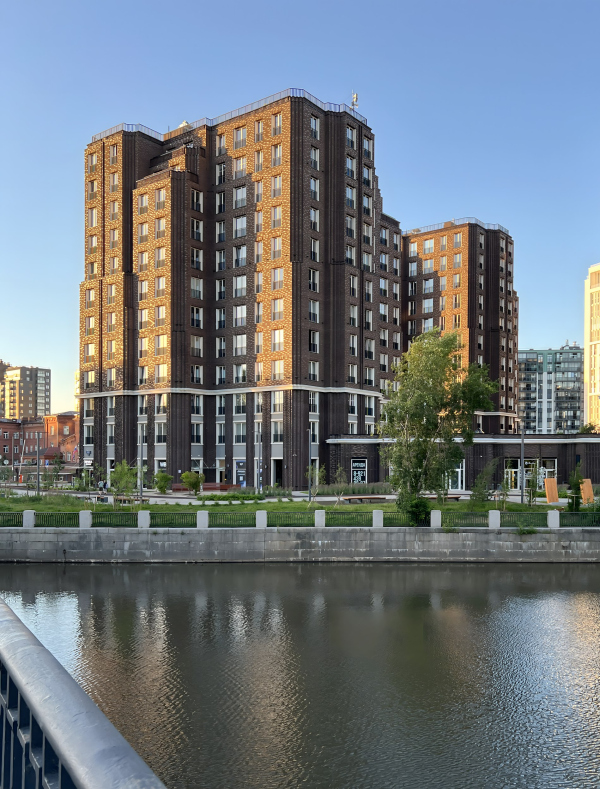
The Alter residential complex, designed by Stepan Liphart and built on a bend of the Okhta River, is an example of a “drawn house”: the number of original architectural details is virtually immeasurable. As a result, ribs, projections, and recesses create a picturesque silhouette even without a significant variation in height. Both composition and material respond to the proximity of the river and to the red-brick factory building dating back to the early 20th century. The project was also significantly shaped by recommendations from the city’s chief architect. More details in our article.
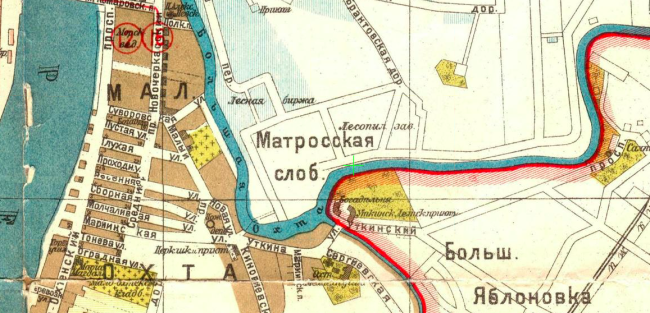
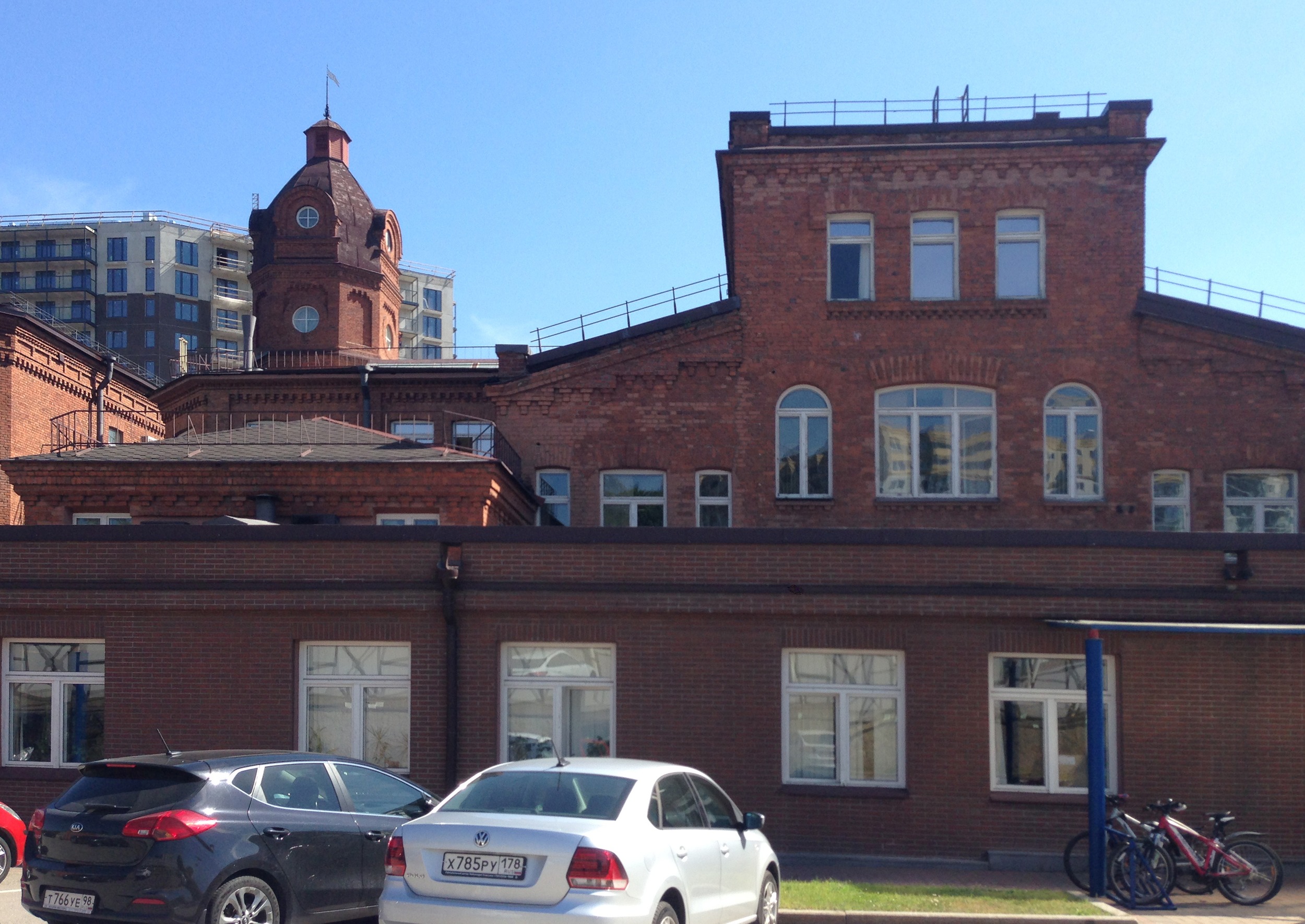
The site on which Alter stands is a fortunate and rather rare one for Saint Petersburg: it lies on the bank of the Okhta River, which here is not constrained by highways or industrial development. Of course, there were once factories – riverside locations almost inevitably attracted them. For a long time, the cape was known as Matrosskaya Sloboda; nearby were the Okhta shipyards, and in the 19th century the buildings of the Russo-Finnish Light Steamship Company appeared here. In the Soviet period, they were occupied by the Znamya Truda reinforcement plant named after Ivan Lepse. One of the brick buildings with a small tower has survived and now houses a business center. Anticipating what follows, it is worth noting that both the river and the richly articulated 1911 brick structure are the two genius loci that Stepan Liphart considered essential not only to acknowledge, but to amplify in his project.

In the 2010s, the area began to transform: along the riverbank, several phases of the Magnifika complex gradually took shape. Alter became their continuation and a connecting element, as well as a focal point – its position on the very bend of the river, between old and new development, virtually demands this role.
Today, both banks of the Okhta have been landscaped. On the right bank, at the foot of the residential buildings, a public embankment has been created – we will return to it later. On the left, near the confluence with the Okkervil River, there is a park area that recalls the time when, around the surviving Utkina Dacha estate, apple orchards grew instead of factory chimneys. The only disruption to this idyllic picture is Shaumyan Avenue, which cuts the river off from the west. To the east, Alter borders on three towers of the third phase of Magnifika, and to the north, the very same 1911 brick factory building.
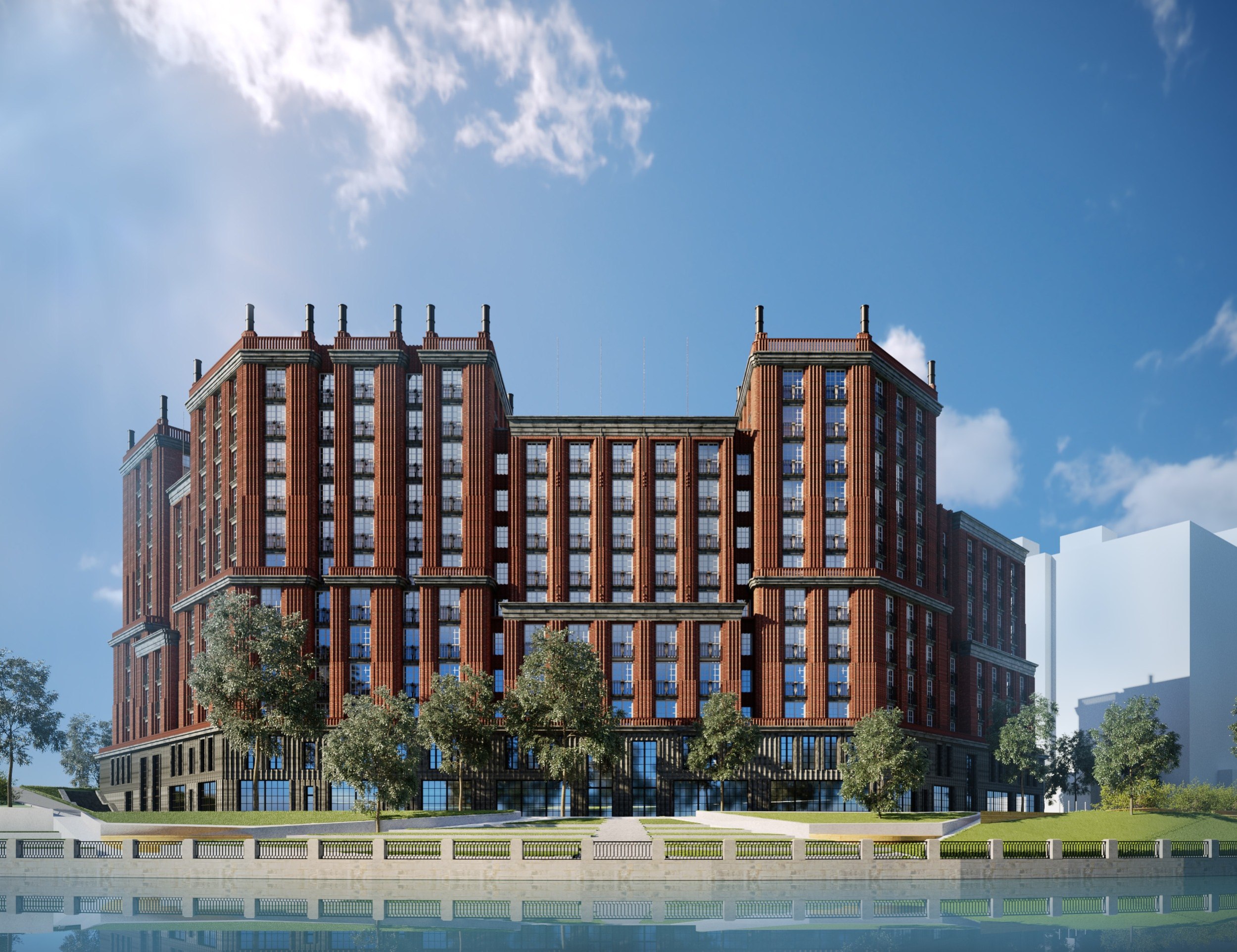
The bend of the river, the proximity of the industrial building, and the client’s wish for something akin to an “Amsterdam house” guided Stepan Liphart’s creative search toward brick expressionism. In the early versions, the building faces the river with a ceremonial courtyard block and “bastions”; the cornice is crowned with pinnacles resembling factory chimneys, while the volumetric brickwork forms “fluting” between the windows and creates a cascading effect. We described this design in more detail here.
Another condition emerged in the course of the project: the city’s chief architect at the time, Vladimir Grigoriev, recommended that the author respond to the towers of the neighboring complex. The third – and ultimately approved – iteration appears more restrained than the previous two, although the architect remained firmly committed to preserving the richness of detail.
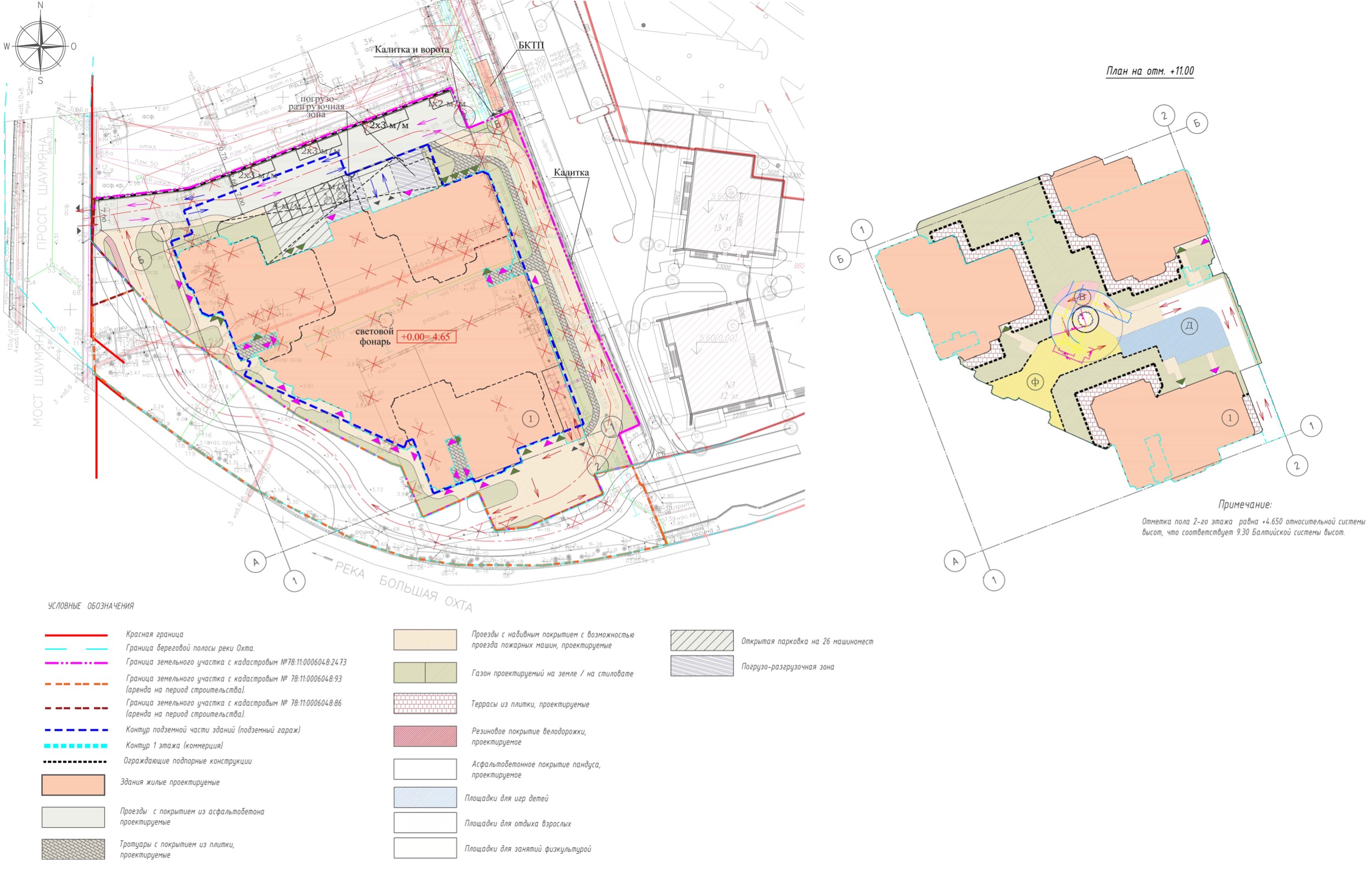
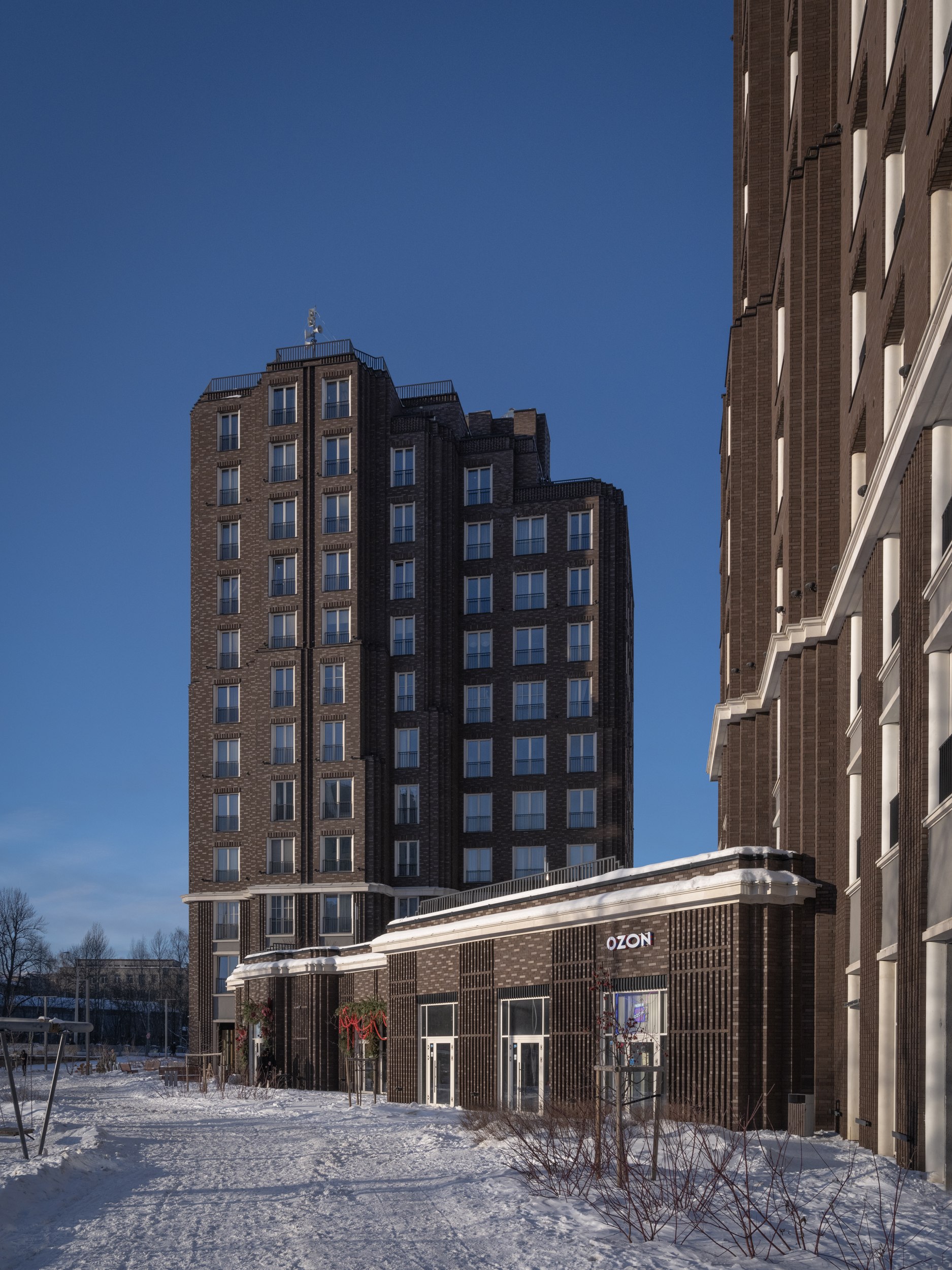
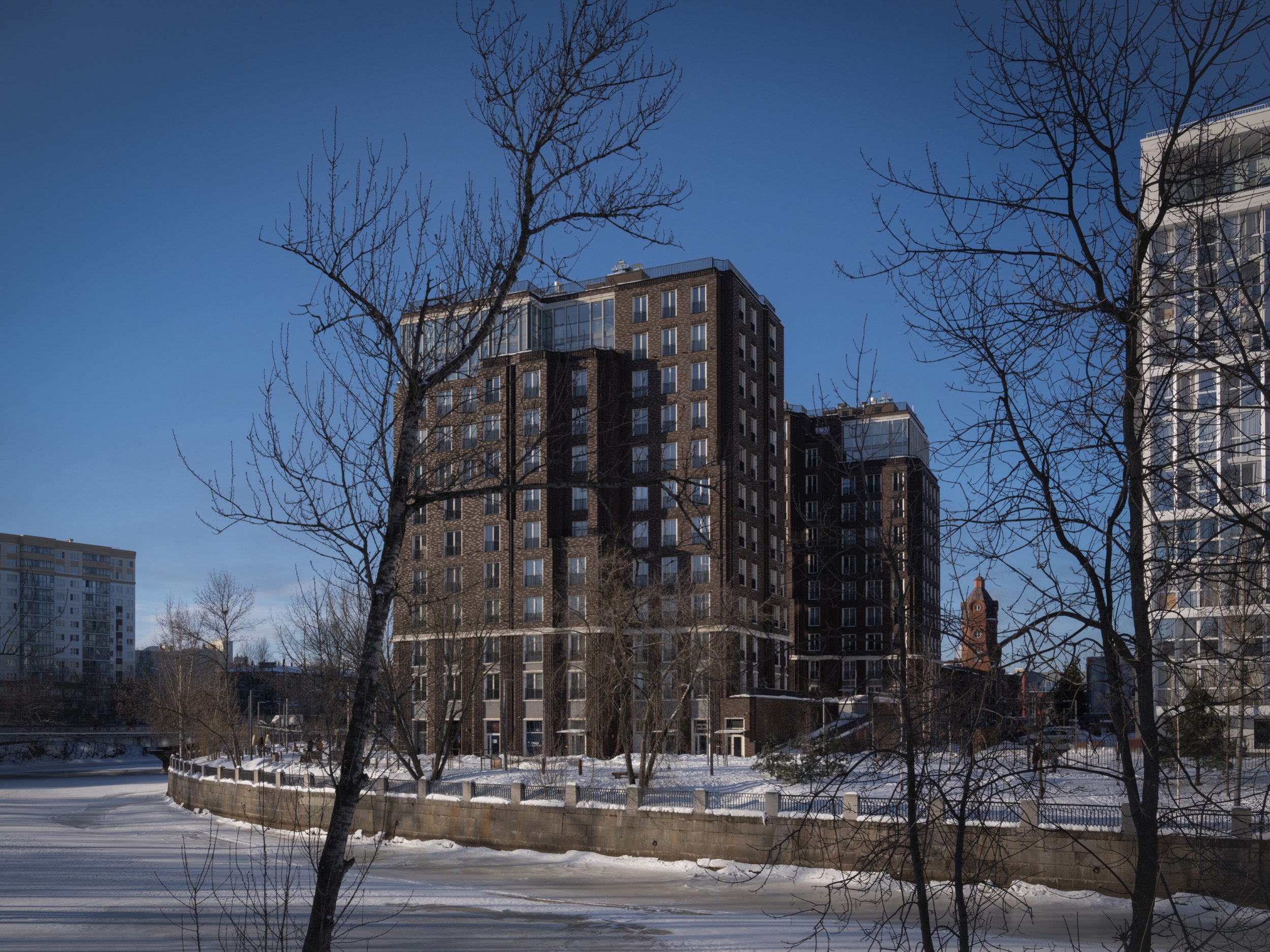
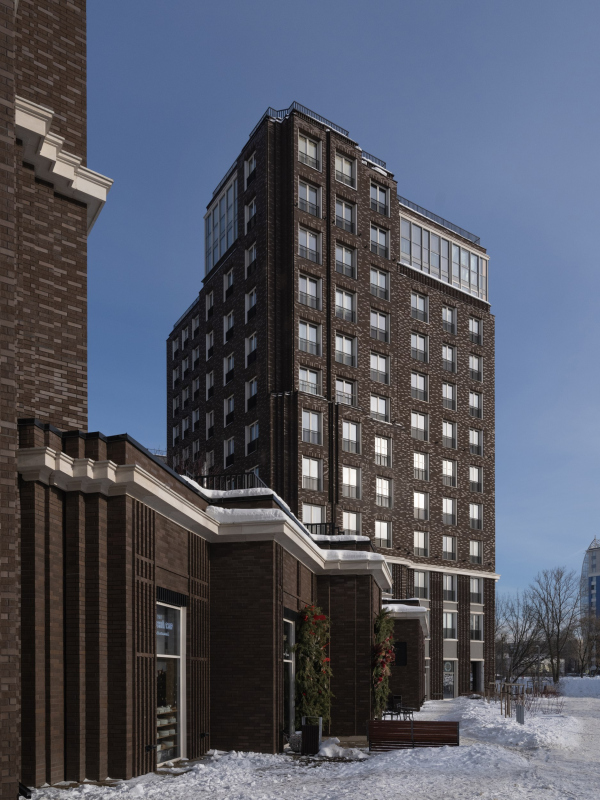
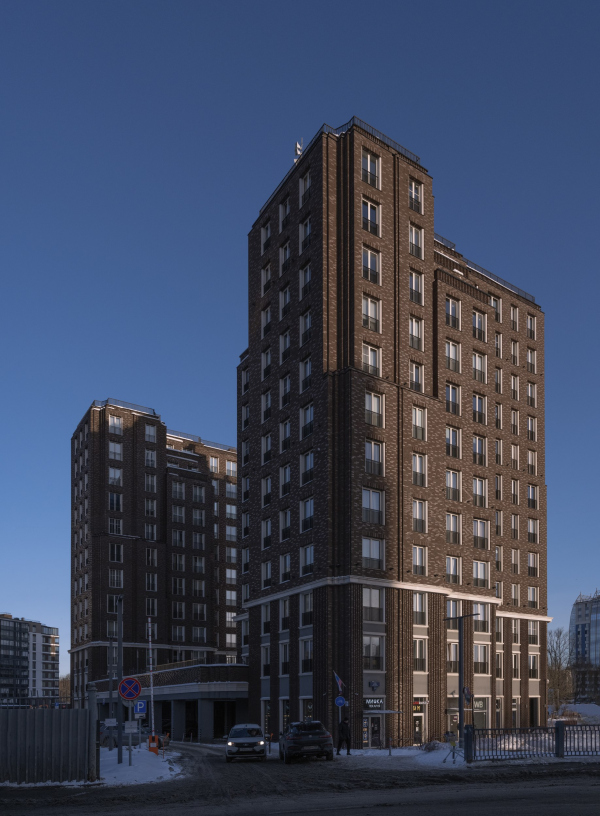
In the final version, the master plan also became more complex: the perimeter block was replaced by three cascading buildings connected by a stylobate, while the section between the “bastions” was pushed deeper into the site. Importantly, the fundamental quality of the composition was preserved: the bend of the river remains a key element, though achieved by different means. The three sections are inscribed within an isosceles triangle, whose hypotenuse roughly aligns with the line of the stylobate facing the embankment. And where, according to the logic of symmetry, a fourth tower might have stood, we instead see the river. Even without consciously grasping the idea, the viewer senses this built-in balance and links the river with the building; from the opposite bank, it can even seem as though the water flows into the courtyard. Moreover, because the tower sections are angled toward the river, a greater number of apartments enjoy favorable views.
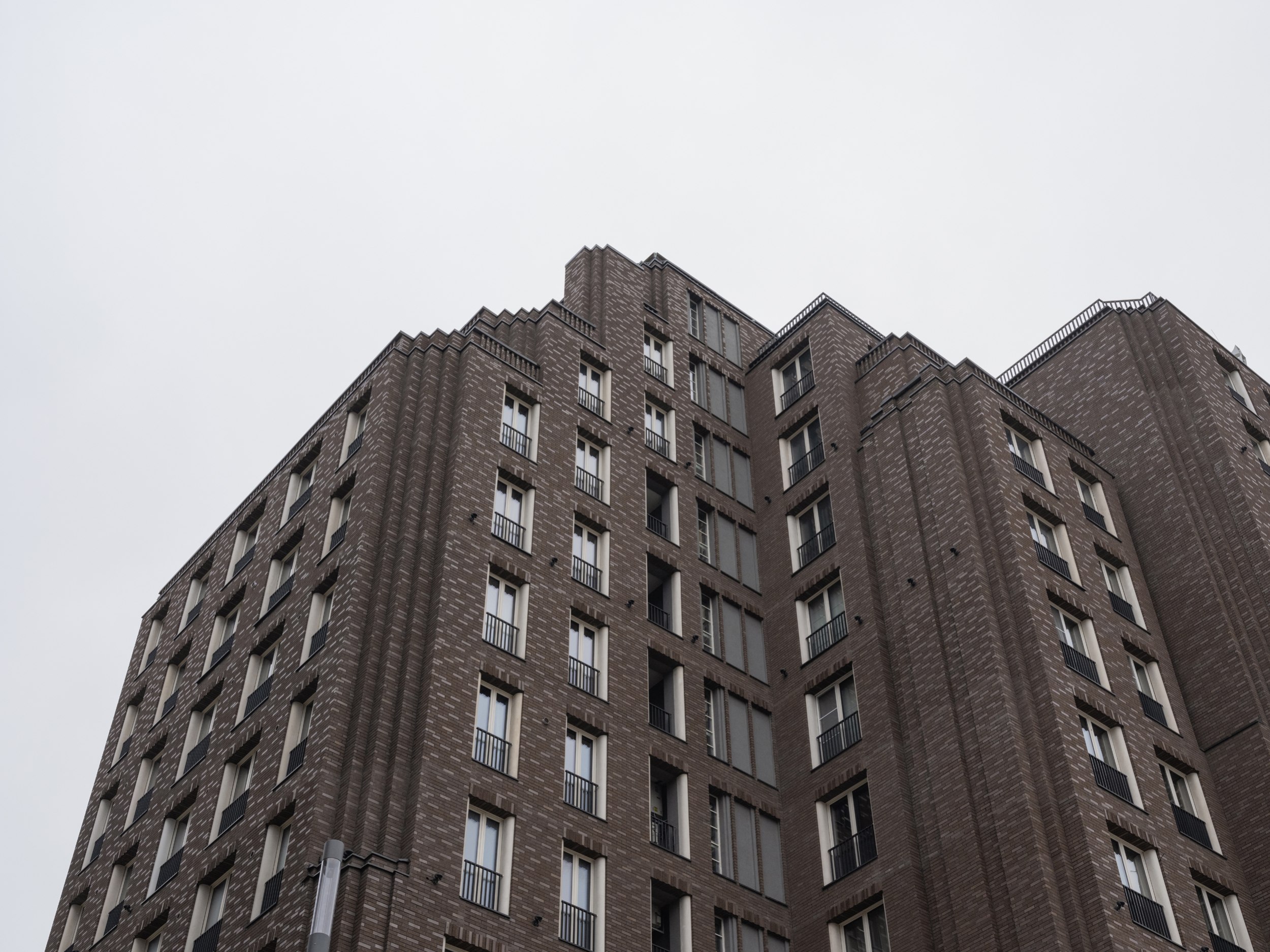
Another key characteristic of Alter, shaped by the presence of the river, is its cascading form, reflecting the many manifestations of moving water – slanting streams of rain, churning rapids, stepped waterfalls. Studying this quality, one begins to understand what architects mean when they say a building is “drawn”: behind every recess, edge, and step, one can sense the hand holding the pencil.
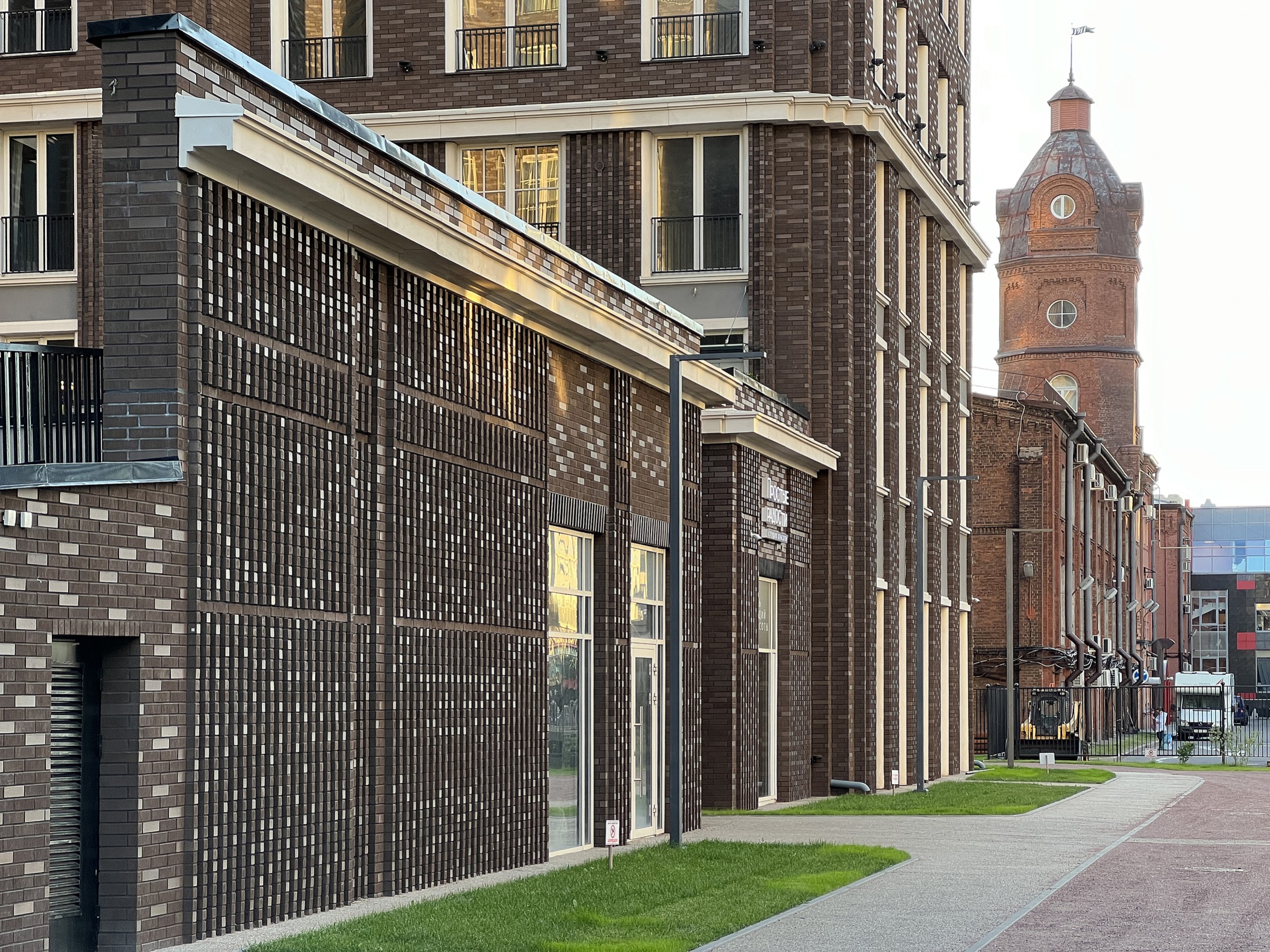
The motif of steps and setbacks is executed in numerous variations. At the stage of shaping the massing, the architect must have proceeded (at least, in part) from the complex volumetric composition of the Lepse factory. The façade facing the neighboring Magnifika tower is particularly responsive: here, the rhythm of the new building’s pilasters picks up the line of the cornice and the cadence of the factory structure.
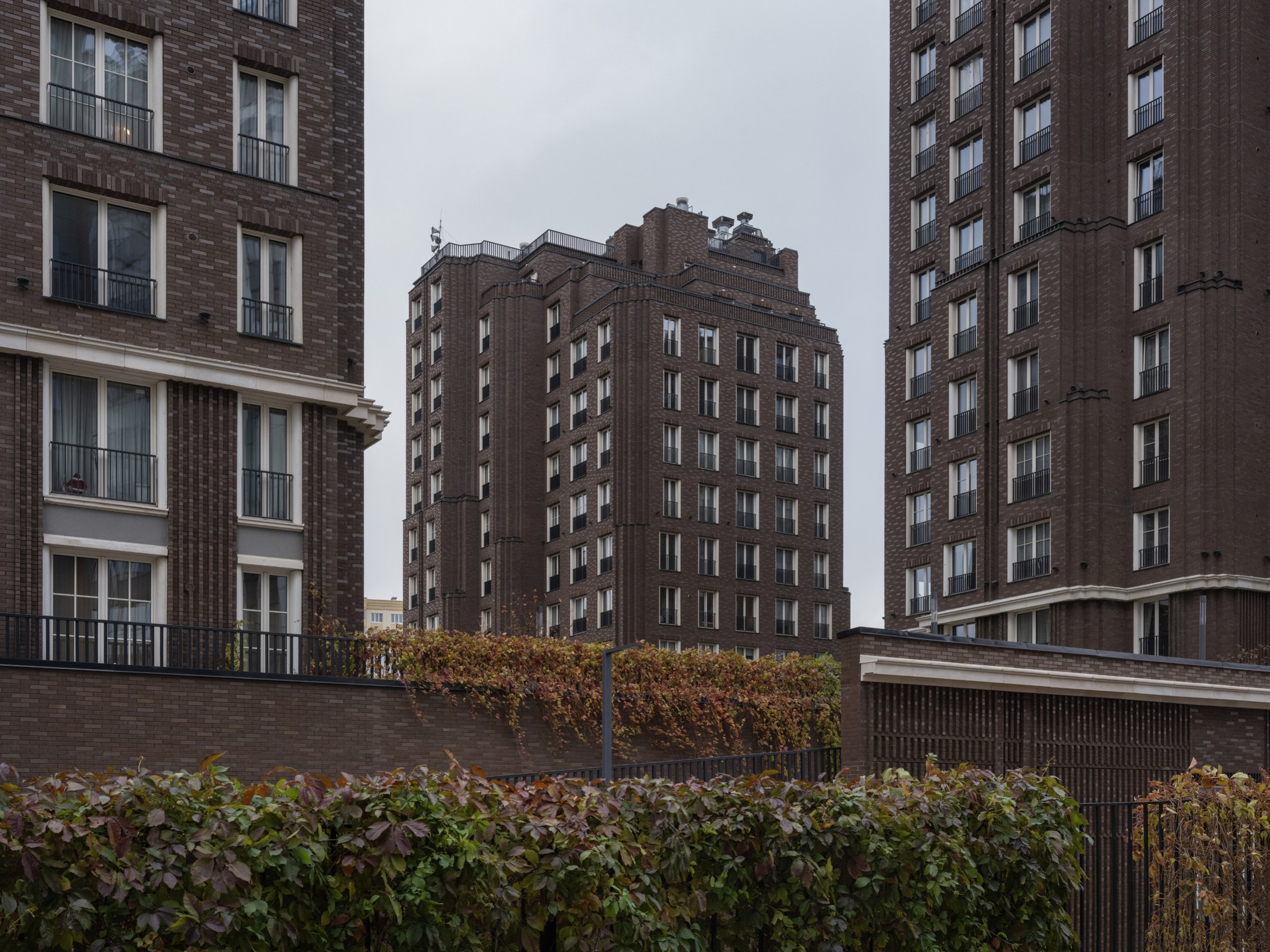
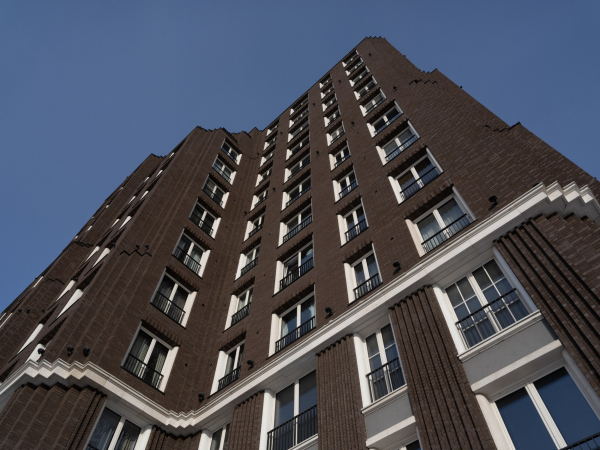
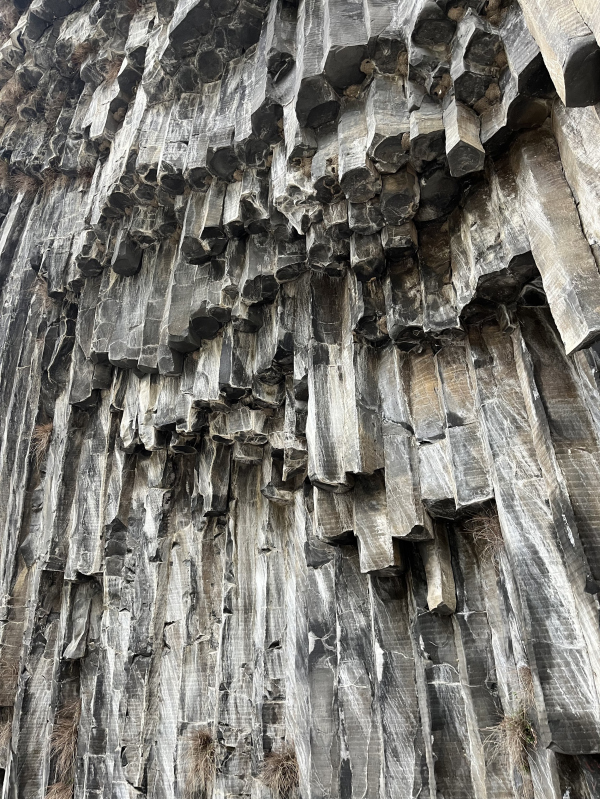
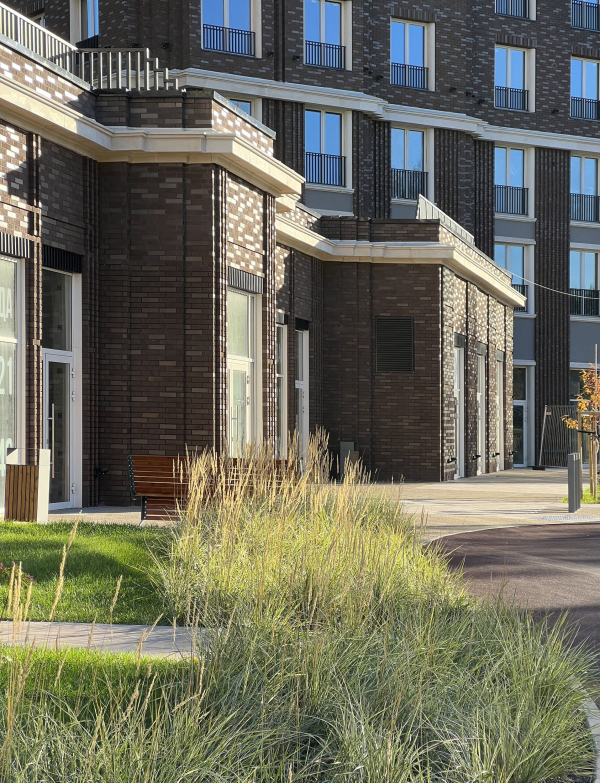
As already noted, contemporary residential architecture in Saint Petersburg is often associated with a certain austerity – of emotion, of formal devices, of materials. Here, however, the impression is the opposite: not a single square meter of the façade is neglected. The author treats it with remarkable generosity, seemingly never repeating himself – elements such as terraces, “fluting,” or folds vary in length, height, and mass. All this produces a kind of pictorial quality inherent to nature, one that architecture rarely manages to replicate. The buildings resemble mountains gradually settling, with streams flowing down from their peaks to the base.
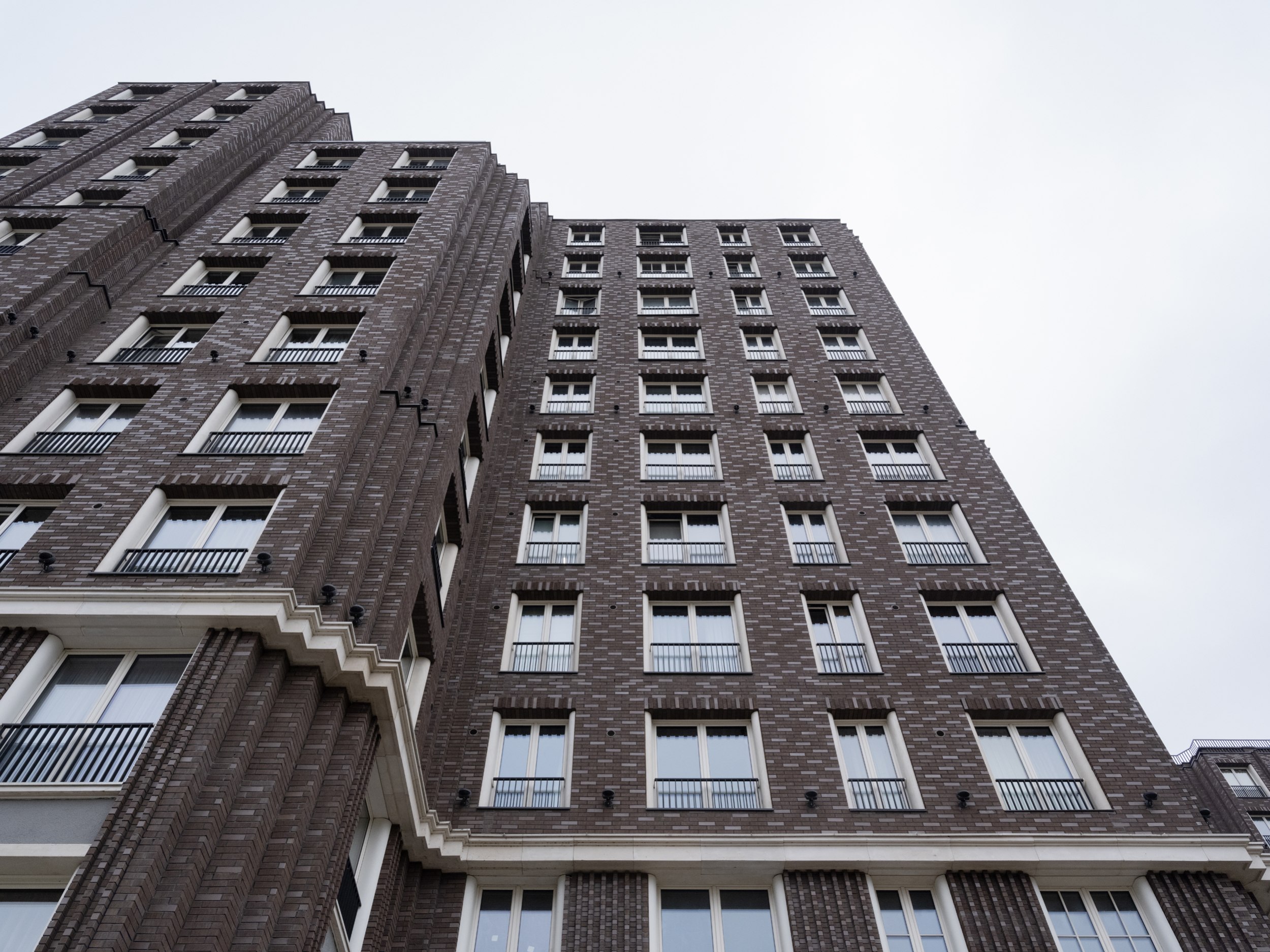
The compositional features and the rich variation of simple elements – folds and recesses – generate, without exaggeration, an endless array of viewpoints. Lighting also plays a crucial role in perception: in sunny weather, the volumes appear sharper and more articulated, while under overcast skies they may merge into new, unexpected forms.
The building’s sculptural expressiveness is rooted in the properties of brick. The material was ordered from the Estonian Wienerberger factory before the onset of pandemic restrictions. Its color is darker than that of historical architecture, with a subtle violet undertone. In the masonry, matte bricks are combined with glazed ones, which, under certain lighting conditions, give the surface a variegated appearance.
Finally, Alter creates not only varied perspectives but also spaces of different character. The embankment, for instance, is not merely two lanes for pedestrians and cyclists, but a “reservoir” of urban life: it is organized as a functionally rich public square that attracts a wide range of people. Along the stylobate, there are shops and cafés with outdoor seating; in the center, sports and play areas; and by the river, a promenade with quieter places for rest.
The other two, less ceremonial sides – facing the Magnifika towers and the brick business center – are also thoughtfully designed: the promenade anticipates future development of the area, and even the parking entrance is carefully integrated. The courtyard atop the stylobate functions as a “city balcony” – a calm, semi-private space overlooking the river.
Alter may seem unusual for Saint Petersburg – both old and new – but all of its design decisions speak to a considered connection with the place, endowing the project with a sense of authenticity. Here, the viewer encounters not an economic calculation, but an artistic one. Fragment from the 1925 map Copyright: Image © courtesy of retromap.ru
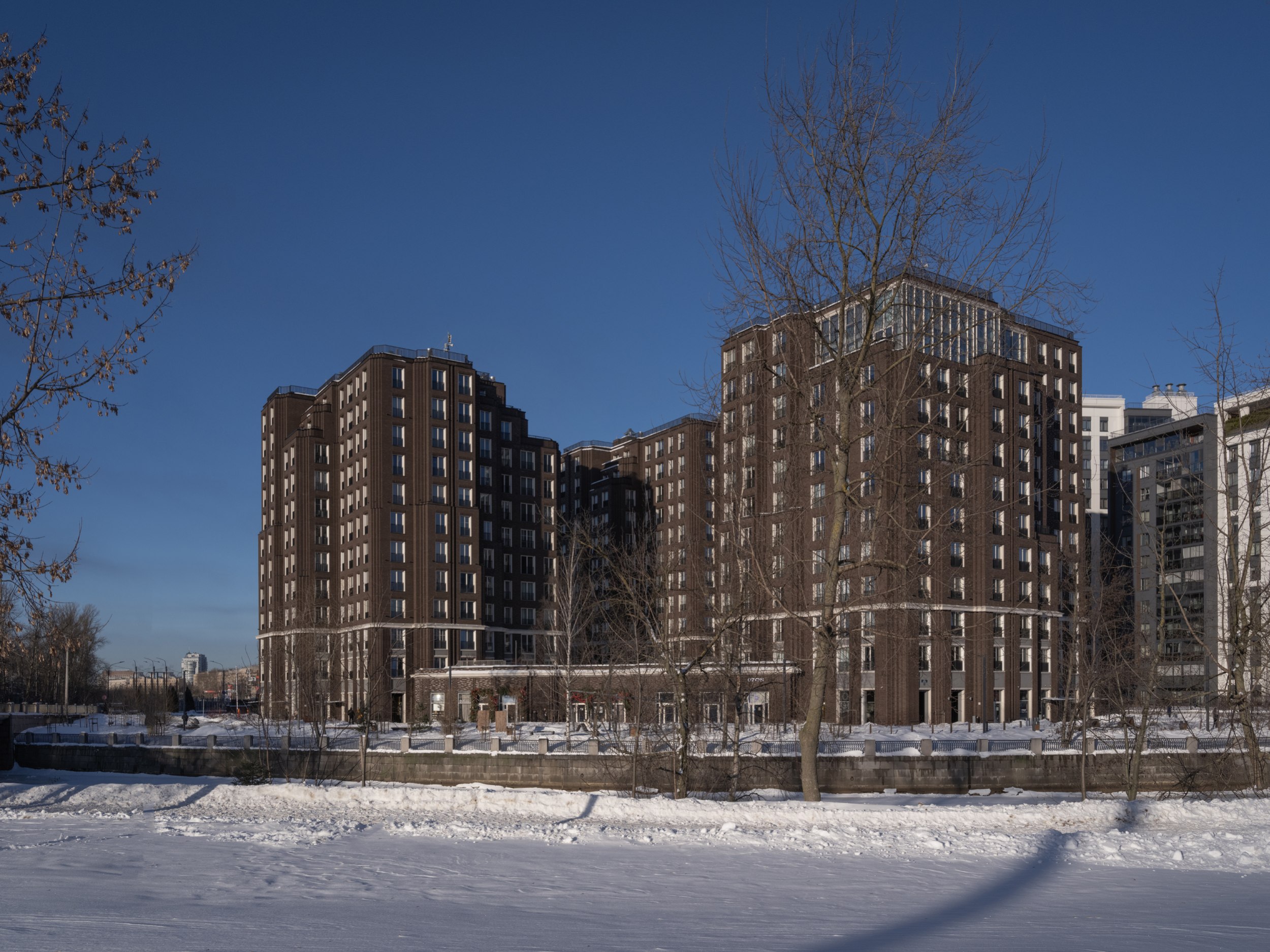
Alter Residential Complex. General view of the façade along the Okhta River embankment, from the south sideCopyright: Photograph © Alisa Gil / courtesy of Liphart & Gerth
Design variant for the building on Magnitogorskaya StreetCopyright: Project for a building on Magnitogorskaya Street. Perimeter block variant in a classical style
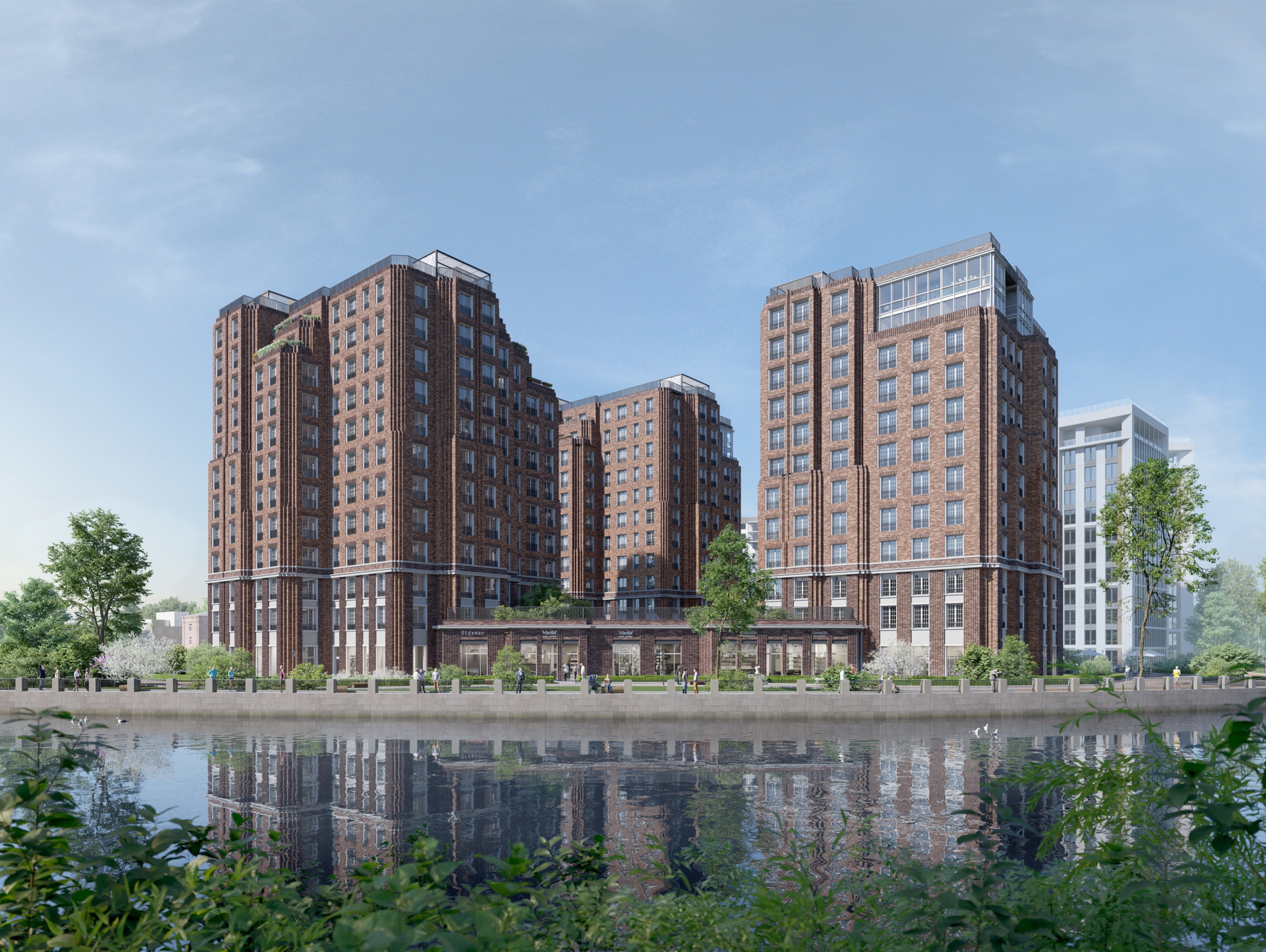
Alter housing complexCopyright: © Liphart Architects, Mosgraf Agency (visualization)
The site plan. Alter housing complexCopyright: © A-Architects
Alter Residential Complex. View of the façade along the Okhta River embankment, from the east sideCopyright: Photograph © Alisa Gil / courtesy of Lipgart & Gerth
Alter Residential Complex. Fragment of the eastern façade, with the Lepse factory building in the backgroundCopyright: Photograph © Stepan Liphart
Former shipbuilding factory Lepse, now the business center “Shaumyana 10”Copyright: © Stepan LiphartCopyright: Photograph © Stepan Liphart
Alter Residential Complex. View from the east sideCopyright: Photograph © Alisa Gil / courtesy of Liphart & Gerth
Alter Residential Complex. General view of the façade along the Okhta River embankment, from the southeast sideCopyright: Photograph © Alisa Gil / courtesy of Liphart & Gerth
Alter Residential ComplexCopyright: Photograph © Alisa Gil / courtesy of Liphart & Gerth
Alter Residential ComplexCopyright: Photograph © Alisa Gil / courtesy of Liphart & GerthStone symphony in GarniCopyright: Photograph © Alena KuznetsovaAlter Residential Complex. View of the façade along the Okhta River embankment, from the west sideCopyright: Photograph © Alisa Gil / courtesy of Liphart & GerthAlter Residential Complex. View of the façade along Shaumyan Avenue, from the northwest sideCopyright: Photograph © Alisa Gil / courtesy of Liphart & GerthAlter Residential ComplexCopyright: Photograph © Alisa Gil / courtesy of Liphart & Gerth
Alter Residential Complex. View of the façade along the Okhta River embankment, from the south sideCopyright: Photograph © Stepan LiphartAlter Residential Complex. Fragment of the façade along the Okhta River embankmentCopyright: Photograph © Stepan Liphart
|