|
The studio of Stepan Liphart, an architect known for his distinctive signature style and one-off projects, now has a partner. Yuri Khitrov, a specialist with a broad range of competencies, will take on the part of the work that distracts one from creativity but drives the business forward. One of the aims of this partnership is to improve the urban environment through dialogue with clients and officials. We spoke with both sides about their ambitions, the firm’s development strategy, shared values, and the need for pragmatism. And why the studio is called “Liphart & Gerth” only became clear at the very end of the interview.
Archi.ru:
Yuri, you have an unusual career trajectory. Could you tell us how it led you to a partnership in an architectural studio?

Yuri Khitrov:
I have been working in the construction and building materials industry for more than 20 years. When, in 2013, I headed the St. Petersburg division of the world’s largest brick manufacturer, I began to engage more closely with architecture and urbanism. I became genuinely interested: I started reading professional literature, attending lectures and exhibitions. A real immersion came in 2020, when Vladimir Frolov and I conceived and organized the first Brick Award – incidentally, that’s where I met Stepan.
Since 2020, I have been actively involved in organizing architectural and construction forums in the Volga region, including the first editions of the “KAZANYSH” forums. Together with partners and colleagues, we have organized dozens of architectural tours of Moscow’s best projects and traveled to Europe as well.
Throughout this time, I was in close contact with developers, officials, and architects from different cities, delving into the topics they wanted to discuss. This is how I became an expert at the intersection of architecture and its practical implementation, while the creative component grew increasingly important to me. At a certain point, this led me to pursue yet another degree – my third – at SPbGASU.
My sincere inner goal is to make cities better, more comfortable, and more beautiful. This can be achieved by fostering dialogue between the architect, the resident, the official, and the developer. Forums, competitions, and lectures were my tools in pursuing this goal. But now a new stage is beginning: as part of the same team with Stepan, I will be able to immerse myself fully in the profession.
Stepan, what prompted your decision to enter into a partnership?
Stepan Liphart:
After graduating from MARCHI, Boris Kondakov and I founded the architectural group Children of Iofan. Our work was rooted in pure creativity and was as far removed from business as could be. That experience showed me that the synergy of several actors – minds and hands – yields far more than solitary navigation. However, that partnership ultimately proved finite: two creative individuals were working in the same direction, yet there was no sustained development, and our goals and capacities to achieve them turned out to be too different.
Then came my move to St. Petersburg, where my professional path continued through architectural practice and built projects. At the same time, I was always aware that a whole range of functions, roles, and responsibilities required of the head of an architectural firm were, frankly, a burden to me. I am not inclined toward routine work. Given a choice, I will always prefer creativity over management, self-promotion, or the organization of production processes – my program is purely aesthetic.
In principle, my work contains a certain self-sufficiency, an authorship that I value deeply. But for a long time now, I’ve had the feeling that there should be a partner – someone ready to lend a shoulder, to take on part of the responsibilities without which professional architectural practice is impossible. After all, the best results are achieved when people are in their proper roles and competently doing their own work.
So yes, it’s a matter of ideal and pregmatic. Yuri takes on the pragmatic side.
Yuri Khitrov: Stepan is right to say that he prefers making decisions on his own. When we first started discussing a partnership, he was prepared to assign me a purely administrative role. But that doesn’t fully interest me. So we agreed that, to one extent or another, I would also take part in the creative process.
What exactly do you mean by that?
Yuri Khitrov: Stepan is a professional in his field, and I am a professional in something else: business, communication, and building relationships. I work extensively with developers, so I understand – from the standpoint of marketing and sales – what kind of product is needed. In this area, I can suggest adjustments, and Stepan can choose to take them into account. A creator may design for himself and be convinced that the result is ideal. I, on the other hand, can assess a project’s potential, grasp the client’s brief more quickly, and act as a translator between the pragmatic and the poetic – in both directions.
Stepan Liphart: It seems that Yuri’s task is, at least in part, to bring things a bit closer to the ground.
For now, to be honest, I see something of a Faustian drama in this.
Yuri Khitrov: There’s no drama. There is the notion of a product from the standpoint of sales, and at the same time we must preserve the aesthetic dimension: explain its value to the client, embed solutions at the early stage that are actually buildable, and carry them through to the final phase of construction. I understand Stepan’s approach – his attention to detail, his care for the end result, his desire to make the city better – and I share it.
If a project is large and rich in detail, and the client has approved it, my task is to ensure that the proposed solutions fit within the developer’s economic model and are feasible with the available materials and contractors. This way, Stepan doesn’t have to be distracted from the creative process by such concerns.
Stepan Liphart: For my part, I fully understand Yuri’s constructive ambition – and it’s the right one. It is, of course, possible to treat architecture purely as a business without a love for creativity, but the result will no longer be architecture, rather something faceless and trivial… Another matter is that I already have an established authorial language and method – these two things will undoubtedly remain recognizable.
Returning to the question of long-term development strategy – which direction are you choosing?
Stepan Liphart: I would like to avoid what happens to many architects: they begin with distinctive, one-off projects, then launch into a wave of large, lucrative commissions, take on enormous projects, and start spreading themselves too thin. I would prefer to stay focused on distinctive urban residential projects and hotels. At present, we are mostly working at the concept stage, and in successful projects I remain deeply involved in authorial supervision. However, experience shows that – even though there are conscientious general designers and contractors – achieving the desired result within this model requires excessive effort, which is also rather modestly compensated.
That is why Yuri and I now face the task of forming a full-fledged team and scaling it into a structure capable of handling general design responsibilities.
As I’ve already said, I try to ensure that the people we work with focus on what they do best. For example, my current colleague Ekaterina Zotova, who worked for a long time at Jukka Tikkanen’s Finnish office, is a highly skilled professional in rational planning, and our urban planners are also quite strong. Ideally, we would assemble a team of such specialists, each leading their own area without requiring my constant involvement.
Yuri Khitrov: We’ve determined that the team should be strengthened to around 20-30 creatively active and strong professionals – a size that allows us to maintain quality control and preserve a recognizable authorial language. It should be a team that shares our ideas. It’s practically impossible to convey a unified vision to large masses of people. When you come to an office with 200 or 300 employees, you realize that the authors are involved in only a handful of projects. A person’s capacity to invest attention in a project is limited – it’s impossible to oversee everything.
Will expanding the practice affect the stylistic diversity of your projects?
Stepan Liphart: Since the days of “Children of Iofan”, I’ve had something like a declared program – “Art Deco and neoclassicism”. All of our realized projects bear this imprint in one way or another. At the same time, I’m not a dogmatist; there’s no rigid stylistic framework with me. What matters more is that architecture embodies a sense of scale, humanism, and artistry. So if a client comes and says, “I relate to your approach, but I’m not ready for neoclassicism”, we usually find common ground. Conventional Baroque is unlikely to happen, but if someone is drawn to a more technological contemporary language, I would be interested in creating my own version of that “high-tech”, for better or worse.
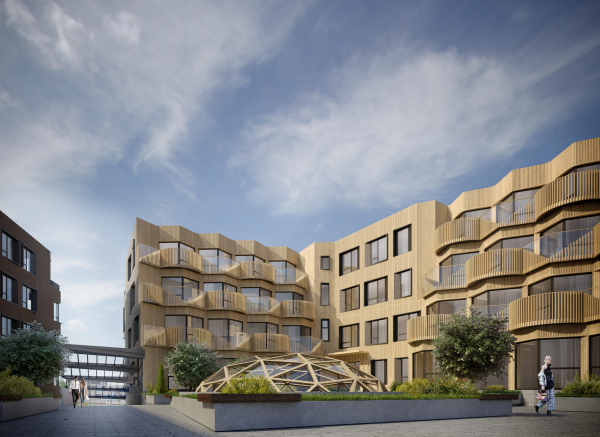
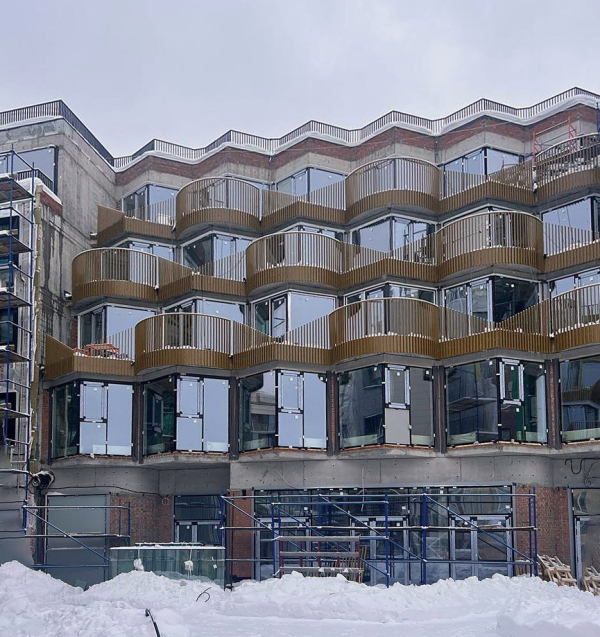
For example, in Kazan I designed the “Threads” building, which looks nothing like my St. Petersburg projects. And yet it still contains a certain “order” – in its plastic articulation, its handling of mass and rhythm. It’s the same rhyme, the same meaning, just expressed in a different language.
Did the Kazan projects come about thanks to Yuri?
Stepan Liphart: Yes, Yuri played a decisive role in establishing communication with the Kazan architectural and development community.
Yuri, won’t you feel constrained within a single architectural practice, given your wide network, opportunities, and cross-disciplinary experience?
Yuri Khitrov: I don’t see the point in spreading myself across everything that is simply available. I will continue some of my work within the “Form and Environment” organization, which arranges urban tours and other professional events for developers and fellow architects – but now as a partner of the Liphart & Gerth practice.
Stepan Liphart: This can be seen as a continuation of building relationships and communication between different stakeholders in the industry. Such activity will only benefit our practice.
Yuri, why do you still need a degree from SPbGASU, especially in “Design”? What do you hope to gain from this new qualification?
Yuri Khitrov: Partly for my personal growth, partly for formal reasons – although life shows that not all formalities truly matter.
Do you already have a joint project?
Stepan Liphart: We completed a small pilot concept to understand how each of us communicates with a real client and interacts within the workflow. We were satisfied with the result.
The new name – Liphart & Gerth – turned out very well. Was it a coincidence? (Until this point in the interview, we assumed Yuri’s surname was indeed Gerth – editor’s note.)
Yuri Khitrov: Gerth is the surname of my grandmother and great-grandfather from a Volga German family. I never expected that this family connection would manifest itself in this way. But when we were thinking about a name, it became an entirely obvious choice.
Stepan Liphart: The Lipharts are so-called Baltic Germans who, unlike the Volga Germans, did not end up within Russia entirely of their own will. Still, this shared line – let’s cautiously call it a historical and cultural one – feels like another good sign.
Both Volga and Baltic Germans preserved certain traditions, ways of life, and approaches to work and relationships, both within the family and in professional settings. Beyond the well-known stereotypes about exemplary housekeeping, advanced technologies, and progressivism, I can confidently say that empathy, attentiveness, and respect for the individual are an integral part of our cultural and everyday heritage. I observed this in my own family, and I’m glad to see it in my working relationship with Yuri. We would very much like to preserve and cultivate this attitude toward work and people today.
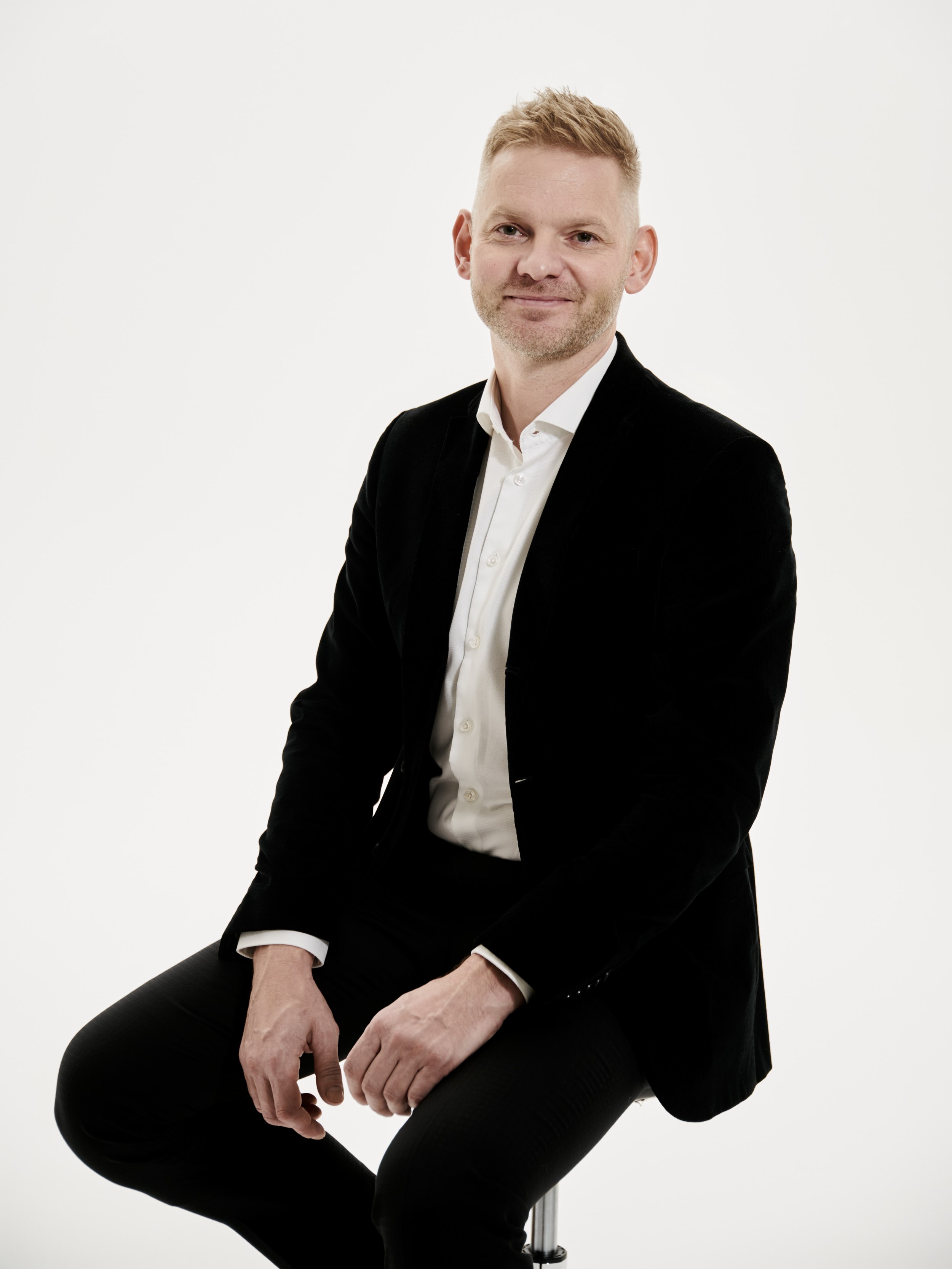
Yuri GerthCopyright: Photograph © Sasha Nevskaya
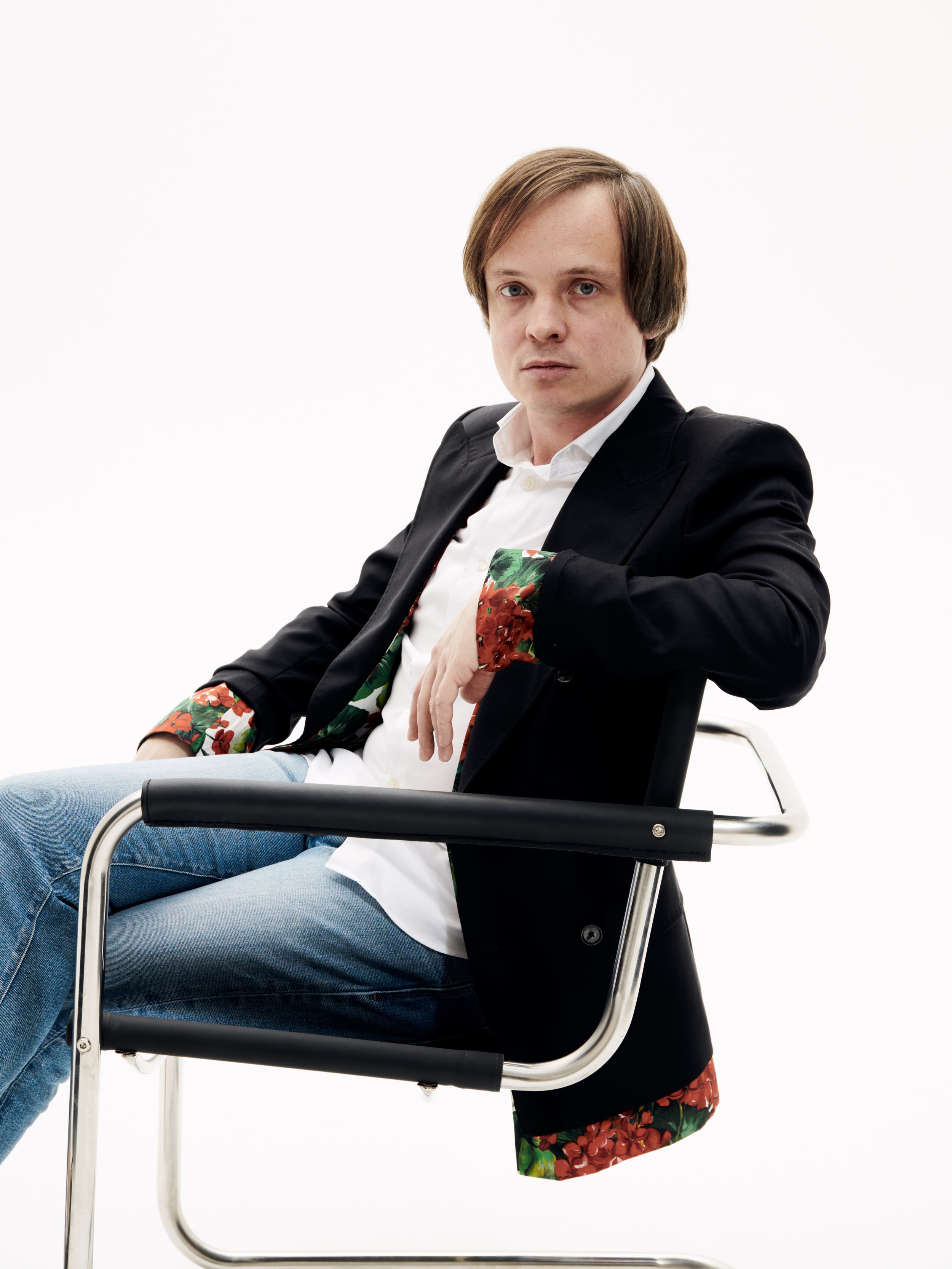
Stepan LiphartCopyright: Photograph © Sasha Nevskaya
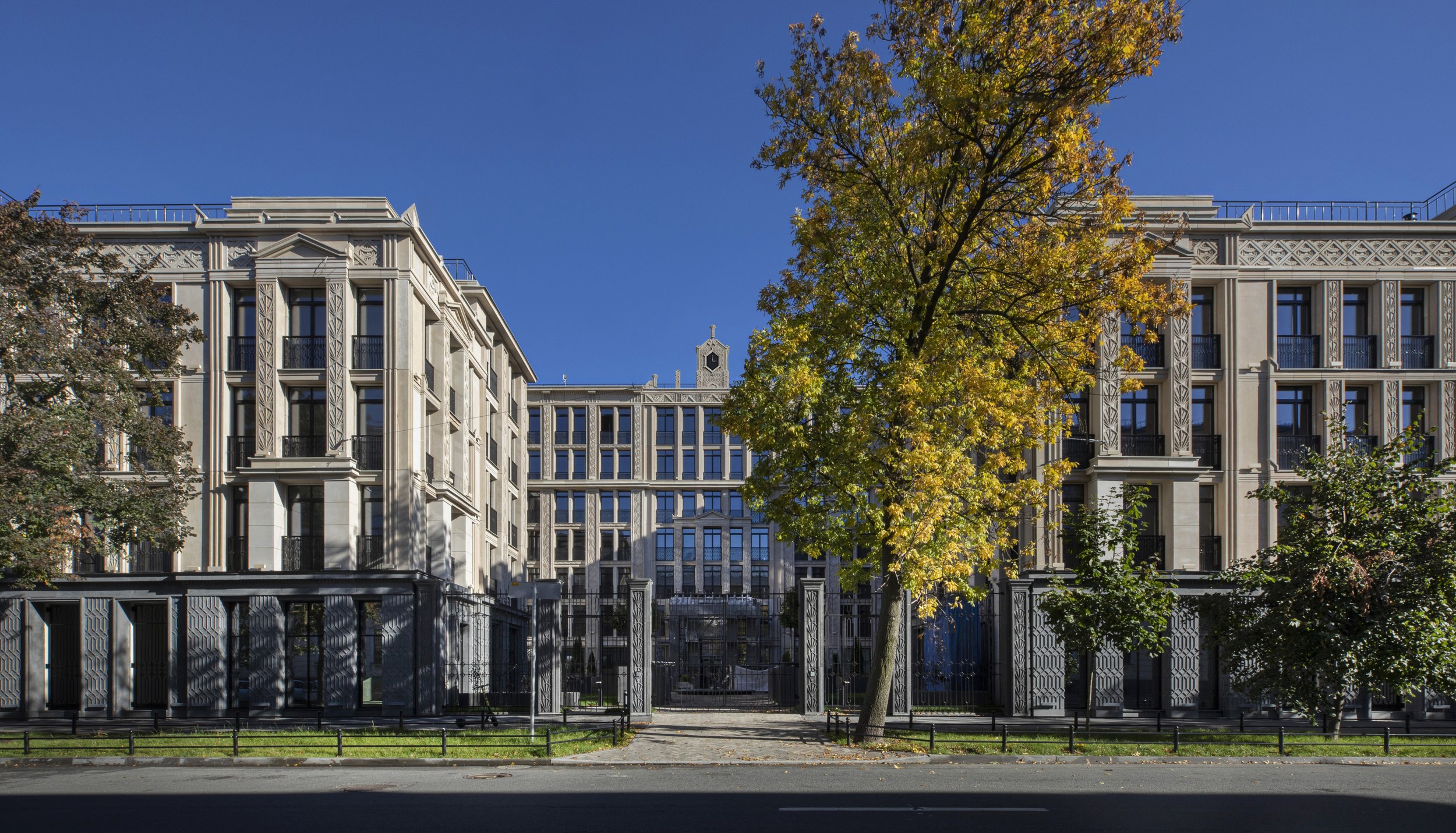
Petite France housing complex, overvie from Lane 20 of the Vassilyevsky IslandCopyright: Photograph © Alisa Gil / courtesy of Liphart & Gerth
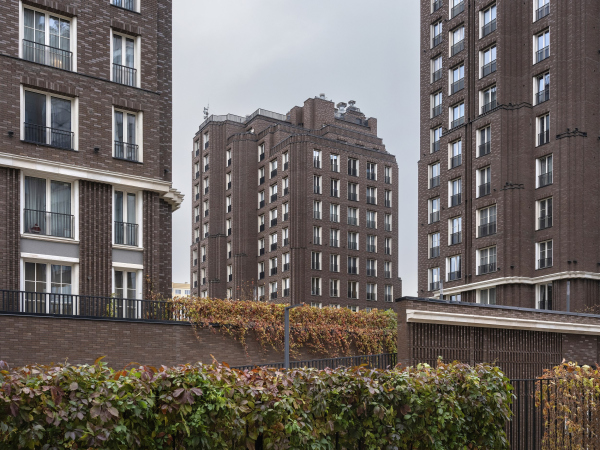
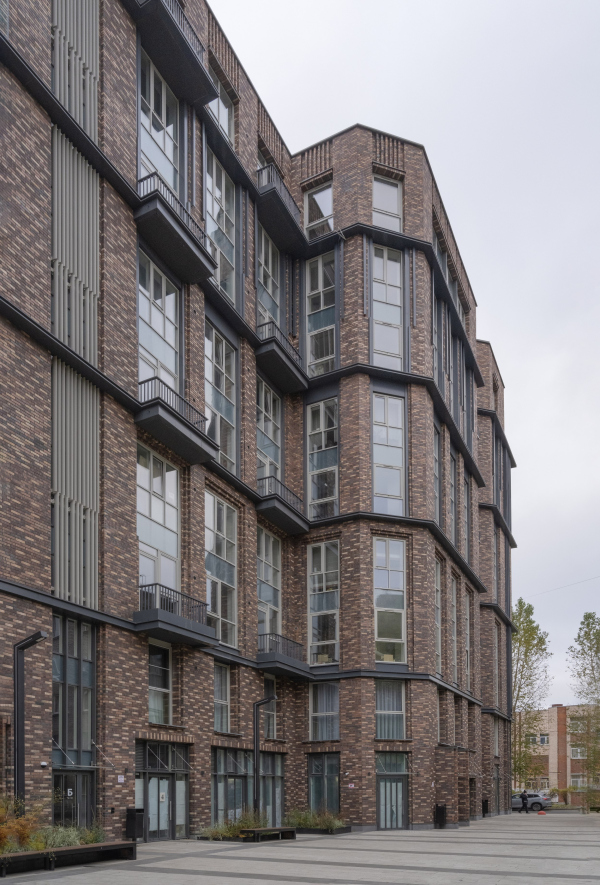
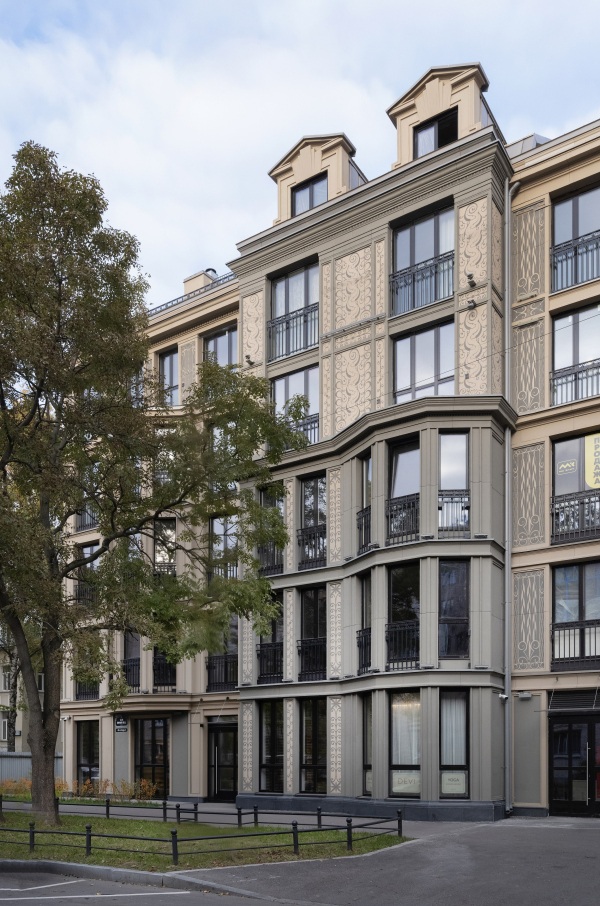
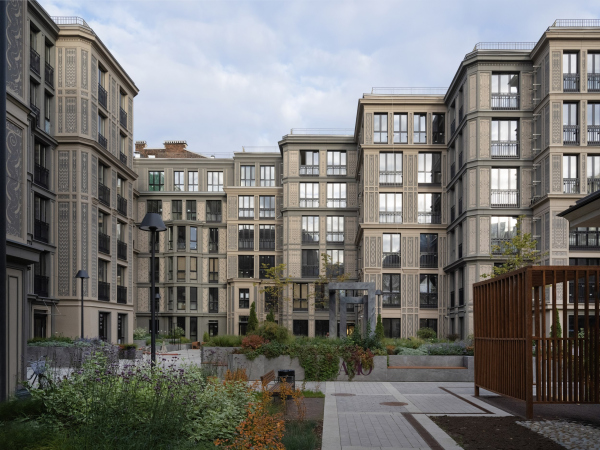
ALTER housing complex, view from the east sideCopyright: Photograph © Alisa Gil / courtesy of Liphart & GerthACCENT housing complex, fragment of the west facadeCopyright: Photograph © Alisa Gil / courtesy of Liphart & GerthAMO housing complex, fragment of the facade of the residential unit on Line 12Copyright: Photograph © Alisa Gil / courtesy of Liphart & GerthAMO housing complex, view of the yard facadeCopyright: Photograph © Alisa Gil / courtesy of Liphart & GerthTHREADS housing complex, view of the east yard on teh podiumCopyright: courtesy of Liphart & GerthThe construction of THREADS housing complex, the west courtyardCopyright: courtesy of Liphart & GerthAVANT housing complex, Building 1. View from Bolshaya Raznochinnaya Street, southeast side. VisualizationCopyright: courtesy of Liphart & GerthAVANT housing complex, Building 3. View from Pionerskaya Street from the southwest side. Visualization.Copyright: courtesy of Liphart & Gerth
|