|
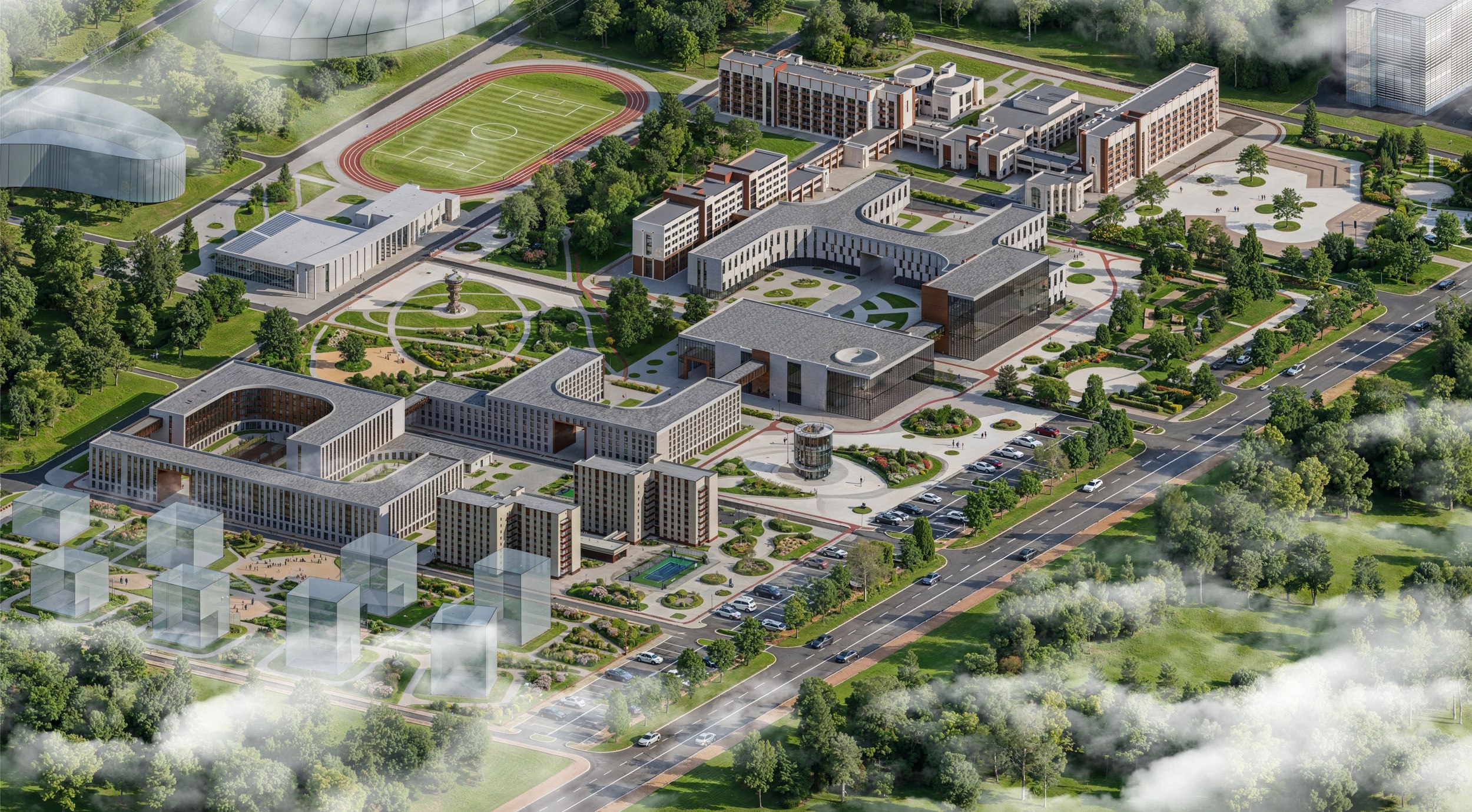
Mezonproekt is developing a long-term master plan for the MEPhI campus in Obninsk. Over the next ten years, an enclave territory of about 100 hectares, located in a forest on the northern edge of the city, is set to transform into a modern center for the development of the nuclear energy sector. The plan envisions attracting international students and specialists, as well as comprehensive territorial development: both through the contemporary realization of “frozen” plans from the 1980s and through the introduction of new trends – public spaces, an aquapark, a food court, a school, and even a nuclear medicine center. Public and sports facilities are intended to be accessible to city residents as well, and the campus is to be physically and functionally connected to Obninsk.
The history of the Obninsk branch of the National Research Nuclear University spans more than 70 years. An evening department of the institute – then still the Moscow Mechanical Institute – was established here in the early 1950s. In the 1970s and 1980s, the center continued to develop, and in 1985 the Obninsk Institute for Nuclear Power Engineering was officially opened. New academic buildings and dormitories were designed for it, though only part of what was planned was actually built. The Chernobyl nuclear disaster had a negative impact on the further development of the entire sector, leading to global caution and prejudice toward the construction of new power plants, while the social and economic difficulties of the last 15 years of the 20th century brought the institute’s growth to a halt. In the current century, however, the efficiency of nuclear power plants and their comparatively lower environmental impact have become increasingly evident. All of these factors prompted renewed interest in peaceful use of nuclear energy: in 2009, the institute returned to its roots and was officially incorporated into MEPhI.

Statistics show that nearly 88% of nuclear power plants currently under construction worldwide are being built with the participation of the Rosatom Corporation. Yet despite being an undisputed expert in the field, Russia accounts for only 5% of education in nuclear and related disciplines. The gap is too large and clearly needs to be reduced. The continued existence of this promising, high-tech sector requires advanced, modern infrastructure. This is how the project of a global educational and technological center based on the MEPhI branch in Obninsk came into being.
For Mezonproekt leader Ilya Mashkov, a MEPhI graduate of the mid-1990s, the work on shaping a new nuclear campus has been particularly important and personally meaningful.
The branch occupies a forested site of about 100 hectares in the northern part of Obninsk. At this point – just beyond Marx Avenue – the city ends rather abruptly: after the apartment blocks and detached houses, the forest begins, stretching all the way down to the Protva River. The boundary is marked by a high-pressure gas pipeline running along the northern edge of the urban development toward Borovsk. The pipeline is designed in such a way that no construction is permitted either above it or in close proximity, creating an exclusion zone roughly 500 meters wide, mostly overgrown with forest. Along its northern edge runs Universitetskaya Street – a straight, deserted dead-end road leading to a restricted facility, the Obninsk radio station. If you turn left onto Universitetskaya Street when leaving the city, you first pass a series of weathered warehouses – quite appropriate for the outskirts – then a ceramic-clad plinth of the “Technopark”, followed by the brand-new, crisply striped building of GARF, strikingly metropolitan in its otherwise provincial surroundings. Beyond that, the forest grows denser, and for an outside observer the student campus – the subject of this master plan – is for now visible only through its security checkpoints. It is precisely this territory that is to be rethought and transformed into a “calling card” of Russian engineering education in the nuclear field.
According to a half-joking formulation by Ilya Mashkov, the project’s task is “nuclear diplomacy – but strictly in a positive sense”. “Countries that build nuclear power plants have their own schools for training specialists, but the Russian approach requires a mandatory, fundamental understanding of scientific principles rather than simply knowing which button to push”, he says. “Moreover, I am convinced that the educational hub project in Obninsk will be of interest to many countries around the world and, overall, can have a beneficial impact on the ecology of our planet. Some economies still rely on coal for up to 90% of their energy – certain African countries, for example. So in reality, the problem affects a significant share of the world’s population. And what is electricity, after all? It is, for instance, clean water and solutions to sanitation issues. In fact, achieving all 17 Sustainable Development Goals formulated in the 2015 UN resolution is directly linked to energy. The new nuclear campus in Obninsk is intended to become a place where students from around the world will learn to understand peaceful nuclear energy, thoroughly grasp the specifics of its application, complete internships at other institutes affiliated with Rosatom and beyond, and then take this deep knowledge back home to help change the situation for the better”.
That is why the high-rise landmark of the entire campus will be an office tower housing not only a representation of the IAEA, startups, and specialized companies, but also offices of various countries interested in developing the industry – Brazil, China, Saudi Arabia, Bangladesh, Hungary, and others. The opportunity to ask questions in one’s native language and receive support is intended to significantly ease the integration of international students.
The tower, however, will not be placed at the center of the site but in its southern corner. Around it, a business hub for the entire campus will take shape, including a hotel, exhibition spaces, and a standalone Museum of the Peaceful Atom. The overall volume of the congress center is not accidental in its form: in plan, it represents a contemporary graphic interpretation of atomic orbitals.
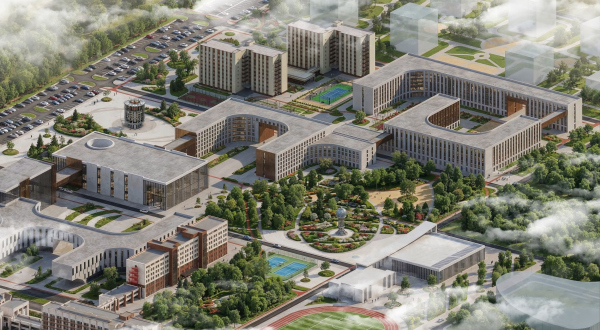
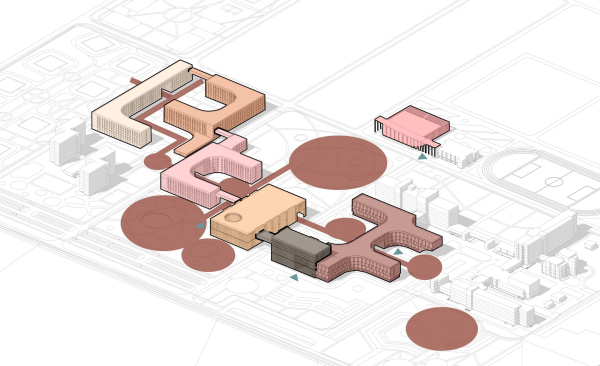
The existing academic buildings nearby are planned to be expanded, forming a main educational complex with a large covered public space at its core. Adjacent to the business zone, an ethnopark and a food court will be created, with restaurants and cafés offering national cuisines from different countries; themed festivals can also be held here. Farther along the northwestern edge of the site, student dormitories, housing for faculty, and residences for young professionals will be located.
From the academic buildings, it will be possible to reach the residential zone through the ethnopark via partially covered passages protected from the whims of the weather. The central part of the site, meanwhile, is reserved for culture and sports. In addition, the plan includes an aquatic complex, a boarding school for gifted children, a college for specialized vocational and technical education, a technopark, and a separate nuclear medicine center – an especially important and rapidly developing related field.
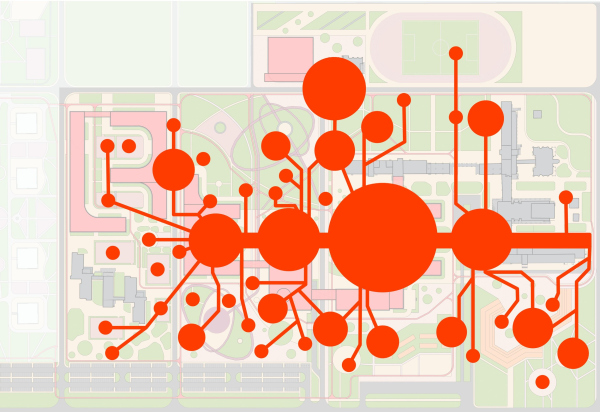
Interestingly, in the placement of certain buildings, the new master plan continues the logic of a late-Soviet plan that was never fully realized. The infrastructure being created will make it possible to nearly triple the number of students across different programs and formats of study, opening a path into a high-tech and promising field: the campus is designed for 13,000 people, with a significant increase in the number of international students envisaged. At the same time, all sports and cultural facilities are planned to be accessible to city residents as well. Layered over the traditional functional zoning and the programmed system of human flows (students, faculty members, researchers, local residents, transport) will be a social and cultural network: urban public spaces, a research cluster, a museum zone, the university itself with its dormitories, park lecture venues, art, and sports. Without always intersecting, these layers will nonetheless be legible in the landscaping, in the wayfinding system, in the spatial design, and architecture, together creating a truly contemporary and progressive territory for the international educational cluster collectively named “Obninsk-Tech”.
Relocating the gas pipeline route that separates the campus from the city is impossible – only minimal measures can be taken, such as installing lighting, improving the existing network of paths, and adding paved elements. On the one hand, this is an advantage: even now, the MEPhI branch, surrounded by forest, feels like a classic 1970s campus – a “small country” set within an environmentally rich landscape. Further development of the site will only increase the value of its natural surroundings. At the same time, the authors of the master plan suggest not dismissing the issue of the site’s “enclave” character and instead addressing connectivity in a comprehensive way by improving links between the science- and education-oriented northern edge of the science city of Obninsk and the rest of the city: looping University Street and extending public transportation into the campus.
A project of this magnitude will inevitably transform the city itself, effectively creating a new urban core. It will also support other forward-looking initiatives being developed by the Obninsk city administration and the Kaluga Region authorities, including the improvement of Repin Ravine, the reconstruction of the Protva River embankment, a ski slope with a spa center, a year-round aqua-thermal complex, the formation of a new art cluster, courtyard upgrades, the creation of a unified bicycle network, and many other projects. After all, attracting top-level faculty and specialists requires improving quality of life – offering distinctive, comfortable housing, well-developed infrastructure, and a wide range of activities. The campus will provide significant opportunities in this regard, but for active young people, it alone will still not be enough.
At present, only a long-term master plan for the vast territory is being developed, and it is too early to speak about specific architectural solutions. At the next stage, the architects plan to propose a unified design code that will bring together the existing buildings from different periods as well as newly completed structures (such as the recently finished state archive building on the adjacent site) with future volumes – a rather complex task. Major renovation of the existing buildings is scheduled to begin as early as 2026. The start of the main construction phase is currently planned for 2030, and total investment across all three phases is estimated at more than 51 billion rubles, with Rosatom Corporation set to become one of the key investors.
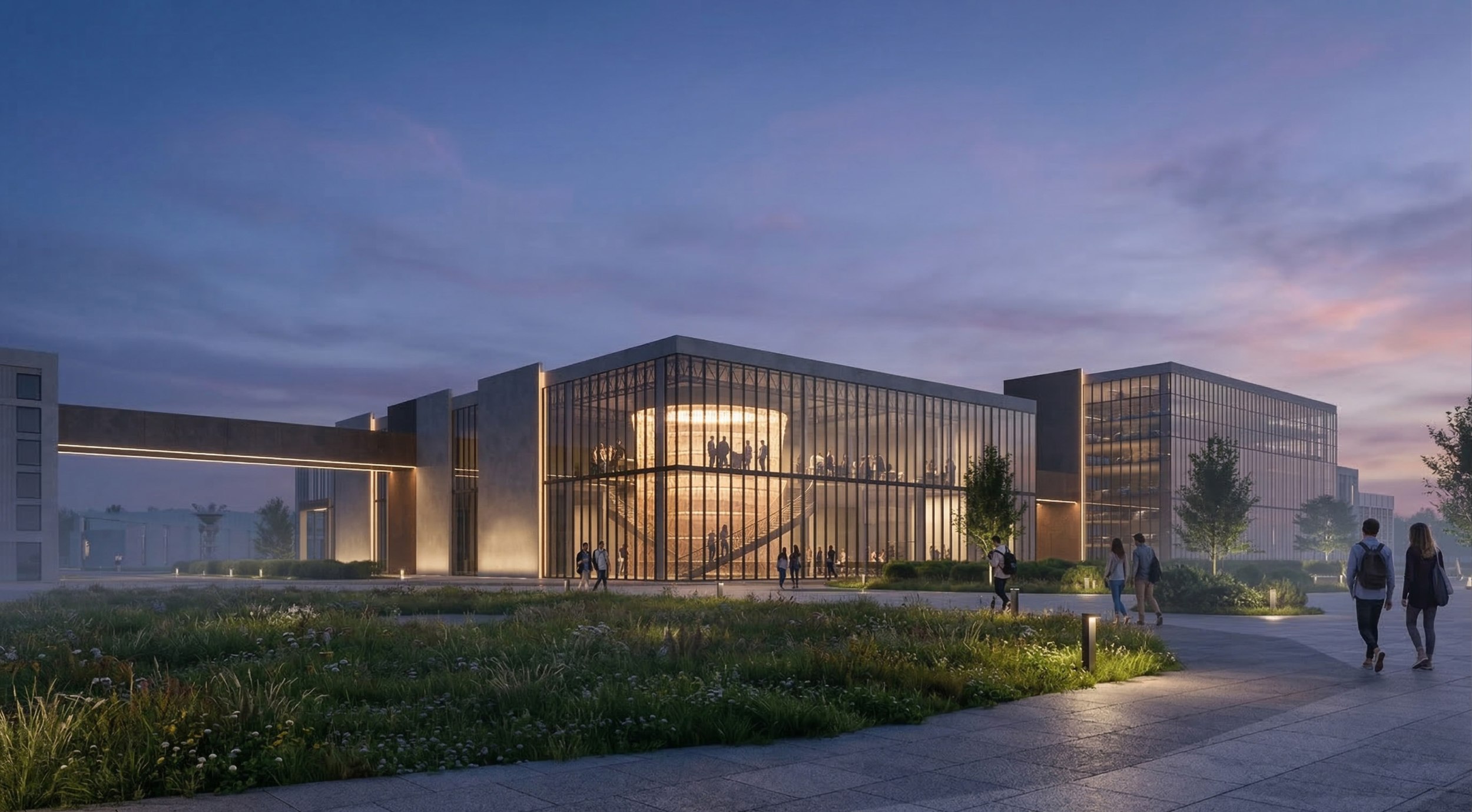
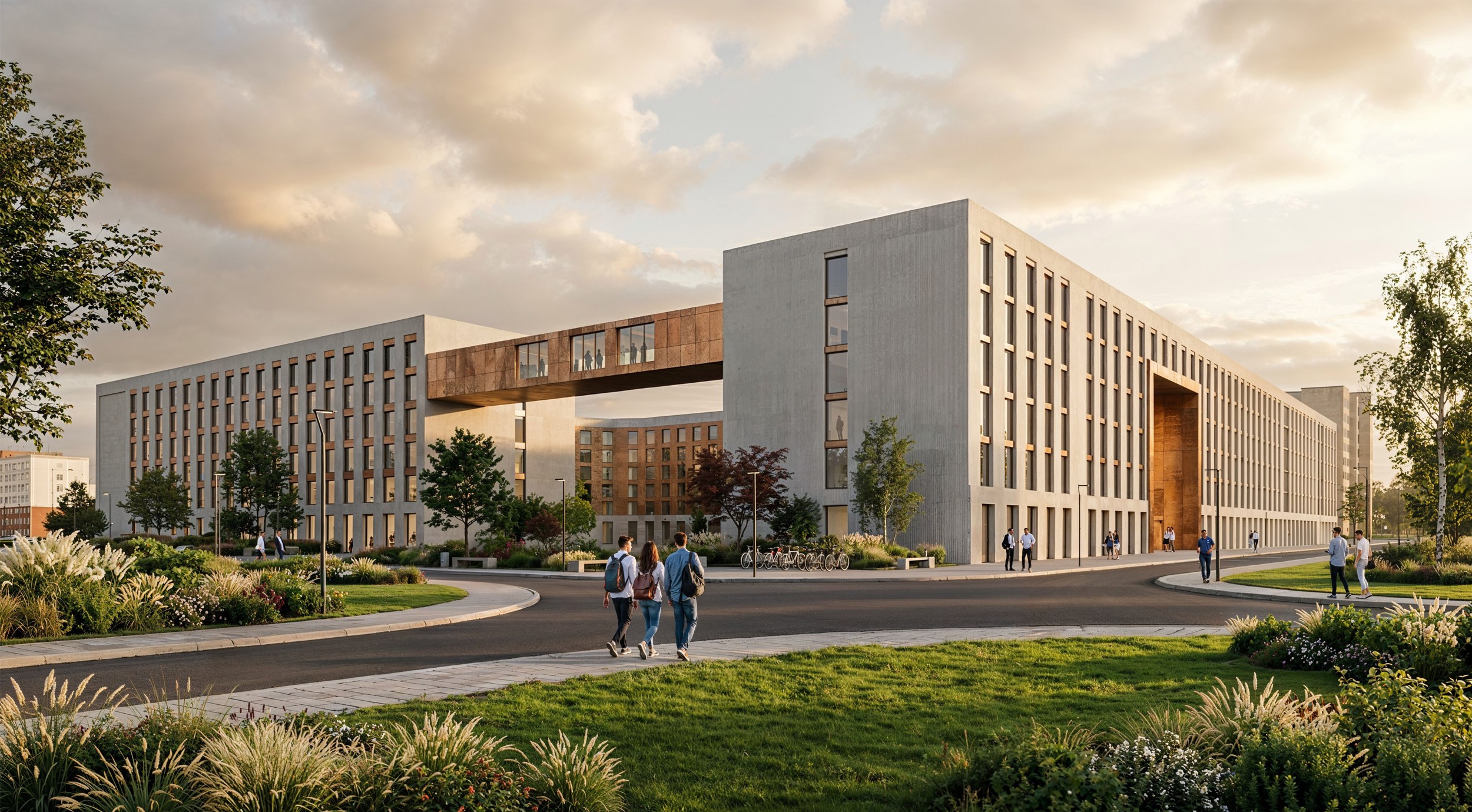
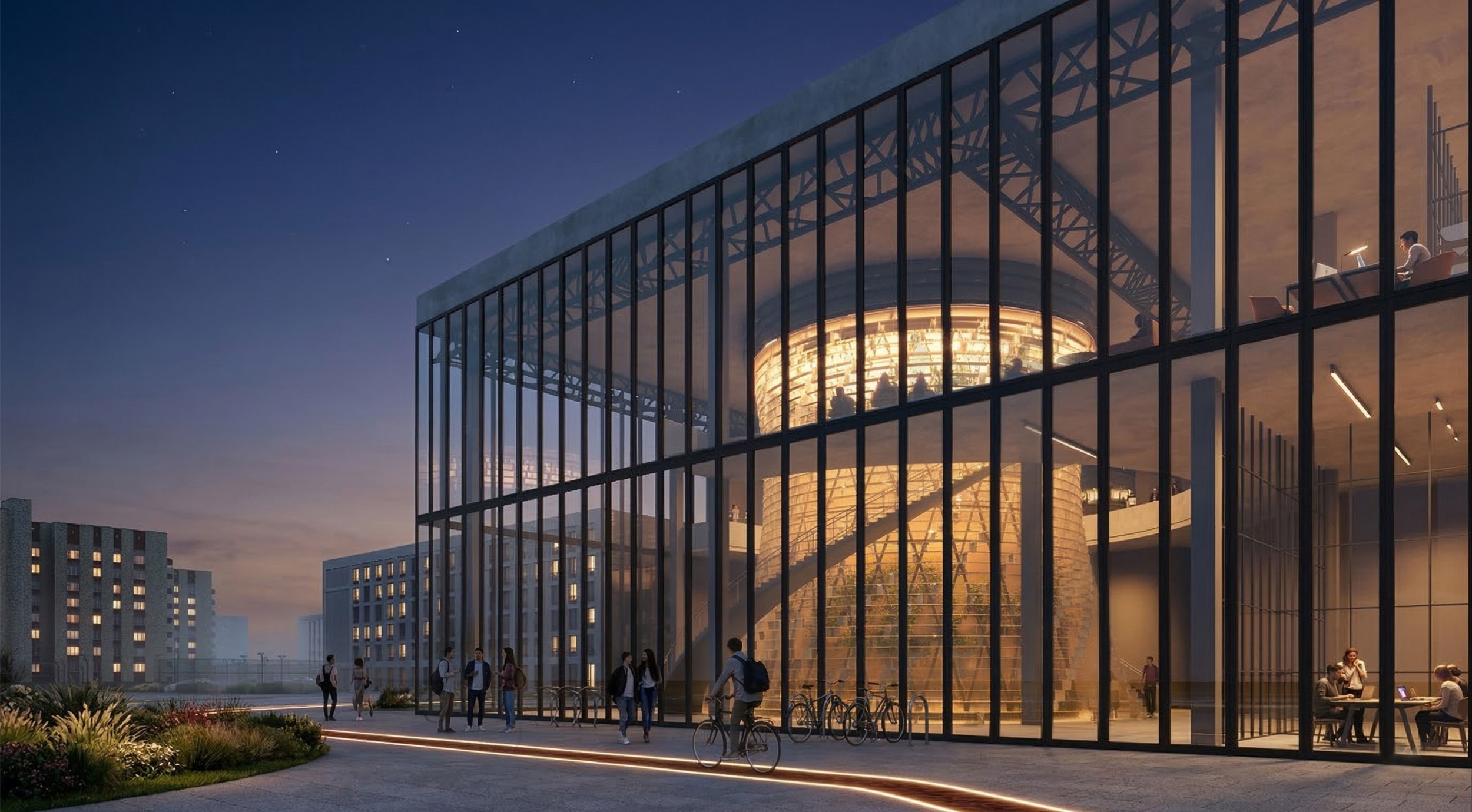
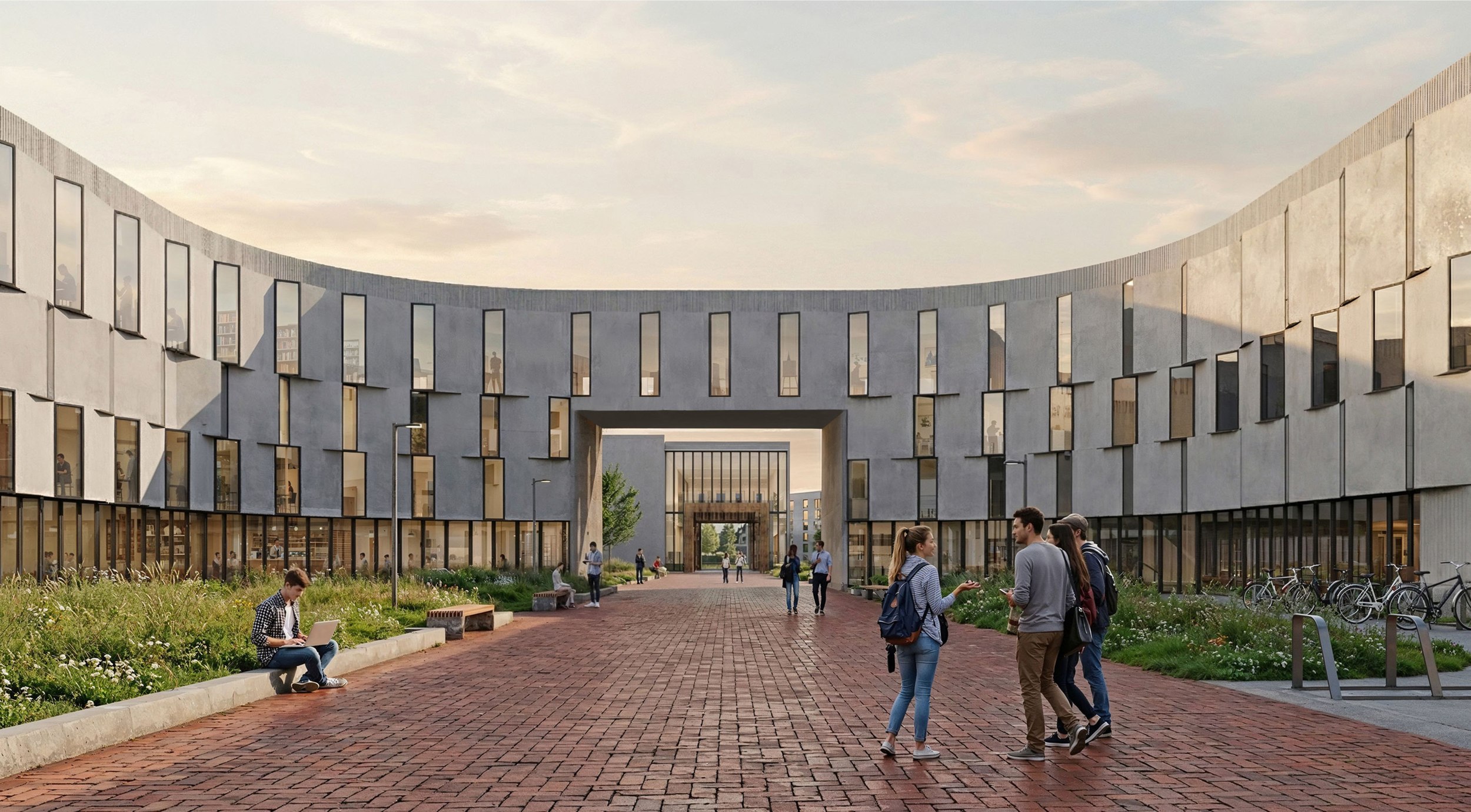
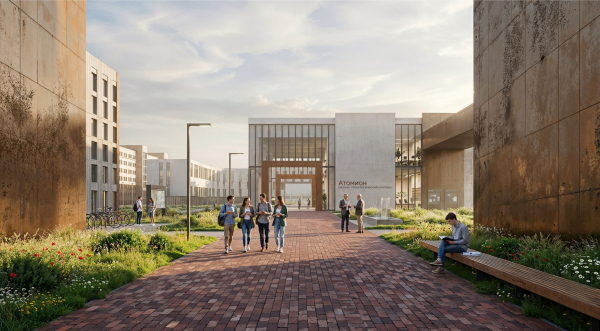
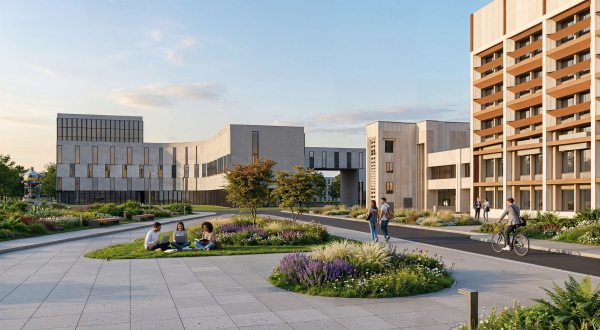
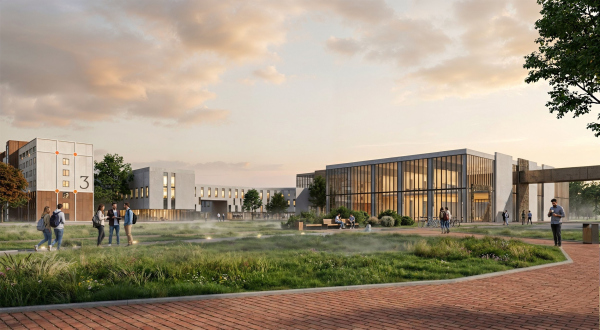
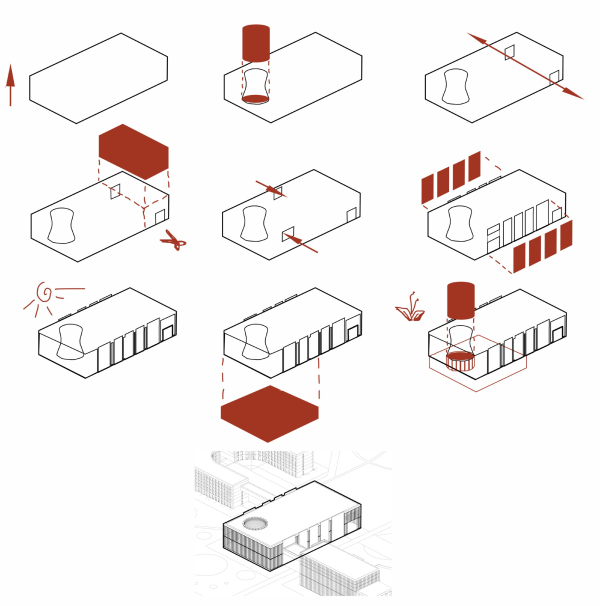
 Ilia Mashkov, Mezonproekt The Obninsk-Tech campus project was presented to the President in August 2025. I am very pleased that by that point we had arrived at an understanding of the fundamental urban planning solutions, ones that are commensurate with the ambition and the high goal of the project. The project team managed to avoid getting lost in details and to preserve the urban-planning scale of thinking. A great deal of work still lies ahead: developing architectural solutions for specific buildings, creating a design code for the entire site, and shaping a high-quality, inspiring environment. Over the course of our work, we gathered input from the business community, the city administration, representatives of the university itself, Rosatom Corporation, and, of course, students – all of this will be taken into account in further design decisions. Incidentally, to illustrate some of the buildings of the future campus and to lend materiality to the urban-planning concepts, we mostly used our own previous projects, reapplying them in a new context. We are very happy with the result. None
NoneNoneNoneNone
None
None
None
NoneNoneNoneNoneNoneNoneNone
|